
Facts vs. White House Rhetoric
In addition to the sick diatribe against Cuba at the current UN General Assembly, U.S. President Donald Trump tried to suggest that the root of America's security woes lies in Mexico. He threatened to launch military operations there—without Mexican consent—against drug cartels that (though he failed to mention this) receive abundant weaponry from U.S. territory; it is a massive business for the perpetually protected arms industry of that powerful and abusive nation.
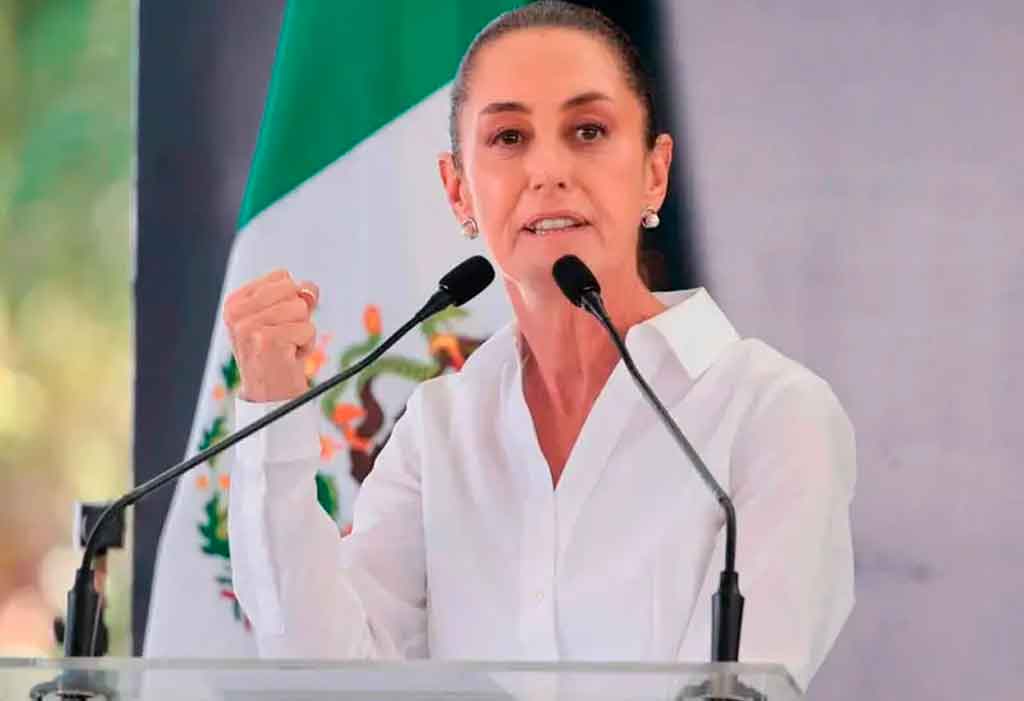
While the White House has repeatedly singled out Mexico as the source of its security woes—labeling it the epicenter of cartel violence and with the Republican president stressing that "it is unacceptable for the United States to share a 2,000-mile (3,218-kilometer) border with territory controlled by hostile cartels"—Mexican President Claudia Sheinbaum asserted that her administration is engaged in bilateral efforts to combat organized crime, offering an ironic retort to Washington:
"I could say: It is very difficult living next to a country with such high levels of drug consumption; or I could say: It is very difficult living next to a country that produces so many weapons. But I won't say that, because we have a good relationship with the president and with the U.S. government."
In reality, these attacks on Mexico help Trump maintain his standing among his hard-core electoral base—voters who fervently believe that narrative—meaning the veracity of his claims takes a back seat.
It does not matter whether the claims are true or false. It does not matter whether he has evidence against Mexican politicians or not; that’s irrelevant. What matters is that there’s a significant group of people who need to hear this and, in turn, be given talking points to repeat it, effectively becoming an echo chamber.
Let’s recall that Trump rose to power projecting the image of a "strongman" and a "fixer"—someone who wields hierarchical authority over Latin America. And although he has often installed subservient right-wing regimes through threats and electoral manipulation, his image within the United States has become blurred. Consequently, Republicans appear to be facing a complex landscape heading into this November's elections, with local media reports placing the leader's popularity at a mere 32%. Thus, his campaign rhetoric aimed at reconnecting with the electorate consistently singles out Mexico—and Latin America in general, but Mexico in particular—as the culprit behind issues related to drug trafficking and security.
There is a difference, however, between the White House's rhetoric and its actions; while it does not carry out open military interventions on Mexican soil, it has engaged in decades of interference in the Latin American nation—practices facilitated by previous illegitimate governments.
THINGS ARE DIFFERENT WITH SHEINBAUM
Currently, the Mexican government possesses three political strengths: its social programs, its communication style, and its rhetoric emphasizing national sovereignty.
This last point has been bolstered by the statements of the U.S. president, who does not enjoy a favorable image in Mexico.
"What the U.S. says about Mexicans actually gives the president a bit more room to boost her approval ratings; she speaks out against interference, so every attack from the Trump administration turns into a positive for her. It even makes the opposition look bad for endorsing the stances of a foreign government," noted commentator Rico Becerra.
"The Morena governing coalition's agenda is also heavily grounded in defending national sovereignty, resources, territory, and borders... I believe this pays off for her, particularly in terms of legitimacy," he concluded.
Against this backdrop, the Mexican government has implemented a strategy to combat drug trafficking at its root, focusing on targeting clandestine laboratories and the illicit crops that fuel the drug market. This action entails not only the destruction of plantations but also the seizure of weapons and materials used by criminal groups, with the aim of weakening their operational capacity nationwide.
These actions seek to protect communities affected by violence and strengthen national security in the fight against organized crime. Through operations across 14 states, security forces carried out actions to combat drug trafficking, rescue migrants, and eradicate illicit crops as part of the National Security Strategy.
This is Sheinbaum's forceful response to Trump's aforementioned claim that Mexico is the "epicenter" of drug trafficking.
Translated by Amilkal Labañino / CubaSí Translation Staff
Añadir nuevo comentario