
Minint Explains Limits Between Expression and Privacy
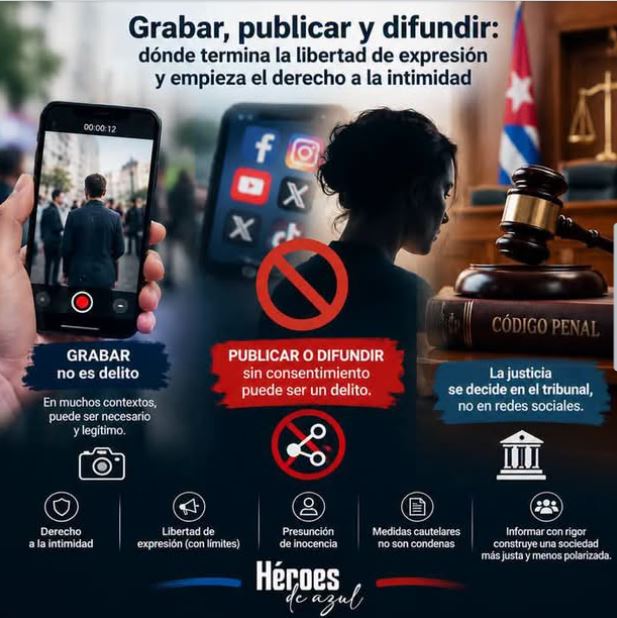
El Código Penal de Cuba tipifica el delito contra la intimidad personal y familiar, por lo que no se juzga el acto de grabar, sino la publicación no consentida de la imagen.
The Ministry of the Interior (Minint) highlighted today from its profile on the social network Facebook that recording with a phone does not constitute a crime, but publishing or disseminating images without consent can constitute a violation of personal and family privacy.
The entity stressed that a judicial case is not decided on social media and specified that the difference between documenting and exposing is key to understanding proceedings for the unauthorized dissemination of images.
It recalled that freedom of expression and the right to information are fundamental, but not absolute, since a person's image is part of their private life and its dissemination without authorization can be sanctioned.
The Penal Code classifies the crime against personal and family privacy, so it is not the act of recording that is judged, but the unauthorized publication of the image, the institution clarified.
It explained that these proceedings can originate from a private complaint, when the affected person exercises legal action, and that the presumption of innocence applies both to the accused and to the complainant.
It indicated that precautionary measures applied in some cases, such as house arrest or a ban on leaving the country, are provisional and do not constitute anticipated convictions.
Minint emphasized that freedom of expression does not protect the exposure of others' privacy and that public interest must be justified, since political criticism does not require disseminating images without consent.
It concluded that reporting rigorously, without turning each case into a media spectacle, is the best way to respect the parties and contribute to a more informed and less polarized society.
Añadir nuevo comentario