
Writers and Artists of Cuba Remember Great Filmmaker José Massip
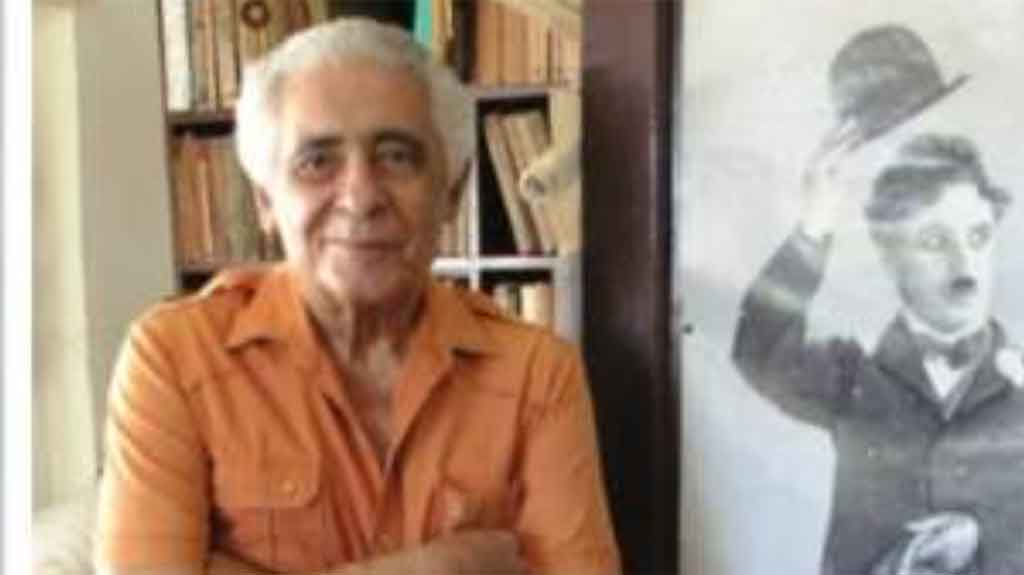
Escritores y Artistas de Cuba recuerdan al gran cineasta José Massip
On the 28th, Cuba will commemorate the centenary of intellectual José Salvador Massip (1926-2014), one of the country's most important contemporary filmmakers, and the Cuban Union of Writers and Artists (Uneac) paid tribute to him here.
Massip was a founder of the Cuban Institute of Cinematographic Art and Industry (ICAIC), winner of the National Film Prize (2012), and a key figure in articulating historical thought, audiovisual creation, and cultural criticism. His work spanned documentary, fiction, and essay, with cardinal titles such as El Mégano, Los tiempos del joven Martí, and Historia de un ballet.
The gathering took place the previous day in Uneac's Caracol Hall, moderated by Cuban researcher and critic Luciano Castillo, who recalled the filmmaker's participation in the documentary El Mégano, a pioneering work of revolutionary cinema, and his decisive role in consolidating ICAIC. Castillo emphasized that Massip belongs to the generation that transformed the screen into a space for critical thought and historical essay.
Documentary filmmaker Lizette Vila, for her part, focused on the philosophical dimension of his legacy, conceiving film, radio, and television as platforms to grant dignity, construct meanings, and wage battles for cultural emancipation, Uneac expanded on social media.
The intervention of Cuban researcher Mayra Álvarez revealed Massip's historiographical training; he worked alongside Emilio Roig de Leuchsenring at the Office of the Historian of Havana before turning to cinema. In that context, she highlighted the documentary Los tiempos del joven Martí (1960), in which the director linked the biography of Cuba's national hero with the tensions of republican Cuba — a work that earned an international award at the 1961 Leipzig Festival.
Another highlight came with the intervention of Cuban maestro Santiago Alfonso, National Dance Prize winner (2007), who recalled the classic Historia de un ballet (Suite Yoruba), filmed in 1962. That production was reflected as an act of poetic and political justice that inscribed Afro-descendant tradition at the center of national identity. Alfonso evoked the short film's final sequence, described by Massip himself as one of his most refined achievements, and portrayed it as a demonstration of cinema's capacity to translate the energy of movement into a visual writing of high lyrical flight.
Pablo Massip, the honoree's son, shared memories that sketched a creator of extreme rigor, obsessed with factual precision and coherence between aesthetics and ethical convictions.
Add new comment