
The War Against Iran Enters a Disastrous Phase for the U.S.
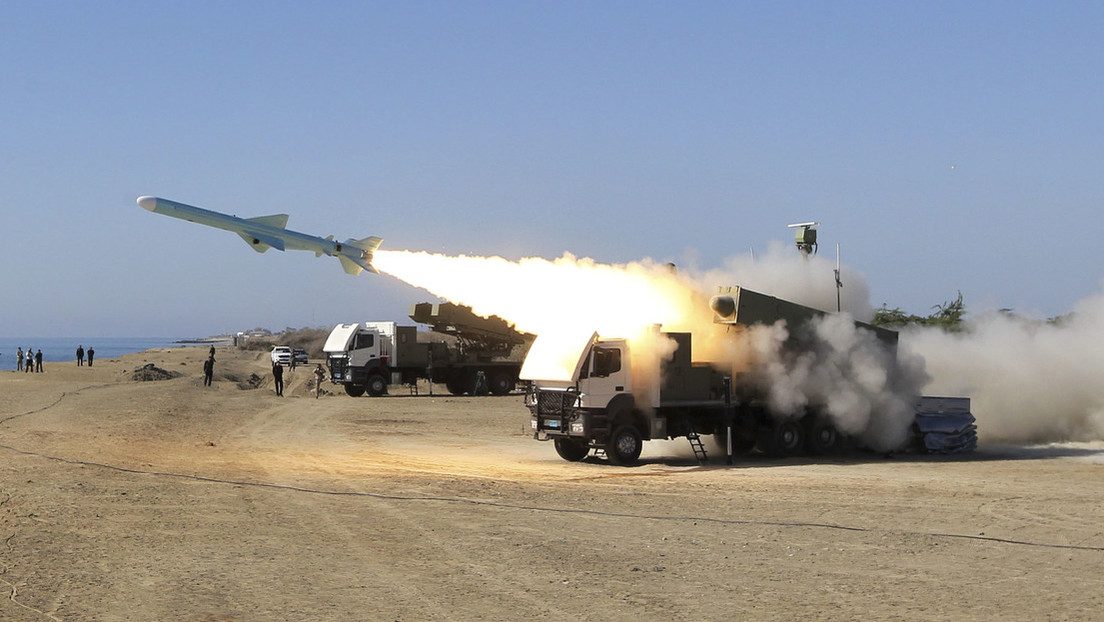
It’s neither an exaggeration nor excessive optimism to foresee a US military debacle, at least in Western Asia, which European metropolises dubbed the "Middle East" at the end of the 19th century. Indeed, the concept of "stalemate" in President Trump's latest military adventure against Iran seems to fall into a kind of what strategists call it a catastrophic stalemate, whereby neither side can defeat the other.
Someone trying to equate the two sides might say that Iran cannot stop the aggression; but that was to be expected, the natural order. In any case, until now, that's what had happened at least since World War II, for the last 80 years, at least in the initial stages of its aggressions, thanks to its technological dominance of the skies.
So, the fact that Iran hasn't been defeated quickly is in itself an extraordinary victory over the empire and Zionism, after only the first 20-odd days of the conflict. Note that there's hardly any talk of resistance; the talk is of defeating the aggressor.
A cursory review of the objectives of the attack on the Persians, at least those admitted with considerable ambivalence by the US government, reveals neither regime change, despite the systematic practice of decapitating the Iranian high command, nor has the attacked population risen up against "the regime," much less any apparent weakening of its armed forces and attack capabilities. And there's no talk of the Strait of Hormuz being reopened, at least not for the aggressors and their allies.
On the contrary, the waves of attacks on US military bases in the region, and on specific Israeli targets, have not only failed to subside but have even become increasingly precise; effective is the best word to describe them. The conflict even appears to be spreading beyond the region, following a failed Iranian missile attack on the British base on Diego Garcia, some 4,000 km from Iran, where the invaders receive logistical support.
As of March 20, the Iranians had practically scrapped $1.2 billion worth of US equipment, just radar systems, plus an additional $2.422 billion, including satellite terminals, "lost" drones, fuel tanks, around 11 tanker aircraft, and three F-15s.
It's worth adding, and it's particularly symbolic, that for the first time, an anti-aircraft system—the Iranian one, of course—had taken out two F-35 stealth fighters by that date. This could be interpreted as even causing a drop in the stock price of the manufacturer, Lockheed Martin. And rightly so, because the US taxpayer paid $100 million for each of these "invisible" aircraft, for nothing. In other words, the best aircraft in the world was sent to the scrap heap with two low-cost Iranian missiles, and with it, the revenue of its manufacturers.
The same thing is happening with the "extraordinary naval forces," which were deployed led by nothing less than two "extraordinary" aircraft carriers. Whether they were forced to withdraw due to the danger of running aground on the Gulf reefs, or perhaps—this is speculation—their crews inflicted damage requiring maintenance, the fact remains that one of them, the USS Gerald Ford, faced hundreds of clogged toilets followed by a potentially devastating fire in the laundry area, which took 30 hours to extinguish. The other, the USS Abraham Lincoln, well, it seems it was hit hard enough to warrant being sent a thousand kilometers away from the theater of operations.
So, symbolism carries weight in this conflict: two super-jets, the F-35s, and two super-carriers, the cream of the crop of imperial military might, withdrawn from the combat zone. Add to this the obvious impossibility of defending the ground positions the US has established in the countries bordering Iran. Another emblem of shattered power is the gradual, and by now almost nonexistent, ironclad shield that protected the Zionists in Israel. All reduced to cosmic dust.
Much more could be said regarding the reliability, or rather the loss thereof, of the victorious narrative presented daily by President Trump, who has claimed to have won the war at least seven times, accompanied by his Secretaries of State and War. The sheer number of contradictions in their speeches is breaking records; one day it's one thing, the next day the opposite, to prove what they previously denied. A veritable jumble of words that contributes to the unstoppable, daily erosion of the federal government's credibility.
It doesn't matter that, with threats and other typical Washington power tactics, they still have the support of a dwindling Congress, or even of the generals who command and deploy their troops in this aggression. It's clear that it's only a matter of time before all of this continues to crumble, unless they find a way out of this war as soon as possible, with as few holes in their hats as possible.
Some facts from the realities outside the Trumpian universe reveal the self-inflicted political situation created by the White House as a result of this adventure in West Asia.
Let’s mention, for example, the growing levels of rejection the war provokes in American public opinion, as shown in polls, including no less than 35% of Republicans surveyed, not to mention the rest. The almost unanimous rejection in the intellectual and artistic world is also evident, as seen at the last Academy Awards ceremony.
At the same time, ghosts of the past linger for those who believed the so-called Vietnam syndrome was behind them, especially now that there’s speculation about a return to mandatory military service, which could well be the spark that ignites the prairie fire.
To make matters worse, there’s the defection of prominent figures in the federal government, such as Joe Kent, director of the US National Counterterrorism Center, no less, who decided to denounce the war folly, blaming the Zionist lobby and appealing to his conscience, he said—something worth noting because Kent must have participated in, or at least admitted to, the convoluted process of including Cuba on the list of countries that tolerate terrorism. But that's another story.
On top of all that, within the US intelligence community itself—the one Mr. Rubio manages, let's not forget—dissent is growing to the magnitude of a tidal wave. Tulsi Gabbard, the Director of National Intelligence, for example, recently suggested that the supposed Iranian nuclear weapons program is not the reason for the attack. Well, Trump had already stated in June 2025 that it had been eliminated, so no one should punish Gabbard for reiterating the idea.
The economy, the damned economy, is another growing and uncontrollable obstacle facing Trump, because the war has swallowed up $25.5 billion (as of March 20, 2026), which includes the weaponry and infrastructure destroyed mentioned above. And this is in a context of asymmetric warfare, with low-budget Iranian weapons neutralizing or destroying the enemy's highly sophisticated and extremely expensive ones.
Clearly, this is like a goldmine for the shareholders of the arms industry, who are listed on Wall Street. In fact, the Pentagon is managing another $200 billion, even though the federal debt has just surpassed $36 trillion, the largest in the world.
The average American wonders, "What do I gain from this war?" Only losses: more expensive gasoline, higher fertilizer prices, complain American farmers, many of them members of the MAGA base. It's no longer news that the price of oil remains above $100 per barrel, with the paradox that the Iranians are earning almost double the amount from the oil they sell compared to before February 28th.
At this point, it's necessary to examine how the situation is evolving at the MAGA base, Trumpism itself, and why, in practice, they have been deceived, despite Trump's promise not to drag the country into endless wars.
Iconic figures from the MAGA/Trumpist world are echoing this phenomenon. Carrie Prejan, a close ally of Trump for the past 20 years, declares: "MAGA is dead. We no longer recognize President Donald J. Trump," adding that: "We are an occupied country. A foreign country has occupied our government." This refers to the claim that the US attacked Iran under pressure from Israel, which isn't entirely true, but it doesn't matter; that's what Prejan and many other Trump supporters believe. Another example is Chiras Murphy, a MAGA supporter on steroids, who also agrees that "Israel forced us to take this action." Former legislator Marjorie Taylor says she no longer believes Trump deserves the Nobel Peace Prize—thankfully, good for Taylor. MAGA is fracturing and publicly declaring it, as can be seen on social media, describing this process.
As if all of the above weren't enough "suspicion" to force Trump/Rubio to abandon this mess, it's now news that NATO and other allies are completely turning their backs on Trump, a process that was already predicted here. The allies want nothing to do with this war; and the Arab countries neighboring Iran, long-standing US allies, despite a Pyrrhic victory with a UN Security Council resolution that reprimanded Iran without practical consequences, find themselves increasingly "mistreated" unintentionally, the Iranians explain, by the continuation of the conflict.
In response to this furtive but evident process of inside fracturing within the belligerent transatlantic alliance, NATO, Trump, being Trump, is threatening to dissolve it, to leave it adrift. And then the floodgates open within the Republican Party, and legislators within the party are threatening a "civil war" within the establishment if the White House continues with these intentions. One observation: Mr. Rubio struts confidently before the cameras, talking about Cuba, but he has neglected the delicate diplomatic work with his historical allies; a terrible mistake.
The isolation Trump is experiencing is astonishing, and the only thing he's missing is a farm rebellion. He must remember that his mission, the very reason he built a movement like MAGA with messianic trappings, was to support, or at least pretend to support, the American worker and middle class, ruined by the inexorable concentration of wealth, not to squander resources on wars in the interests of others (the Zionists) or worse, to send US Marines to die on a distant battlefield.
Time, inexorable time, has the final saying in this particular conflict. Every hour, every minute that passes seems crucial. Iran appears prepared, for 40 years, to resist. But 40 years ago, Trump was enjoying himself on Jeffry Einstein's famous island; he had no idea he would be the head of the gigantic US military apparatus. Clearly, there’s a gap of difference between the two contenders in terms of accumulated experience. And as the Persian leaders have said, winning this war convincingly is not only in their interest, but it also prevents the empire from getting involved in another military adventure. But that's another story; we'll see.
Translated by Amilkal Labañino / Cubasi Translation Staff
Add new comment