
U.S. Midterms: Distrust
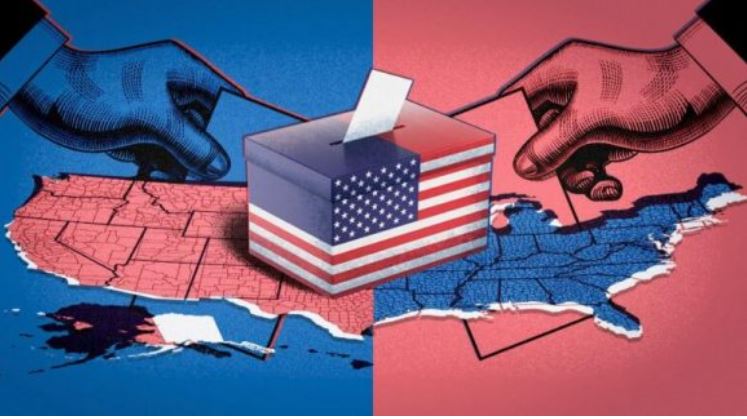
Donald Trump’s determination to maintain a Republican majority at all costs in the upcoming U.S. legislative elections on November 3rd has fueled growing distrust among many of his Democratic opponents—as well as so-called independents—given his dictatorial style, which could range from voter intimidation to the seizure of ballots.
Many Democrats share this view, considering such scenarios possible, with their level of confidence at its lowest.
According to a survey by The Associated Press and the NORC Center for Public Affairs Research, registered voters who identify as Democrats have lost faith in U.S. election results since the legislative elections four years ago. Their confidence that votes will be counted accurately has fallen from 75% in 2022 to 55% this year.
An overwhelming majority of Democratic voters also assert that the former president’s attempts to influence the elections constitute a serious problem—a sentiment shared by independents, though certainly not by the majority of Republicans. Meanwhile, confidence in election results among Republican voters has increased slightly since 2022; however, they remain less likely than Democrats to express trust in the electoral process.
A poll conducted less than two weeks before the election reveals how opinions have shifted since Trump returned to the White House last year and initiated a broad effort to expand federal authority over elections. Although the Constitution grants states and Congress control over voting processes, the president has sought to reform them through executive actions and lawsuits.
With the November 3 election approaching, the Republican president has indicated that he wants federal prosecutors to be on the lookout for fraud—a suggestion that he might pursue legal challenges if the vote count does not go in his favor.
ADMINISTRATION STRATEGY
The Trump administration has pursued various strategies to influence this year’s legislative elections. Chris Diaz, director of legislative tracking at the Voting Rights Lab, noted that the organization has observed states aligned with the administration passing several versions of the president’s proposals.
The group recently published a report highlighting key areas that have drawn the attention of Republican lawmakers, including mail-in voting, voter identification, and the search for non-citizens on voter rolls.
Voting by non-citizens has been a focus for the Trump administration, even though such instances are rare. The U.S. Department of Justice recently announced charges in approximately 90 cases involving various forms of electoral misconduct—including 50 cases against individuals who allegedly voted despite not being citizens. The United States had 227 million registered voters for the 2024 presidential election.
The Brennan Center for Justice has identified nearly 40 laws across 21 states that took effect for this election season, which will make it more difficult for eligible voters to register, remain on the voter rolls, or cast their ballots.
The report from the center—part of the New York University School of Law—revealed that many of these new laws target specific subgroups of voters.
“What I want voters to take away from this is that elections are still administered by the states, and there are still people in many states trying to make it harder to vote,” explained Sean Morales-Doyle, director of the center’s Voting Rights and Elections Program. “But that is all the more reason to make a plan, vote, and participate.”
REPUBLICAN DECLINE
With November just days away, the Republican Party’s midterm election campaign has turned into an emergency operation. Officials are scrambling to avert defeats in a number of seats once considered safe; there’s growing fear that these losses could cost the party full control of Congress.
The deteriorating landscape has alarmed Republican operatives in several key states, forcing the party to redirect resources toward districts and states that are traditionally Republican—at the expense of their previously broader ambitions in Democratic-leaning areas.
Furthermore, after months of urging former President Donald Trump to increase his travel in support of key candidates, some Republicans now fear that he has become so unpopular that his presence on the campaign trail could, in some instances, do more harm than good.
One Republican member of the House of Representatives, currently seeking reelection, remarked on the former president’s approval ratings: “Trump is dragging the party down.” The bleak outlook facing the Republican Party follows weeks of polling that suggests it’s on track to lose the House of Representatives—amid intense voter discontent over the aggression toward Iran and the rising cost of living—and that it faces a serious risk of losing its once-solid majority in the Senate as well.
The growing number of tight races has complicated Republican leaders' plans to regain ground by injecting hundreds of millions of dollars in the final stretch. Despite a massive financial advantage—bolstered in part by the pro-Trump super PAC, MAGA Inc.—the spending to date has failed to significantly shift the Republican outlook, as more funds are being diverted to contests that were previously considered safe wins.
The Senate Leadership Fund, the primary Republican super PAC for Senate elections, has already canceled its ad reservations in North Carolina and has directed at least $10 million to Kansas—a state that has not elected a Democrat to the Senate since 1932. It also recently invested $5 million in South Carolina to bolster senator Darline Graham, amid concerns among some Republicans that she is losing ground to Democrat Annie Andrews in this deeply Republican state.
Elon Musk, the world’s richest man, has committed nearly $300 million to support the Trump-aligned faction’s campaign efforts. This comes on top of the more than $100 million that the Senate Leadership Fund has spent in Texas to back Ken Paxton, who is struggling to solidify Republican support in his race against Democrat James Talarico following a bruising primary campaign. Trump himself has traveled to Texas three times in the last month to mobilize voters in favor of Paxton.
“We all expected the war to be over by now, but it isn’t,” said a Trump aide. “We shouldn’t have to be fighting a battle in a place like Texas, but clearly, we are.”
Top Republican leaders overseeing House campaign spending are expected to narrow their focus in the coming days—doubling down on races they deem winnable while drastically cutting investment in candidates whose prospects are fading, according to several people familiar with the matter.
This strategic narrowing of focus serves as a fresh acknowledgment of the challenges Republicans face; it’s an attempt to concentrate resources on candidates capable of defending their seats or flipping districts from the Democrats, thereby limiting the Democrats' overall momentum.
A BLOW
On Friday, the Cook Political Report dealt a fresh blow by shifting 18 House races toward the Democratic column. Among these are five highly contested seats in Iowa, Pennsylvania, and Washington—races that, according to the projections of this influential analysis, are now more likely to be won by Democratic candidates.
The outlook in the Senate offers little relief to the Republican Party, either. Paxton is facing a steady stream of leaked, damaging audio recordings from a private fundraising event—a situation that is further fueling the frustration of Republican leaders, who already viewed his campaign as lackluster. Meanwhile, Democrats are leading in the polls in key states like Georgia and North Carolina, and are running competitive campaigns in traditionally Republican strongholds such as Alaska and even Kansas.
Ultimately, all of this underscores a well-known truth about the sham that is American-style democracy: the only people who can realistically compete and get elected are those who have the most money—or who have someone with money backing them.
Translated by Amilkal Labañino / CubaSí Translation Staff
Add new comment