
US-Iran Dialogue: To Be or Not to Be
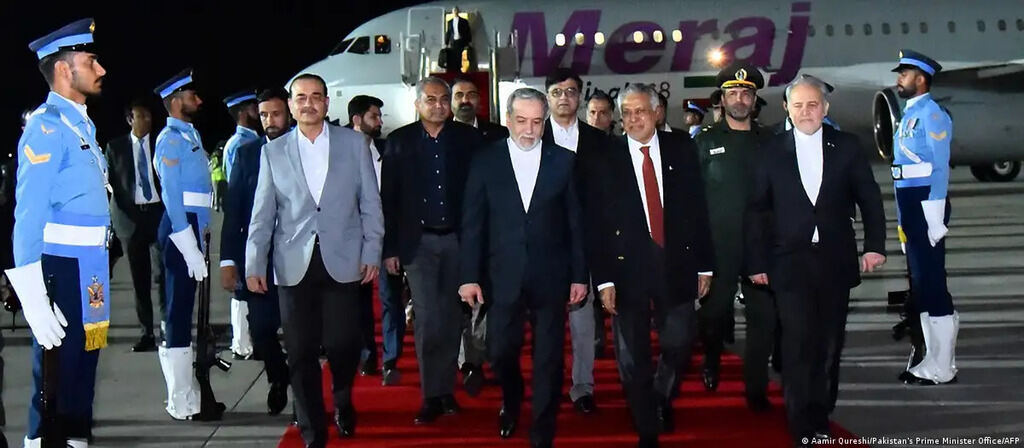
Contradictory signals regarding eventual peace talks between the United States and Iran in Islamabad currently leave the resolution of a conflict—which President Donald Trump initially defined as an "excursion"—hanging in the balance.
While the American side speaks of "certain progress" in recent days and asserts that Iran will present a proposal in line with Washington's demands, Tehran affirms that, thus far, there is no decision to negotiate with the United States.
On Wednesday, Vice President JD Vance was left with one foot on the airplane stairs en route to the Pakistani capital; however, the trip was aborted when Iran announced it would not send its delegation to the meeting due to the lack of a clear horizon for resuming negotiations.
The United States reported this Friday that talks will indeed take place and that Trump's special envoy, Steve Witkoff, and advisor Jared Kushner will travel to Islamabad this Saturday. White House Press Secretary Karoline Leavitt indicated that both officials will depart "again for Pakistan tomorrow morning (today) to engage in talks (...) mediated by the Pakistanis."
"We are hopeful that it will be a productive conversation and, hopefully, allow for progress toward reaching an agreement," Leavitt added.
Local media noted that Vance would not be attending this time, waiting to see if the proposed negotiations advance. Similarly, the Speaker of the Iranian Parliament, Mohammad-Bagher Ghalibaf—considered by Washington to be the counterpart to the White House's number two—will not attend.
The official who did travel to Islamabad was Iranian Foreign Minister Abbas Araghchi, who is also scheduled for a tour that includes Russia and Oman. Tehran warned that no meeting with the United States is planned during the current visit.
The spokesperson for the Iranian Ministry of Foreign Affairs, Esmaeil Baqaei, wrote on his X account: "We arrived in Islamabad, Pakistan, for an official visit (...) Araghchi will meet with senior Pakistani officials within the framework of the mediation efforts and good offices they are carrying out to end the war of aggression imposed by the United States and restore peace to our region."
"No meeting is planned between Iran and the United States. Iran's observations will be transmitted to Pakistan," he emphasized.
The United States and Iran held a round of talks on April 11 without reaching a definitive agreement. On April 7, Trump announced a two-week ceasefire, which he later extended to provide room for diplomacy and in expectation of the Iranians presenting a "unified" proposal.
Hostilities broke out on February 28 when the United States and Israel began bombings against Tehran and other locations in the Persian nation, which have already left thousands dead.
Add new comment