
U.S. Government and Its New Coercive Measures Against Cuba
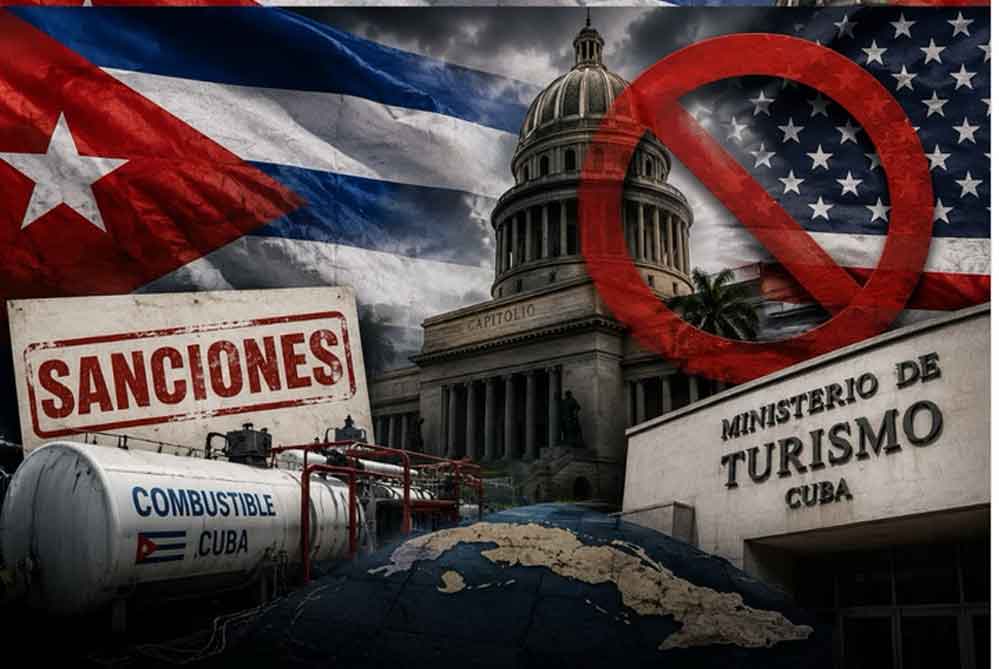
As part of the U.S. government's maximum pressure campaign, the Office of Foreign Assets Control (OFAC) of the Treasury Department published today an official alert on the expansion of sanctions and restrictions against Cuba.
The regulatory framework, to be published this Wednesday in the Federal Register, reviews the Cuban Assets Control Regulations (CACR) to implement part of President Donald Trump's foreign policy toward Cuba, in particular Executive Order 14404 of last May 1, which expands sanctions in an attempt to isolate Cuba from international trade.
According to the measures, upon their entry into force this September 30, banks subject to U.S. jurisdiction will be prohibited from so-called "U-Turn" banking transactions.
The authorization that allowed U.S. banking institutions to open and maintain an account exclusively in the name of a Cuban citizen who is an independent private-sector entrepreneur will also be eliminated.
Unless they possess a separate authorization, banking institutions subject to U.S. jurisdiction are obligated to immediately block such funds and accounts, and will need a specific OFAC license to unblock them.
Furthermore, the authorization related to attending or organizing professional meetings or conferences in Cuba is eliminated.
OFAC likewise limits the scope of authorization for U.S. academic institutions and their faculty, staff, and students regarding certain transactions related to the educational sector involving Cuba.
The restrictions are part of the brutal policy of maximum pressure—and maximum aggression, as authorities on the island characterize it—of the Trump administration since January of this year.
In a further twist, it then declared a national emergency regarding Cuba on the supposition that the Caribbean country constitutes a threat to U.S. national security, something the Cuban government has roundly denied.
Trump, with his order, prohibited Cuba's access to oil purchases under threat to third parties of imposing steep tariffs, after which other provisions have followed so far in 2026 that impact all sectors in the Greater Antilles.
"It is evident that there is no progress," stated Deputy Foreign Minister Carlos Fernández de Cossío in a recent interview granted to Prensa Latina, regarding direct communications and in-person meetings in recent months between the governments of Cuba and the United States.
No progress can be identified when the U.S. government "frequently imposes, weekly or biweekly, new coercive measures of punishment against the Cuban people and continues to reinforce the brutal economic war."
Add new comment