
Trump’s “Warlike Sermon” at the UN
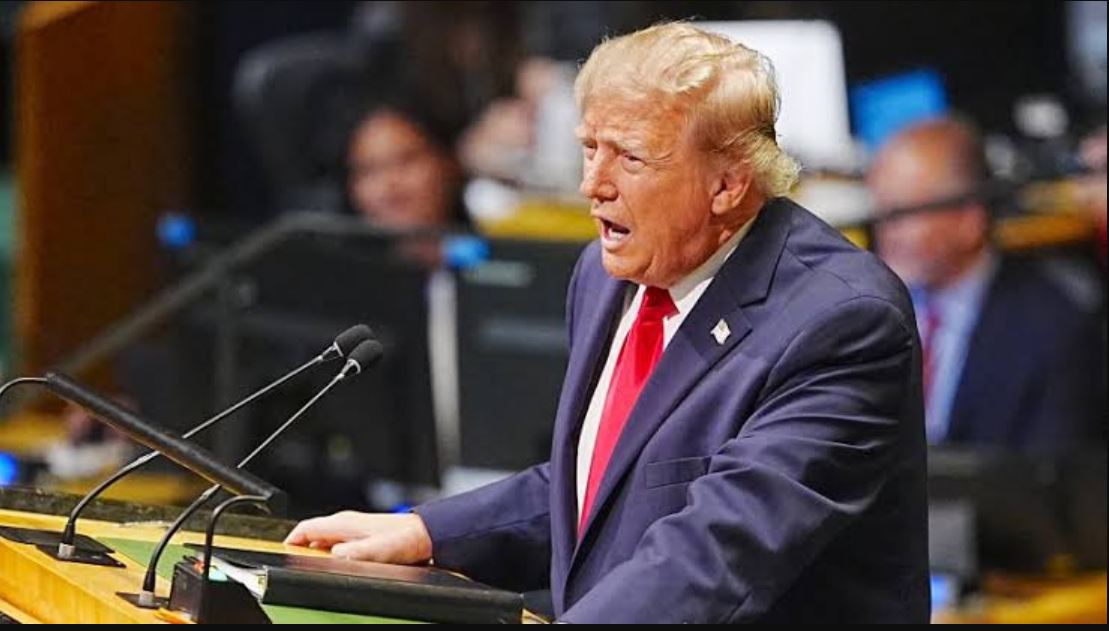
There is an old saying that suggests “turn a deaf ear to foolish words”; In terms of communication, this amounts to virtually zero dissemination of a statement or speech—specifically, the address given by Donald Trump, the 47th U.S. President, at the opening session of the 81st UN General Assembly (UNGA).
Clearly, this lack of awareness regarding the presidential message applies to the general public; it does not extend to foreign policy experts or officials whose duties require the detailed analysis of statements made by world leaders on the international stage, such as at the UNGA.
And while Trump’s speech would certainly need an algorithmic analysis of its social media reach, it would come as no surprise if that reach proved to be extremely limited. As for the major U.S. press—forget about it; leading media outlets simply chose to boycott the president's public appearances during that period in response to his blatant violation of the First Amendment (ostensibly guaranteeing freedom of the press)—well, such are the ways of the empire.
Nevertheless, it is tempting to overlook this speech, which presumably set a record for bluster—both in terms of its content and the venue where it was delivered. Although the high-ranking official’s words were addressed to the audience present, they were strictly conceived with other recipients in mind, as will be discussed below.
Without further ado, the first point to address is Trump’s remarks regarding Cuba. Whatever critical adjective one might choose to use it is welcome—and certainly appropriate—so there’s no need to mince words regarding his statements defending the indefensible: the immeasurable harm his policies inflict upon the Cuban people. These actions amount to an act of war—such as the energy blockade—causing massive impact and constituting outright collective punishment rather than mere collateral damage.
In essence, Trump claims the Cuban state is to blame for this suffering and predicts the government’s imminent collapse; in doing so, he admits that his policies have subjected Cuba to unprecedented pressure. It’s unclear whether he said this by mistake—though such blunders are typical of him.
Several absurdities—or rather, acts of sheer stupidity, to use less diplomatic language—can be gleaned from this paragraph. Note the contradiction: he begins by asserting that Cuba is a failed state due to communism—implying communism’s imminent demise—yet later suggests the fault lies not with communism but with the U.S. government itself, citing that very pressure.
Herein lies the major blunder: he effectively absolves Cuban authorities of blame while simultaneously making a damaging admission. Trump seems unaware that the UN General Assembly has—since at least 1992—been the very place where the need to lift the blockade is debated annually, only to be consistently rejected by the blockading power (successive U.S. administrations).
It remains to be seen what the blockading nation’s delegation will say when the resolution condemning the blockade comes up for debate—likely between October and November. One would hope they do not contradict their own president regarding the existence of this ruthless economic war waged against the Cuban people.
As for the claim that the Cuban regime is about to fall, one need only look at history as it actually stands. The last U.S. president to make that promise at the UN General Assembly opening session was Bush the younger—the alcoholic—back around 2006 or 2007; that is, some 20 years ago. In short, the ways of the empire—if one may be redundant.
One can also deduce another element that runs more or less through Trump’s entire address to the 81st UN General Assembly: as mentioned earlier, the message had one specific intended audience—the American voter. In this case, it was his most loyal MAGA base—the only ones likely still interested in his speeches—along with, for other petty reasons, the donors from the Zionist lobby and the Cuban-American mafia lobby in South Florida regarding Cuba.
Only by taking into account this "small detail"—the true target audience of Trump’s speech, amidst his fruitless effort to avert a colossal disaster in the November elections—can one explain the way he referred to his policy toward Iran. Once again—and at the UN, no less—he threatened to wipe the country off the map if it did not fall in line with his spurious demands. Such an outcome is highly unlikely, regardless of threats—or, to reiterate a point that is moot at this stage, regardless of whether the goal is to drastically lower the price of diesel and other fuels at U.S. gas stations.
In a similarly halting, monotonous tone, the U.S. president devoted a few more minutes to how wonderfully things are going in his country. He claimed that poverty had dropped dramatically and that average income had risen in a "mind-boggling" way; yet these figures do not appear to be true—or at least, more than 70% of the U.S. population does not believe them when asked about the state of the national economy. Undoubtedly, the president is already grappling with a serious credibility problem, as has been demonstrated time and again.
Trump also boasted of having "total" control over Greenland and warned that he would not allow any intruders there. Whatever that might mean, the president lied once more. After all, agreements to establish US military bases on this giant island—a Danish territory that is part of NATO’s internal arrangements—are nothing new; at one point, the Pentagon maintained over a dozen bases on this colossal expanse of eternal ice, only to eventually leave—not due to hostility from the Chinese or Russians, but because of the unrelenting, bitter cold of the region. Climate versus the Pentagon—once again, the ways of empire.
The White House occupant also devoted some time to Mexico, hailing the robust cooperation in place regarding the regional war on drug trafficking. The issue here is not so much a blatant lie, but rather an implicit one—a failure to say what should have been said, for lack of the courage to do so.
For when it comes to confronting drug trafficking, US authorities will inevitably have to address the demand side someday, rather than focusing solely on the supply side as they have done until now. The US is the world's leading drug consumer—a fact for which its own American leaders of earlier eras bear responsibility; and ever since, the commercialization of these has generated fabulous revenues—laundered through the U.S. banking system—compounded by lucrative arms sales to Mexican cartels and the like. It is all too “fabulous” to be dismantled anytime soon; better to blame third parties, evade internal responsibilities, and—while at it—use the situation as yet another pretext for aggressive, Monroe Doctrine-style policies.
Returning to the audience in the UN General Assembly hall where Trump spoke, another “curiosity” stands out regarding the speaker’s ramblings about his contributions to world peace. He repeated the claim about the eight wars he supposedly ended—another massive lie that filled the more than 1,600 square meters of the hall where he was holding forth. In all likelihood, there was no other place on earth at that moment with a higher concentration—per square meter—of people deeply knowledgeable about international realities. As previously noted, they were not the intended audience for his message; yet, what remains as the lasting impression of the event is the sheer absurdity and brazenness displayed by the leader of the UN’s host country.
Trump disregarded at least two articles of the UN Charter when he issued threats against Iran and admitted his role in the alleged “failure of the Cuban state.” In short, he went to the UN General Assembly to treat others as inferiors, subordinates, and puppets. Is it reasonable to believe that such behavior will be tolerated forever? Does the international community not realize that while today it is Iran and Cuba, tomorrow it could be someone else? One need only look at the cases of Canada, Panama, Greenland itself, and Mexico—or the brazen interference (let us not forget the role of Cerimedo) in various “highly democratic” electoral processes across South America. Incidentally, the way Trump addressed the 81st UN General Assembly was quite striking. He spoke in a measured, deliberate tone—characteristic of an elderly man (and not something to be mocked, though no one is forcing him to hold the presidency). At times, he seemed to be gliding over calm waters despite his threatening language—a sort of "bellicose sermonizing," if one can accept the contradiction of brandishing weapons within a religious-style message.
Regarding that term—"bellicose sermonizing"—it is well worth recalling famous phrases from biblical or religious phrasing; words spoken in a different era, yet which seem tailor-made for reflecting on Trump’s performance at this 81st UN General Assembly. Exactly twenty years ago, when Commander Hugo Rafael Chávez Frías attended a high-level UN General Assembly session—the 61st—he famously remarked: “Yesterday, the Devil was here, in this very spot. It still smells of sulfur!”—referring to Bush, the drunkard. Long before that, in 1954, the Swede Dag Hammarskjöld—then UN Secretary-General—stated that “the UN was not created to take mankind to heaven, but rather to save humanity from hell.”
Trump approached the UN General Assembly like a preacher acting as a mouthpiece for evil, confusing the dignity of that podium—a sort of cathedral of universal peace—with the vulgar stage of a satanic cult (Epstein-style; a comparison worth recalling to better understand the logic behind the actions of the White House leader).
In any case, after Trump’s stint on that stage, the area—at least the space surrounding the main podium where the 81st session of the UN General Assembly meets—will need to be cleansed of sulfur. All of this serves as a metaphor for the state of the world, which is enduring the slow but inexorable crumbling of the Empire and witnessing how it attempts to drag everyone down to the *basso inferno*—the lowest of the nine circles in the scheme outlined by Dante Alighieri in his *Divine Comedy*.
Another glaringly obvious point should not be overlooked: the text on the teleprompter bore the signature and stamp of Marco Antonio Rubio García, the official responsible for managing the US presence at the UN, including his president's messages. So, tomorrow or the day after, when someone is called to account for these absurdities—given that they inevitably damage US prestige and credibility—that is the name to look for.
Regarding the Trumpist intervention at the meeting regarding the 81st UN General Assembly, one might finally add that apt recommendation attributed to Napoleon: “When the enemy is making a mistake, do not correct him.” In a sense, this applies to the general public ignoring the threats, falsehoods, and brazen behavior typical of the U.S. leader. As for those whose duty it is to record these events—well, let Trump and Rubio keep making such blunders; in politics, they generally lead to the abyss.
Among the speeches given by high-ranking dignitaries at the UN General Assembly, it is well worth recalling something said by Commander-in-Chief Fidel Castro Ruz on Monday, September 26, 1960—speaking without affectation and with transparency, wearing the uniform he had just arrived in from the Sierra Maestra, and displaying that vigor that always charac... ...the Cuban leader stated: “Let the philosophy of plunder vanish, and the philosophy of war will vanish too.” It is astonishing to imagine how different today’s world would be had Fidel’s words been heeded even slightly; perhaps we wouldn't have "Mr. Devil" lecturing from the main podium of the UN. Amen.
Translated by Amilkal Labañino / CubaSí Translation Staff
Add new comment