
Trump Puts Allies on the Spot in His War With Iran
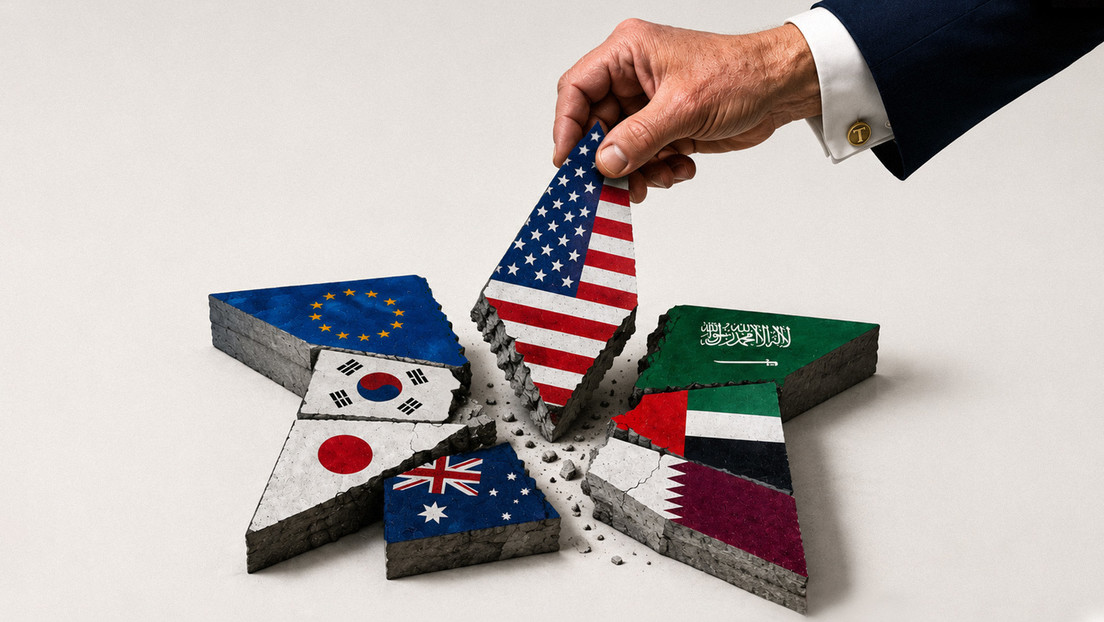
Cómo Trump pone a sus aliados contra las cuerdas en su guerra con Irán
From the military to the economic and diplomatic arenas, the Trump administration has spent months trying to force other countries with which Washington maintains good relations to cut their links with Tehran and join its offensive.
The latest and most forceful message came from U.S. Treasury Secretary Scott Bessent, who warned Thursday that countries will have to choose between backing Washington or facing its measures. The Administration is preparing a new sanctions package against Iran that, according to Bessent, will be the harshest in history and aims to deprive Tehran of the resources needed to continue resisting the U.S.
With the U.S. or against the U.S.
The threat is not limited to Iran. Washington also intends to apply secondary sanctions against companies and countries that continue trading with Tehran, which could affect even nations that are formally U.S. partners. The strategy seeks to close the financial and commercial channels that still allow Iran to sell oil, receive foreign currency, and keep its economy afloat.
Trump had already used a pressure strategy against European and Asian allies when he considered they were not contributing sufficiently to U.S. objectives. Now, the war against Iran is turning those differences into a matter directly tied to foreign policy and security.
Europe and Asia under pressure
One example has been South Korea, which has become a target of U.S. pressure for its refusal to back demands related to Iran. Last week, Trump ordered a reduction in joint military exercises, citing his "very good relationship with Kim Jong-un," though he added that the South Korean president rejected his direct request to participate in the war against Iran.
In Europe, the confrontation with Trump is especially delicate. European governments are U.S. military allies and NATO members, but they are not rushing to fully join the U.S. campaign against Iran, given the additional economic, energy, and political costs in a conflict whose outcome remains uncertain.
Irritated by their refusal to provide assistance in the aggression against Iran, the U.S. president has repeatedly launched harsh criticisms of NATO, asserting that the Alliance was not only unnecessary but may have even hindered Washington's objectives.
The pressure also extends to the commercial realm. Washington wants to prevent third countries from maintaining business with Iran, especially in sectors related to oil and finance. For allied governments, this poses a dilemma: maintain their economic ties with Tehran and risk U.S. sanctions, or reduce them to avoid retaliation.
China occupies a particularly important place in this strategy. The Asian country is one of the main buyers of Iranian oil, and its cooperation would be essential for any U.S. attempt to economically strangle Tehran. Bessent has urged Beijing to cooperate, though China has rejected the logic of sanctions and has advocated for a diplomatic solution.
The Gulf between two fronts
But Washington is not only pressuring its Western allies. Middle Eastern countries are also receiving warnings and facing an increasingly uncomfortable situation.
Earlier this week, Trump threatened to bomb Oman, a U.S. ally that has tried to mediate for normalizing traffic through the Strait of Hormuz. The following day, the president posted a map with a circle around that waterway and its coastlines in Oman, the United Arab Emirates, and Iran, labeling them as "new U.S. territory."
Gulf states maintain close military ties with Washington, but at the same time they must coexist geographically with Iran and assume the risk of becoming potential targets of retaliation.
Saudi Arabia, the United Arab Emirates, Qatar, Kuwait, and other regional countries have a direct interest in preventing the war from turning into a permanent regional conflict. Though they seek to maintain U.S. protection, they do not want to be trapped in an open war with Tehran that could endanger their infrastructure, trade routes, and economies.
The problem for Trump is that the longer the conflict he ignited drags on, the harder it becomes for him to maintain a coalition of allies fully aligned with his own ambitions and with an unequivocal stance toward Iran.
Add new comment