
There Will Be a Runoff Election in Brazil
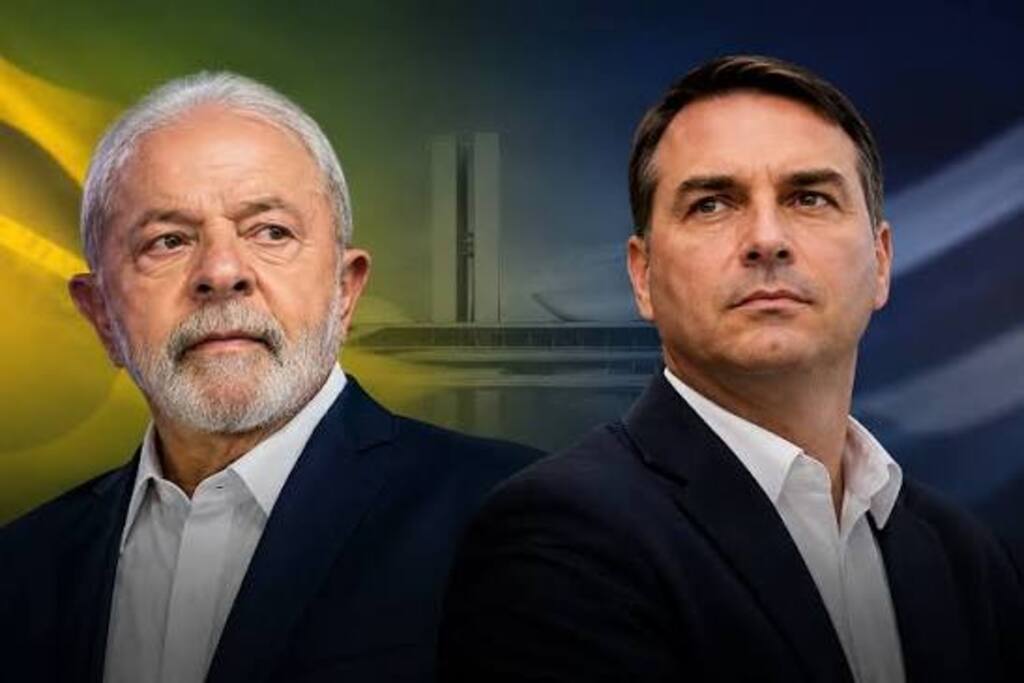
Projections for this Brazilian election were confirmed: incumbent President Luiz Inácio Lula da Silva will face right-wing Senator Flávio Bolsonaro in a runoff on October 25.
What was unexpected was the clear lead held by Bolsonaro.
With 99.99% of the votes counted, Bolsonaro finished first with 47.03% of valid votes—excluding blank or null ballots—while Lula garnered 45.16%, according to data from the Superior Electoral Court (TSE). The margin is approximately two million votes. Since neither candidate surpassed the required 50% of valid votes, the TSE confirmed the runoff.
Although a tight second round is anticipated, "historically, we have never seen a comeback in a Brazilian election runoff," political analyst Creomar de Souza told BBC News Brasil. "It’s a very, very difficult scenario for Lula," he explained.
Upon learning the results, the president stated that the outcome was unexpected and that he had been convinced he would win in the first round. He asserted: "No one but us can offer Brazilian society a future."
Bolsonaro, for his part, said in his initial statement that the figures signal "the end of the Workers' Party era"—the party led by the president.
With his seventh presidential bid, Luiz Inácio Lula da Silva puts to the test a legendary story that includes an infancy marked by extreme poverty, union struggles, years in prison, a triumphant return, the thwarting of a coup attempt, and a leading role in Latin America's trajectory.
At 80, the leader who lifted Brazil out of the "hunger map" faces the challenge of achieving an unprecedented turnaround this coming October 25th. His main adversary is Flávio Bolsonaro, the son of former President Jair Bolsonaro (2019–2022).
"The result is often unexpected," Lula declared at the start of his speech. "You never get everything you wanted. I confess I was convinced I would win the election in the first round," he admitted.
He alluded to Bolsonaro's dark background and indicated that his election campaign would kick off this Monday. "It is time to show the true image of the Brazil of today and the Brazil we want," he stated. At the end of his speech, he rallied his supporters: "We are going to win this election."
Lula's next electoral challenge puts to the test a legacy that positions him as one of the few remaining leftist presidents in the region—and one who has distanced himself from the occupant of the White House, Donald Trump.
In fact, weeks before the election, Lula confronted the U.S. president, accusing him of alleged electoral interference. Tensions have escalated, not only due to Trump's closeness to the Bolsonaro clan but also because of the tariff war the U.S. declared against Brazil—an issue that has become a key element of his campaign.
Brazil heads into this election just four years after suffering the most serious attempt to undermine its constitutional order since the end of the dictatorship. The contest between Luiz Inácio Lula da Silva and Flávio Bolsonaro pits two opposing worldviews against each other. The worst-case scenario would be an outcome that plunges the country back into authoritarianism, in a continent where the rising strength of the hard-right—aligned with Donald Trump—threatens to undermine the balance of power and the rule of law.
Lula is seeking a fourth term after returning to power in 2023 with a pledge to rebuild social policies, reduce inequality, and repair the damage done to institutions and social cohesion during the Jair Bolsonaro years. His administration can point to genuine social progress and historically low unemployment. And while simply positioning oneself as a bulwark against *Bolsonarismo* is not enough, the Americas and much of the world will be watching Brazil closely; the choice is stark, and the consequences will resonate far beyond its borders.
Flávio Bolsonaro presents himself as a more moderate version of his father, yet his candidacy is inseparable from the political project embodied by his family clan. Jair Bolsonaro is serving a 27-year, three-month sentence for the plot to prevent Lula from taking office following the 2022 election. The January 8, 2023, assault on the seats of the three branches of government demonstrated just how far contempt for democratic norms could lead.
Flávio Bolsonaro’s promise to pardon his father for those events turns that murky legacy into a central campaign issue, leaving no doubt about what is at stake in the runoff scheduled for October 25. The candidate also faces his own legal troubles: the Federal Police opened an investigation this year into alleged corruption and money laundering—accusations he dismisses as political persecution.
Facing a Trump administration that has strengthened ties with conservative governments and movements across Latin America—and revived the old imperialist "backyard" doctrine—Brazil serves as a crucial diplomatic counterweight. Squandering this influence and abandoning this role would be a mistake.
Lula, a symbol of global progressivism, has championed strategic autonomy and multilateralism—priorities that Bolsonaro’s son would sabotage in order to align with Trump. And, above all, there is the resilience of a democracy that, just four years ago, was subjected to an extraordinary test that must never be repeated.
Translated by Amilkal Labañino / CubaSí Translation Staff
Add new comment