
Solidarity with Cuba Takes On a Voice of Its Own in France
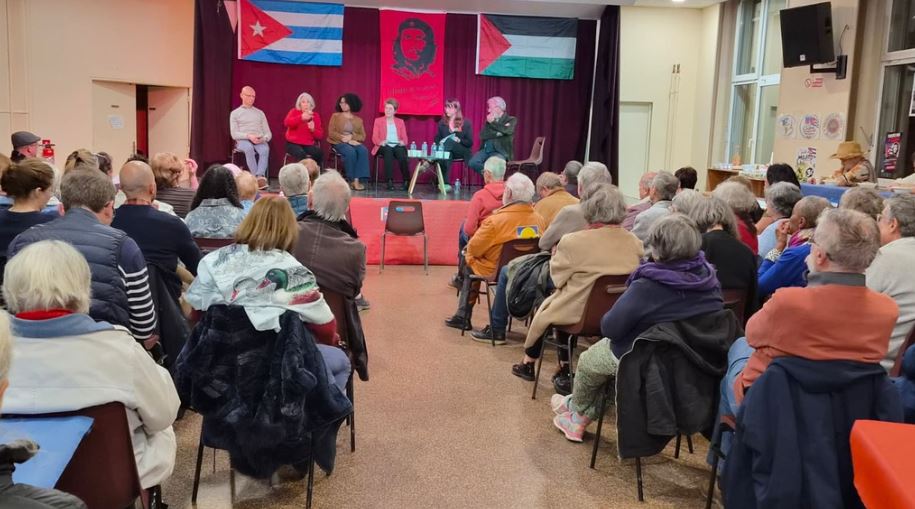
Governed by communist administrations since 1925, the Île-de-France commune served as an ideal backdrop to address the impact of the genocide policy of the Donald Trump administration against Cuba, the resistance of its people, and the ongoing international relief efforts.
During the event, which also featured remarks by Consul Alisbel Hecheverría, the President of Cuba Coopération France, Manuel Pascual, highlighted 20 years of collaboration with trade unions and organizations across the Paris region to improve water supplies on the island.
This project encompasses technical exchanges between Cuban and French specialists, knowledge transfers, and the delivery of specialized equipment for maintaining water networks and hydraulic infrastructure.
Additionally, Pascual noted agricultural initiatives to cultivate rice with minimal pesticide usage, along with industrial fruit and vegetable processing projects involving planned investments of up to 450,000 euros.
In the healthcare sector, he explained that the association has shipped pharmaceuticals and medical supplies, including laboratory equipment and preoperative materials.
Pascual described the challenges faced by Cuban hospitals—even during surgical procedures and childbirths—and advocated for maintaining cooperation projects despite banking and commercial hurdles.
For his part, Fabrice Leclerc, President of the association France Cuba, emphasized the shipment of one ton of medications within a single year through the so-called "solidarity suitcases," an initiative driven by Cuban residents in Europe and solidarity organizations.
The medications, selected according to priorities outlined by Cuban physicians, include analgesics and pediatric treatments, reaching the island via traveling volunteers.
Among the actions undertaken by France Cuba are the fitting of a dental office at the Havana Neuroscience Center, the delivery of diagnostic technology for ophthalmology, and the funding of solar panels and generators for hospitals.
Leclerc also mentioned "La Bandera," a project aimed at manufacturing medicines from medicinal plants to counter difficulties in importing certain pharmaceuticals.
Meanwhile, Olga Álvarez, representing the international solidarity team of French People's Relief (Secours Populaire Français), underscored her organization's commitment to Cuba since 1961 and announced a national program to fund and install 1,000 solar panels across the island.
The initiative, supported by public donations and fundraising activities in France, prioritizes hospitals, special education centers, scientific institutions, and facilities tied to food security.
Highlighting concrete outcomes, Álvarez pointed to the installation of 48 solar panels, 13 batteries, and an inverter—representing a 58,000-euro investment—at Cuba's primary poultry research institute.
Prior to receiving the equipment, blackouts had resulted in the loss of 12,000 incubating eggs. With the new system in place, the center can safeguard its scientific research and contribute to food production, she noted.
Similarly, solar panels were installed at a research facility focusing on neurodegenerative conditions like Parkinson's and Alzheimer's, ensuring that power outages do not interrupt ongoing studies.
The event, attended by Cuban residents and solidarity groups, also featured traditional Cuban food tastings and a rueda de casino dance session organized by members of the solidarity network.
Add new comment