
FROM SOCIAL MEDIA: What Whales “Say”
Whale leaping above the sea
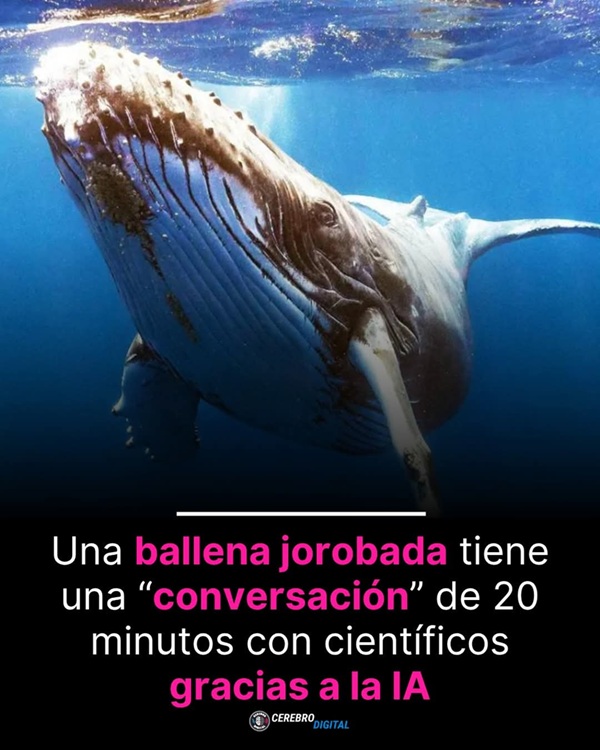
The fascination with whale song is not new, but this month, which is almost over, social media has amplified its impact on public opinion.
Texts, viral videos, and various audiovisual experiences have contributed to fueling curiosity about this topic.

Behind the phenomenon lies a real scientific experiment, conducted by researchers from the CETI Project (Cetacean Translation Initiative) and other entities.
According to scientific and journalistic reports, researchers played specific sounds—called “contact calls”—and a whale responded at the same time intervals for about 20 minutes, displaying a coordinated communication pattern.
Some media outlets have commented that this interaction could be considered a milestone in the study of animal communication, although it doesn't imply that humans can converse with whales in what our species understands as language.

The use of AI in these studies has drawn attention, and there is evident interest in these stories that reflects a certain combination of scientific fascination and technological expectation.
However, experts insist that whale language has not been translated and they have not conversed with humans; although coordinated responses to acoustic signals do exist.
Furthermore, recent research has shown that whales rely on sound to navigate, feed, and communicate, which explains why studying their vocalizations is crucial to understanding their behavior.
Messages Beneath the Waves
Whales possess one of the most complex communication systems in the animal kingdom. Scientific investigations of the humpback whale, in particular, have shown that their songs are composed of organized sequences A series of sounds, which are repeated and change over time, suggesting social learning and transmission between individuals.
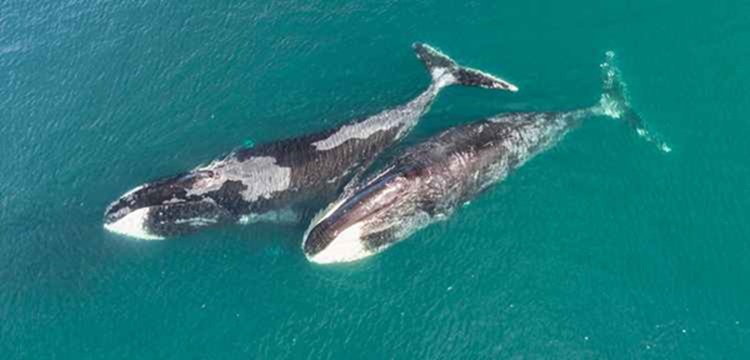
These results have been published in the scientific journal Science, where the hierarchical structure of whale songs is described.
Studies disseminated by the CETI Project also indicate that cetaceans use acoustic signals for specific functions, such as individual recognition, social coordination, and reproduction.
Clearly, whales are a topic of conversation; although, so far, they haven't been overflowing with words.
Translated by Amilkal Labañino / CubaSí Translation Staff
Add new comment