
Report Reveals Greater Damage at U.S. Bases from Iranian Attacks
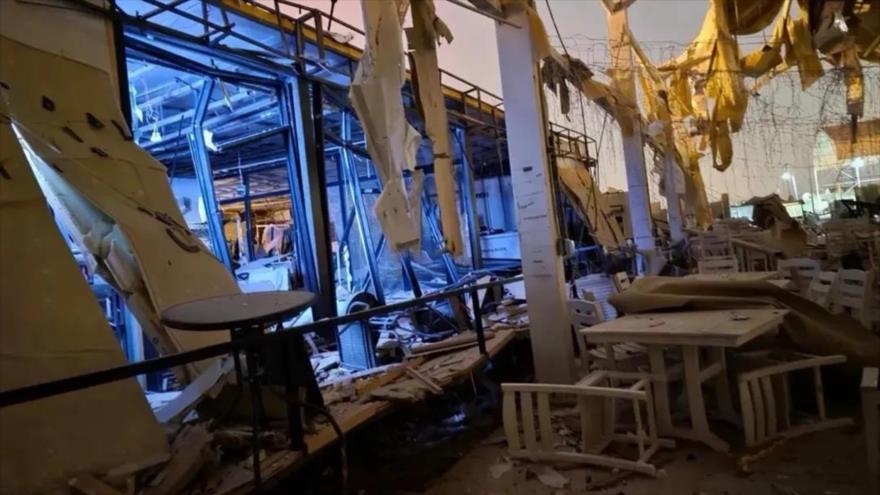
The U.S. outlet MeidasTouch, in coordination with its partner VALOR Media Network, has obtained dozens of unpublished photographs and videos showing damage at U.S. military facilities in Saudi Arabia, Jordan, Kuwait, the United Arab Emirates, and Bahrain, along with firsthand testimonies from people who were there.
The testimonies describe the damage suffered by military installations, the destruction of aircraft, attacks on barracks and dining halls, as well as the protective measures taken by soldiers and military family members in the face of Iranian missile launches.
When the United States went to war with Iran in late February, the American public received little information about what was happening to troops deployed at various points in West Asia. There were no journalists embedded in military units, details about casualties were known in dribs and drabs, and images of the damage suffered by U.S. bases were barely disseminated. Now, military personnel, civilian contractors, and soldiers' families are breaking their silence.
"The situation is much worse than people believe," one of the sources stated.
The sources spoke on condition of anonymity because, they explained, they had received repeated threats of disciplinary sanctions under the Uniform Code of Military Justice for speaking publicly or sharing images. The testimonies were compiled by VALOR Media correspondents, who delivered their notes and the images to MeidasTouch.
Some of the claims included in this report could not be independently verified, and the outlet has noted the cases where this occurs. The U.S. Department of War has not publicly confirmed several of the losses described below.
"This is not a normal deployment," several sources stated. They described a level of disorganization they had never witnessed before.
One military member recounted that he was mobilized in mid-February and received orders to depart immediately for a temporary mission that was initially supposed to last three weeks. However, once he arrived at the destination, he was told the stay would be extended to nearly three months. In the end, he remained there for more than seven months.
Several military members noted that they had no prior knowledge of the U.S. military aggression against Iran, despite some participating directly in it. They learned that hostilities had begun in the same way as most Americans: through the news.
"Unlike previous wars, the threat came almost exclusively from the sky: drones, rockets, and ballistic missiles launched by an enemy they could not see," one U.S. military member described the Iranian drones that attacked his base.
"You can't see them at night. They have no lights and are guided by GPS coordinates. They sound exactly like a Cessna light aircraft. If they fly at about 120 meters in altitude, they look like a large hawk. We had no defense against the drones," he added.
The images provided by U.S. military personnel and civilian contractors show severe damage at Prince Sultan Air Base in Saudi Arabia between March and July.
Since the United States and Israel launched a war of aggression against Iran in February 2026, U.S. bases in the region have been recurrent targets of retaliatory operations by the Iranian Armed Forces. These actions come after Tehran warned countries in the region not to allow their territories to be used to launch attacks against Iran.
More than 50,000 U.S. military personnel were deployed during the war against Iran. However, various reports indicate that the Pentagon has repeatedly avoided revealing the real casualty figures recorded during the conflict and has provided incomplete information about the costs of the war.
Add new comment