
Ray Cruz: Bringing History to the Screen with Discipline and Closeness
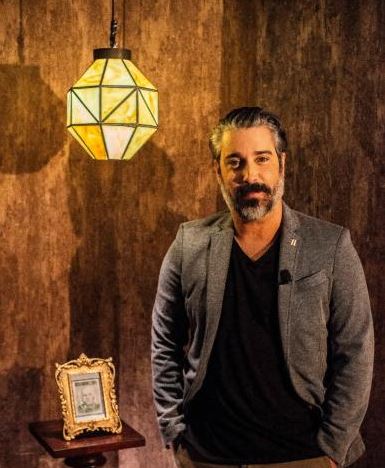
Ray Cruz is a multifaceted young man who recently finished filming the soap opera *Mujeres de café*. He is the same artist who has returned to the stage after a year-long hiatus, reprising the beloved lead role in the one-man show that defined his career—a piece inspired by Miguel Barnet’s short story *Fátima y el parque de la Fraternidad*. Audiences also see him every Saturday on *Pensando en 3D*, alongside Yaremis Pérez.
He never stops. Between social media, filming, and premieres, his schedule is packed; he has just wrapped up the fourth season of *Tomo I*, where he serves as host. That versatility defines him: an actor with an extensive track record, a television host, and a figure who moves naturally between fiction and cultural promotion.
On *Tomo I*, his voice and presence act as a bridge between history and the public, reaffirming that television can serve as an open, accessible classroom. Conversing with him is easy.
—During the week, we see you hosting two programs: *Pensando en 3D* and *Tomo I*. What motivated you to accept the hosting role for *Tomo I*? How do you manage to distinguish between the two shows?
—What made me decide to accept *Tomo I* was the production team. It’s the same team behind *Pensando en 3D*: director Ernesto Bosch and Petricor Producciones. Working with them is very easy for me. When they pitched the idea for *Tomo I*, I didn’t think twice. With that team, I’d go to the ends of the earth. And once they told me about the project itself, I didn’t have the slightest doubt. I have absolutely no regrets because it’s been very well-received—something that doesn’t usually happen with this sort of programs.
—Considering the visual style, the delivery, and the content, would you consider the host of *Tomo I* to be a character in his own right?
—Absolutely. I approach the role of the *Tomo I* host as a character. In *Pensando en 3D*, I’m just myself—alongside Yaremis—and it feels like being comfortably at home. In *Tomo I*, without falling into the cliché of the solemnity often associated with history programs, I look for a different way of speaking: more measured, calmer. The late-night time slot plays a role, too, because the audience is different, and you have to keep that in mind.
—Eduardo Vázquez writes the script for *Tomo I*, but you’re the one delivering it on camera. How do you handle the bridge between the written text and the way you convey it to the audience?
—I try to make it my own. Sometimes we tweak Eduardo Vázquez’s text to make it more accessible and understandable for the audience. It’s great that the writer gives you the freedom to decide how to say the lines. With the team I mentioned, everything becomes much easier. Plus, the way the program is designed really helps me—thanks to the editing cuts and what we can achieve with technology.
—Even though you’re young, you already have an extensive career across various media. What have you personally learned from hosting a show dedicated to the history of Cuba?
—I’ve learned a huge amount. The topics we cover aren’t the ones typically found in history books, which is fantastic for both me and the team; while we’re filming, we’re constantly discovering new stories, figures, and facts. That is very motivating. It has taught me discipline and respect for historical memory. Each episode reminds me that behind the dates and names lie real lives, and that commits me to conveying the story honestly.
Ray’s extensive career has spanned theater, film, and television, where he has played characters as diverse as Lieutenant Sergio in *LCB: La otra guerra* and the mortician Miguelito in *Al habla con los muertos*. His ability to shift between dramatic, comedic, and educational registers has made him a familiar and trusted face to the public.
—The soap opera *Entrega*, where you played Professor Manuel, comes to mind. Is there any lesson from that fictional role that you apply now as the real-life host of *Tomo I*?
—Professor Manuel from *Entrega* has always stayed with me and served as a reference point for *Tomo I*. I played him for nearly a year while filming the soap opera, and he is always very close to me. I think that has also been beneficial when it comes to hosting the program. People subconsciously see me as Professor Manuel, and that is ...a step forward in bringing history to the audience.
Without a doubt, *Tomo I* serves as both a classroom and a stage: the discipline of historical knowledge merges with the freshness of television storytelling. Ray Cruz’s ability to juggle multiple projects and characters without ever losing authenticity largely explains the impact of *Tomo I*.
His presence showcases his acting versatility and serves as a key asset: he makes history feel personal and accessible—maintaining a measured, reflective tone without sacrificing rigor. His ability to adapt to different formats and audiences boosts visibility and adds significant value to a program dedicated to bringing Cuban history to a diverse public.
Audiences recognize him both for his fictional roles and his current role as a historical guide, which reinforces the program's credibility and expands its reach. With Ray acting as a bridge between Eduardo Vázquez’s script and the viewers, *Tomo I* reaffirms that television can be an open classroom—a place where history is told with emotion and experienced in the present.
Translated by Amilkal Labañino / CubaSí Translation Staff
Add new comment