
The “Polish” Future of the Transition According to Mr. Rubio
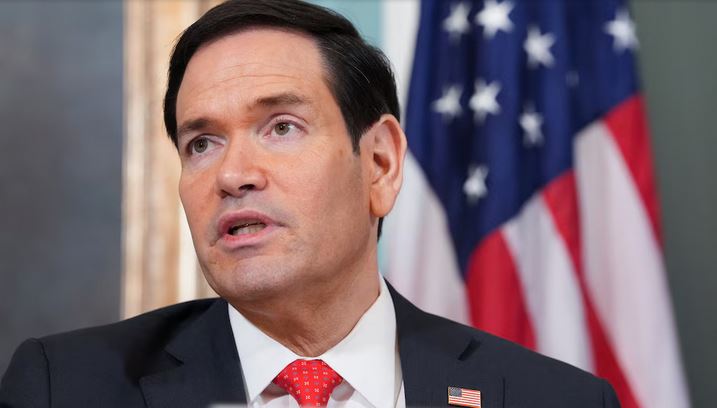
The suggestive title, about a hypothetical transition in Cuba, something like a passage into the unknown, allows us to review Mr. Rubio's outdated vision, not only of the rebellious island, but in general of political processes in the world, which, strictly speaking, operate quite outside the narrow cosmogony of the Secretary.
Now Mr. Rubio has decided to reiterate the inevitability of the aforementioned transition in the current "Castroist" Cuba—as they call it—as a return to the neocolonial status the island held until January 1, 1959. Of course, the Trumpian foreign minister doesn't say that; he's not that stupid. And the scheme he recommends, and hopes to impose, is like what happened in Poland after the fall of so-called real socialism.
So, it may seem "curious" the type of transitional model that the State Department is managing/speculating about, whose true purpose isn't even Cuba, but rather limited to electoral gain—a tall tale aimed at Trumpian voters of Cuban origin, and a few other far-right specimens who rub shoulders with them in South Florida.
The disappearance of “real” socialism in Poland, in an attempt to return to a previous mode of production—capitalism—occurred within a First World context, closely resembling the Nordic models, to be more precise. This circumstantial argument alone, geopolitically very different from that of Cuba, would invalidate Mr. Rubio's recommendation. But that's not all.
The imperial Secretary of State could easily ask a subordinate with a passion for history—and he surely has one—to explain the “transition” in the “model” country and the tortuous path it had to traverse when it abandoned the political philosophy of the greatest possible social justice, implicit in the socialist model, and embraced capitalism. Even within First World society, it took the Poles no less than a decade to even begin to match some of the social achievements of socialism, with approaches that more closely resembled the European social democracy of the time.
Most scholars of this process agree in characterizing this "step backward" as a period of shock therapy, marked by the loss of rights, the deepening and legitimization of wealth concentration, and the virtual paralysis of the economy—all of which inevitably generated corresponding social consequences.
For example, in the area of health, Poland experienced a decline in several indicators, such as life expectancy at birth and infant mortality. Simultaneously, there was also an increase in tuberculosis, cardiovascular mortality, and the suicide rate, both associated with what was termed psychosocial stress, caused by a wave of "massive and sudden" unemployment and the elimination of subsidies for basic food items. Healthcare services ceased to be entirely free and, according to experts, still suffer from staffing and funding problems. In short.
Regarding the education system, basic education remained free, unlike universities, some of which were privatized, creating competition with the remaining public institutions. Given the differences in quality between the privatized and public universities, as well as the pressing need for many young students to work, a socioeconomic barrier emerged that did not exist during the socialist era.
And a revealing "curiosity": unlike during the socialist period, with its collapse, Polish women began earning, on average, 15% less than men. Why? Well, welcome to capitalism is the only explanation, because paradoxically, women make up the majority of university graduates, while their presence in political positions and corporate leadership is low. Let's not even mention the realm of reproductive rights, which has become a constant source of conflict regarding issues such as abortion and others.
In these processes, there’s an aspect of the matter that could be particularly dangerous for Cubans, should anyone believe or apply Mr. Rubio's ideas. It concerns the rise of organized crime in Poland during transit. Statistics show a geometric increase in common crime and corruption linked to the privatization of state assets "among friends," as well as local mafias, some with international reach.
In Poland, under the protection of "new capitalism," groups like the Pruszków mafia (primarily based in the capital) emerged, gaining not only from alcohol and drug trafficking, but also from extortion or taxes levied on merchants, known as haraz, as well as large-scale human trafficking (prostitutes) to Western Europe, masked by a massive increase in migration flows there.
Reflecting on the true and spurious interests that Mr. Rubio represents, this type of consequence associated with the transition—the development of a mafia in Cuban territory—could well be one of the main aspirations for Cuba that these sectors hold. Let's not forget that when Batista and his gang of criminals "emigrated," among many other things, a colossal and, in the long run, "excellent" business deal with the American mafia, through "the Godfather," if you understand the concept, was interrupted.
Thus, the neo-Batistas, “legitimately” intend to revive the scheme with significant advantages, as was already envisioned in Cuba in the 1950s. That is, to establish a thriving “enterprise” of drug trafficking, prostitution, casinos, and who knows what else, just 90 miles from Florida, with the huge advantage of operating outside the formal jurisdiction of U.S. authorities. To traffic, extort, and poison Cuban and American society without the DEA or FBI interfering, or even in opaque collusion with these structures. What could possibly go wrong?
It’s no coincidence that various U.S. experts on this matter of organized crime insist that, despite everything, the existing “regime” in Cuba remains the best option for security in the Caribbean, according to successive evaluations by the Pentagon and various U.S. security services.
Amid the fluctuations in the degree and quality of bilateral relations between Cuba and the U.S., at least until 2025 And since 1990, the relevant Cuban authorities have provided more than 1,500 leads on drug trafficking to their counterparts in the United States; just ask Barry McCaffrey, the so-called drug czar during the Clinton administration, who repeatedly praised the Cuban government's efforts in this area.
There’s a revealing, surprising fact for US strategists, beyond Mr. Rubio and his narrative: the Global Organized Crime Index, funded by the US government, ranks Cuba 168th out of 193 countries audited in terms of crime. Meanwhile, Haiti is in 35th place and Jamaica in 53rd, to name just two examples of islands in similar geographical locations. Not to mention the US, the paradigm according to President Trump, which ranks 60th.
Poland, moreover, needed billions of dollars in financial aid to get out of the quagmire, especially from the European Union, eager to strengthen its area of influence and to “recover” for their oligarchies an immense economic space, thousands of kilometers that had previously been off-limits due to “communism.” And this could also be seen as an example of Cuba.
For instance, during the transition period, Poland received 266.9 billion euros (as of the end of 2023), particularly since 2004, when the country was admitted to the European Union. This last point is very relevant to understanding or imagining what kind of “aid” scheme would be appropriate for Cuba, a country with a medium level of economic development below Poland's.
Would the US contribute anything substantial beyond philanthropic, almost symbolic, aid packages? Highly improbable, since they would limit themselves to acquiring/occupying land, industrial plants, mines, etc., etc., but for themselves. Make no mistake, after waiting more than 60 years, they would be “magnanimous” with the Cubans if they manage to defeat The Revolution.
Those who believe that, in the process, invaders will solve the energy problems, to mention just one pressing issue, then why haven't they done so in Puerto Rico, for example, a subordinate colonial territory? Much less health and education for all, or affordable public transportation, and so on ad infinitum.
Regardless of what happened in Poland, another terrifying aspect could be added for Cuba. Yes, because if the US Marines were to invade, as Mr. Rubio and the Miami gang want, this would provoke a conflict of virtual and permanent civil war; the invaders would at least have to resort to a kind of Pinochet-style dictatorship, after all, advised by the CIA in his atrocities against humanity. Is that what Mr. Rubio is referring to in his dreamlike way when he speaks of a transition in Cuba?
In short, socialism in Poland, according to historians, was something of an import, after the heroic victory of the Soviet people in the Second World War. But obviously, in Cuban-style socialism arrived hand in hand with an entire people, challenged by the history of being the last place to achieve independence from Spanish colonialism, but the first to free itself from US imperialism. Thus, socialism in Cuba equals full sovereignty.
The Trump-aligned foreign minister, stuck in his enormous shoes, a gift, as we know, from President Trump, proposes and promises something utterly unfeasible. It's not just about enormous ideological differences, or his "logical" hatred of the Cuban Revolution, from which he has lived and aspires to live forever; it's not even a political matter. It's that you can't control and occupy the sun, the king of stars, or the moral sun that Cuba represents.
Translated by Amilkal Labañino / CubaSí Translation Staff
Add new comment