
Perugorría and Mirtha Ibarra Bring 'Neurótica anónima' to Málaga, a Love Letter to Cuban Cinema
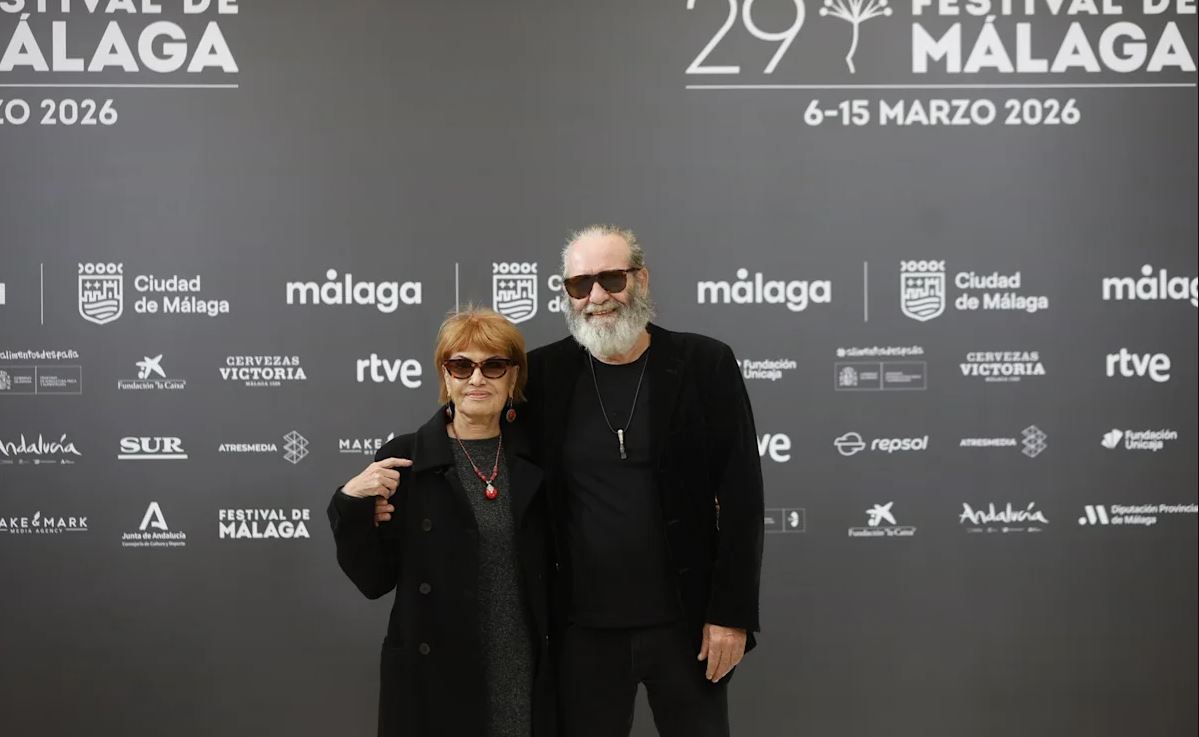
Mirtha Ibarra y Jorge Perugorría en el Festival de Cine de Málaga. Foto EFE
Cuban actor and director Jorge Perugorría and his compatriot actress Mirtha Ibarra presented Neurótica Anónima this Sunday at the Málaga Film Festival in Spain — a film that serves as "a tribute to Cuban cinema" and to its years of splendor, from the 1960s through the 1990s, when it stood as a benchmark for the Latin American film industry.
"This film was born out of the passion and determination of this beloved actress," said Perugorría, referring to Ibarra, during the press conference presenting the film. The feature will compete in the festival's official selection alongside 21 other entries, nine of which come from Latin America.
Neurótica Anónima, a Mexico-Cuba co-production already released on the island, is the cinematic adaptation of a stage play of the same name written and performed by the Cuban actress ten years ago alongside actor Joel Angelino, who also appears in the film.
"I realized that once you reach a certain age, you stop getting called — not even for the role of an aunt, a grandmother, or a mother. So I decided I had to create my own work, and since I didn't feel like doing theater, I adapted it for the screen," Ibarra explained. She noted that before approaching Perugorría, she had offered the project to another director: "but he got another commitment and dropped out."
"I called Jorge, and he took on the script, gave it a different dimension, and I am very pleased with what he did," the actress added.
Perugorría expressed his admiration for the character played by Ibarra — Iluminada — stating that he "tailored the role specifically to Mirtha." The director described the film's central conflict: the protagonist, a frustrated aspiring actress who becomes an usher at a neighborhood movie theater in Cuba, fights to prevent its closure.
Throughout the story — in which other characters, including Angelino's, serve as reflections of Cuban society — classic films appear, among them Amarcord, The Dark Side of the Heart, Psycho, and Modern Times. The film also includes brief cameos, such as that of Puerto Rican actor Benicio del Toro, seen sitting along the Havana seawall.
"It is a love story — a love for cinema and for the remarkable moment Cuban cinema experienced from the 1960s to the 1990s, when Cuba was the center of Latin American filmmaking, and for the significance that the Latin American Film Festival in Cuba held during that era," said Perugorría.
Culture and Freedom
Ibarra also highlighted the film's portrayal of women's struggles against machismo, reflected in her character's relationship with her husband — an alcoholic man she loves but cannot live with.
She also underscored the vital role of culture in people's lives. "Cinema belongs to the people. The more cultured you are, the freer you are. Without culture, people can be deceived without any difficulty — and we are witnessing that every day. We are living through the worst moment of my life from a social standpoint," she stated.
For his part, Angelino emphasized the film's limited budget, noting it was made "with great enthusiasm" despite being shot last August in Havana amid sweltering heat.
"It was very tough," Ibarra added, noting that she contracted chikungunya during production and is still dealing with its effects. "But afterward, you feel such satisfaction that you forget all the hard work," she concluded.
Add new comment