
Peru: Stormy Times
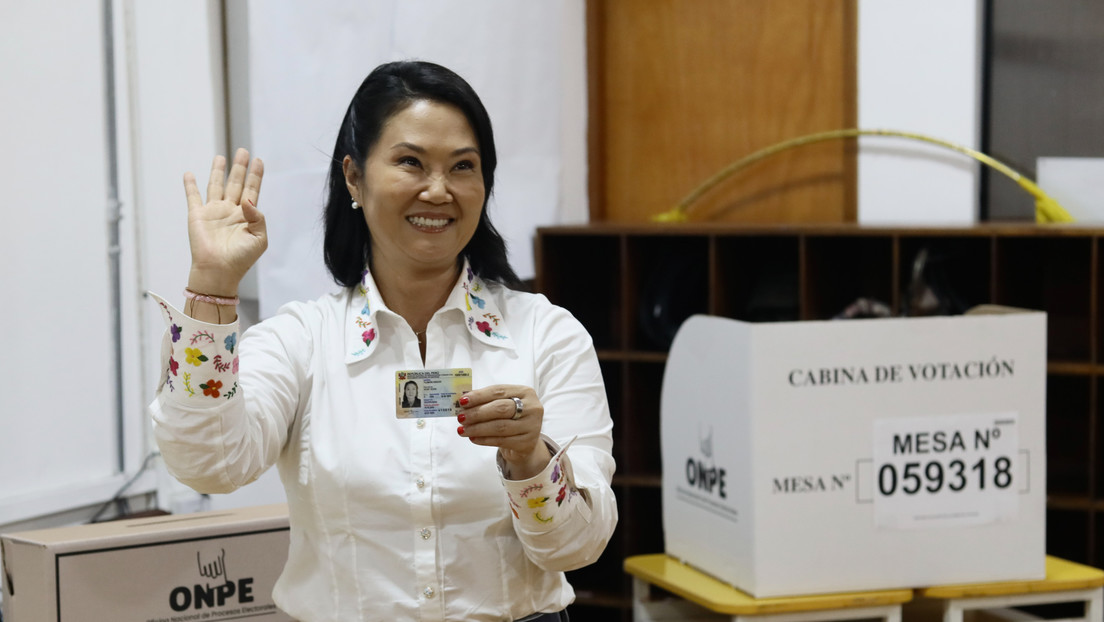
Stormy times are ravaging a Peru severely battered politically and socially, though not economically, with some thriving sectors that, unfortunately, are far from reaching the most disadvantaged.
In this context, the arrival of a president who emphasizes military power to confront the consequences of so many years of social neglect stands out, while her foreign policy approach could not be more reactionary, with total alignment with the policies of US President Donald Trump.
Thus, the woman who claims to maintain her own policy, without subordination to anyone, revealed this Saturday that she spoke with US Secretary of State Marco Rubio to convey her request to join the Shield of the Americas security initiative, launched in March by the US government, comprised of the majority of reactionary governments in the region, to cover up imperialist crimes and serve as instruments for hegemonic media to eliminate public ownership for the benefit of oligarchs and foreign capital, primarily American.
Defending the indefensible, the president tried to make people believe that the “Shield of the Americas” seeks to unite the efforts of countries confronting organized crime and drug trafficking, and aims to share information. “Because we understand that these scourges and these kinds of evils don't respect borders; on the contrary, they invade continents, and that's why Peru would like to participate.”
She failed to mention that all of these regimes, absolutely all of them, supported the United States' military aggression against Venezuela, stand idly by while alleged drug traffickers—many of them demonstrably fishermen—are killed in the sinking of boats in the Caribbean and the Pacific, and look favorably upon the unleashing of U.S. military power against an increasingly blockaded Cuba, which it tries to suffocate in various ways.
I don't know if Keiko, following in the footsteps of other governments subservient to Washington, will break relations with Cuba, a nation she visited as a young woman alongside her father, Alberto Fujimori, while serving as First Lady. There, she embraced and kissed our Commander-in-Chief and spent what she described as very pleasant moments.
CONSIDERATION
The inauguration of Keiko, 51, in elections marked by doubt, signals a turning point in the Andean nation, where crime is rampant and some sectors fear a return to the dark past of the Fujimori dictatorship.
With fewer than 50,000 votes separating them and after a protracted recount, Fujimori won the second round of voting against the leftist Roberto Sánchez. However, in an unprecedented event, even in Latin America, he lost the national election.
With all the ballots counted, Sánchez received approximately 32,000 more votes than the new Peruvian president. The difference? The Japanese-born politician swept the overseas vote. Her fellow citizens abroad propelled her to victory with 63% of the vote, although this was somewhat overshadowed by the fact that the Foreign Ministry, not the National Electoral Board, controlled the transfer of ballots.
"The country is divided," political analyst José Carlos Requena told Russia Today. "There is a significant segment of the population that opposed her, a segment that is generally apathetic toward politics," he asserted.
There are examples that reflect this. In the Puno region, bordering Bolivia, Sánchez won decisively with 86% of the vote, while Fujimori garnered 13%. In Ayacucho, although the leftist candidate fell short of expectations, he still secured 79%, followed by the right-wing candidate with 20%.
These are two regions deeply marked by the massive protests of late 2022 and early 2023, which resulted in dozens of deaths due to state repression. "Keiko Fujimori will inherit a country burdened by the many liabilities of these 10 years of political instability," Requena observes.
CASTILLO AND HUMALA
Keiko has emphasized that she will not pardon former president Pedro Castillo, who is serving an eleven-year prison sentence, accused of attempting a coup and corruption, charges for which there is no evidence.
The president stated that she will only pardon Castillo if he experiences serious health problems, for humanitarian reasons.
Fortunately, the newly elected president was not involved and could not obstruct the recent release of another former president, Ollanta Humala, who declared, before entering his home in Lima after leaving Barbadillo prison, that he, his wife, Nadine Heredia, and his closest circle in the Peruvian Nationalist Party were "persecuted for our ideology," which shifted toward the center-left during his presidency.
"These hitmen, the armed wing of the Public Prosecutor's Office, the Lava Jato Special Team, usurped the functions of the Judiciary," the former president stated, referring to the prosecutors in charge of investigating the alleged irregular financing of his campaigns with contributions from the Brazilian company Odebrecht.
The former president reiterated that he never received campaign contributions and that this case "is the flagship case because the other cases (opened against him) are also related to Brazilian companies," such as the investigations into the Construction Club, the Southern Gas Pipeline, and the Olmos irrigation project. However, the former head of state assured that he will face all of these ongoing legal proceedings.
"The Constitutional Court's ruling demonstrates that the decision to grant political asylum to my wife and son was the right one," Humala stated regarding his request to Brazil, where the former first lady has been living since last year with their youngest child. In that regard, he expressed his hope that "the justice system will reconsider and allow my wife to return" to Peru, given that annulling the case would also free Heredia from the charges against her.
The former president added that the Nationalist Party, which he founded with his wife, has also been "criminalized," and stated that "the State owes us an apology."
“On April 15 of last year, I was kidnapped by the State (…) They needed to persecute us because of our administration, because of our political ideology (…) There must be justice for this situation. They will not defeat us,” he emphasized.
Humala had been in prison since April 2015, when he was convicted of money laundering in a case that the Constitutional Court has now ruled illegal, considering that the money laundering charge lacked merit, EFE reported.
MANU MILITARI
Keiko Fujimori's main challenge will be combating organized crime, particularly extortion, which has spread throughout almost all of Peru. Reports of this crime rose from 2,421 in 2019 to 26,734 in 2025.
Extortion is crippling the economy of thousands of small businesses, which are threatened with attacks using explosives or arson. It has also claimed the lives of 239 transport workers in 2025, primarily motorcycle taxi drivers operating in the poorest areas.
The political opposition has made a series of demands of Fujimori, including the repeal of a set of laws passed by the previous Fujimori-led Congress, which, according to experts, weaken the fight against organized crime.
These laws eliminate pretrial detention in cases where no crime is committed, prevent the prosecution of political parties as criminal groups, raise the requirements for confiscating assets from criminal groups, and hinder effective cooperation and raids.
The conservative leader promised during her campaign to confront crime with an “iron fist,” following the model of Salvadoran President Nayib Bukele. She has also stated that she will build a prison similar to El Salvador’s Terrorism Confinement Center and implement masked judges, as occurred during her father’s administration.
The opposition has also requested a commission to investigate the deaths of 50 civilians at the hands of security forces during the 2022 and 2023 protests demanding new elections, which arose after the impeachment of then-President Pedro Castillo (2021-2022).
The families of those killed in the protests do not recognize Fujimori as president and protested before her inauguration. Milagros Samillán, sister of one of the 50 civilians killed, told the press that they consider Fujimori responsible for protecting the then President Dina Boluarte, Castillo's successor, is also being referred to as the "daughter of a dictator" who violated human rights.
The families washed red and white Peruvian flags. "Justice is far from us; today we wash the flag in memory of these martyrs," said Samillán, sister of Marco Samillán, a medical student killed in 2023 by security forces while helping wounded protesters.
She added, "Keiko Fujimori does not represent us; she is not our president. We wash the flag that should be clean, but it remains stained with blood, injustice, corruption, and impunity."
Translated by Amilkal Labañino / CubaSí Translation Staff
Add new comment