
The Perfect Storm?
The term "perfect storm" naturally originates in meteorology; it is said to have been used for the first time in 1991 by a specialist from the US National Weather Service to describe a uniquely catastrophic phenomenon—specifically, the event that occurred in October of that year, when a hurricane, a cold front, and what was termed an extratropical low-pressure system converged. That phenomenon passed through Havana, causing massive devastation.
Why bring this up? Because, as is well known, the label "perfect storm" has also been applied to extreme, critical situations in the realm of politics.
In the US, guess when this metaphor was first used to describe a situation that completely entangled a president's affairs? That’s right: it was during Trump’s first term. In that fateful year of 2020, the occupant of the White House was under pressure from a health crisis—COVID-19—which was (as usual) poorly managed and led to an economic recession. Meanwhile, true to his "politically incorrect" style, Trump sparked yet another crisis: the deep political polarization of society. Ultimately, this 2020 "perfect storm" cost him his re-election.
With the upcoming US midterm elections scheduled for Tuesday, November 3, 2026, it’s worth determining whether Trump is once again facing a "perfect storm"—one that, by all indications, will cost the Republicans control of Congress. It’s therefore appreciated to identify the "hurricanes," "cold fronts," and "low-pressure systems"—to use meteorological lingo—that would trigger a major political crisis.
The war against Iran. This can well be compared to the impact of COVID-19, though—strictly speaking—magnified in terms of content and long-term scope.
Beyond the figures—which are, of course, highly significant—the consequences of the US being obviously and rapidly outmatched militarily (and potentially expelled) from this region of West Asia marks a before and after in the global geopolitical landscape. This defeat by Iran undermines imperial hegemonic ambitions and erodes the confidence that allied states in the region once placed in the US as a protector against any threat. Furthermore—and crucially—the highly probable shift in the balance of power in this unique part of the world is already impacting the vital hydrocarbon industry and trade.
Indeed, as the saying goes, the empire has no interest in winning and ending a war; rather, it seeks to prolong it. Ultimately, "forever wars" are the motivation—the engine—driving that country's economy. Yet therein lies the problem—a structural one, essentially—because, broadly speaking, it is nearly impossible for the US to sustain this conflict.
This applies not only from a financial standpoint—representing another of the "hurricanes" or crises currently unfolding—but also regarding something as fundamental as actual military capabilities. This ranges from a perilous depletion of missile stockpiles—jeopardizing the defense of national territory—to the fact that the conflict has exposed the growing vulnerability of military assets once considered formidable and nearly indestructible, such as aircraft carriers, the famous F-35 stealth fighters, and the exorbitantly expensive Patriot missiles, among many others.
Ultimately, the US-Zionist aggression against the Persian nation can already be recorded in the annals of contemporary US history as one of the empire's most absurd strategic blunders—compounded by the conflict's manifest and growing unpopularity among the American public.
The economic consequences of this war, now approaching its 200th day, represent yet another negative factor for the US situation. The closure of the Strait of Hormuz—and potentially the Bab al-Mandab Strait—by the Houthis severely disrupts the international flow of fuel; and, as goes without saying, more war in Iran simply means higher gasoline or diesel prices at US service stations. Diesel, in particular, is already nearing $7 per gallon—an "astronomical" figure for most American budgets—while also triggering a ripple effect that drives up the cost of transporting goods of all kinds.
The reaction to the rise in diesel prices was swift; there is in the networks a call from American truckers to start a strike on October 1, demanding that diesel prices drop to around 2.5 USD per gallon, something materially impossible.
And of course, inflation is the figure that best expresses the consequences of these increases. For example, from January 2025 to current September, fuel prices increased by 39% (diesel, up to 69%), various foods, between 8 and 20%, including baby food, above 7.9%; health expenses, 13%, etc. Rounding up, above 3% year-on-year inflation.
The situation in the imperial financial ecosystem is another component of the “perfect storm”; It's like two or three cyclones at the same time. For a brief note: record federal debt, which increases by 6 billion USD daily, and has already exceeded the symbolic figure of 40 trillion USD, a number large enough that it barely fits in one line.
The symbolic term is not a concept said at random, since the problem has already flooded the treasury bond market with uncertainty, which sees its value fall, forcing the US government to raise interest rates, which results, in a vicious circle, in the increase in debt and makes government financing more complex. If anyone finds a way to address this problem, then they should be nominated for the Nobel Prize in Economics in 2027.
Then comes the issue of how to combat inflation, mentioned above; How do they usually do it? Well, the FED (the Federal Reserve, a type of central but private bank) raises interest rates, with particular effect on the various consumer credit mechanisms. This will automatically impact approximately 46% of the population (working and middle class) who depend on their credit cards, especially to purchase food, services and health (“essential needs”). Hours after this increase, the FED admitted that it foresees other increases, a week before the elections. It is recommended to preserve this data, because the vast majority of these people are voters.
The above data would be incomplete without mentioning, at least in passing, the hundreds of thousands of people who were left without various support programs, for example health coverage, after the Republicans approved cuts of about a billion USD in the Medicaid and Medicare programs and in the Health Care law.
As has been said so many times, in politics being poor is not the same as becoming impoverished, and as already explained regarding the unpopularity of the war in West Asia, the blame for the socio-economic situation also has the same label, Trump and the Republicans.
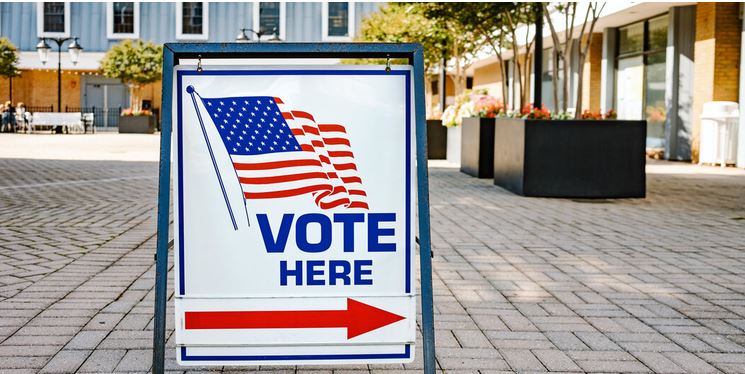
In specifically electoral matters, when the so-called early voting began on September 18, the polls simply reflect the repudiation of Democrats and independents and the growing frustration of Republicans with the Republican ruling party.
To illustrate: according to the very “Trumpist” Fox News, up to 75% evaluate the country's economic reality negatively; in accordance with the above, only 8% were enthusiastic about the government's management, while 63% are dissatisfied, and 33% declare themselves “absolutely angry.”
In general, all measurements of the state of opinion agree on the sustained decline in the president's popularity, the importance of this for Republicans is already known, and the increase in vote preferences for Democratic candidates, with an average advantage of between 5 and 7 percentage points (Fox News survey), even in historically Republican states such as Texas, and to a certain extent Florida.
At this point, it’s worth referring to the Latino vote, an issue that has a “first cousin,” the repressive policy against immigration. In this case another insolvent contradiction appears. Expelling “criminal” immigrants was and continues to be one of the “attractions” of Trumpism, before a mass of voters who influenced the 2024 results.
But in parallel, the aggressive, fascist way applied to meet certain deportation goals ended up making this policy unpopular, of course among Latinos, including those who are in favor of removing other “criminal” immigrants, according to the Trumpist narrative, but reject the vast majority of the methods used by ICE. Once again the figures say it all, from January 2025 to date, Trump lost no less than 40 points of support among this community.
Another critical situation arises from this aspect, another cyclone, if we speak in meteorological language. Consistent with the theme of abhorring “undesirable” immigrants, Trump engaged in a legal battle to prohibit voting by mail, a practice that has been around for many years, and in general responds to the historical logic that since voting is always on a Tuesday, a solution was wanted so that everyone working on a schedule could vote.
In addition to the above, the White House, also within the scheme against immigrants, threatened to send ICE personnel, armed as expected, to prowl around the polling stations. This certainly generated a great stir; it’s said that something like this had not been seen since the civil war of the last 19th century. If this had prospered, it would represent an obvious obstacle to guaranteeing the free participation of many citizens in the vote, especially Latinos, even without being Latino but who seem to be, due to absurd racial assessments.
The Supreme Court of Justice, markedly conservative, however, decided that voting by mail continues, and Trump, well, threw a corresponding tantrum. But this attitude, from the high court itself, exposes the climate within the ruling party, where more or less strident dissidence appears every day, quite an issue.
Actually, listing all the misdeeds that the president tries to apply in order to prevent a defeat requires an inventory. Just mention, as a kind of corollary, Trump's statements at the Republican convention, recently held in Denver. There he promised to send each adult a check for 5 thousand dollars, if the Republicans won, with a clear whiff of an attempt to buy votes, otherwise monetarily unviable; Lastly, most picturesquely, he asked those present to cheat.
Not satisfied with so much mess, Trump's latest was to ban the access of three major media outlets to the White House, CNN, MS Now and Politico. They say that it violates the “freedom of the press”, in this case of the magnates who own those media, who are affected by the “freedom of business”, in that country, something actually worse. In solidarity, other major networks announced that they will not cover the president's press conferences; ABC, CBS, NBC and even Fox News joined the boycott. What is the point, in the middle of an electoral campaign, of this fight with the main press networks? Only Trump can explain it.
Sorry, it was almost forgotten: the Epstein files, a cry of condemnation, which strikes the conscience of every ultra-conservative believer who at the time had any sympathy for Trump, forming, if you will, one of his most faithful bases. How will they behave now? Will the hectic anti-communist campaign, in electoral mode, promoted especially by Marco Antonio Rubio García and company, influence them?
The socio-economic and certainly political environment, in the midst of the electoral process, cannot reasonably be worse for Trump. A perfect storm? We will see, but without a doubt Trumpism will not emerge unscathed, much less unscathed, from this situation.
And as if to open the topic, leave a question: How will this “climate situation”, eventually disastrous, impact the rest of the international ultra-right for the supposed universal leader of that political current? Of special interest in Latin America.
Beyond elections, it’s noticeable that Trump's “perfect storm” can affect the strategic thinking of the plutocracy, the one in charge, which placed Trump in the White House to do exactly the opposite, that is, to guarantee that the United States continues to be the empire as it has been until now, not to squander in just 2 years, what was sold as the political option to save it.
And if there is any doubt about the “legitimate concern” of US owners, you can go back to the Fox News poll. It offers a very surprising fact: 57% indicated that “the functioning of capitalism in the US” does not offer equal opportunities, a figure that rose from the 42% who already believed in that truism truth, in 2019. Well, it seems that yes, even the American people are beginning to visualize that the perfect storm does exist, and that there is no way to hide its aftereffects.
Translated by Amilkal Labañino / CubaSí Translation Staff
Add new comment