
Peace in Iran?
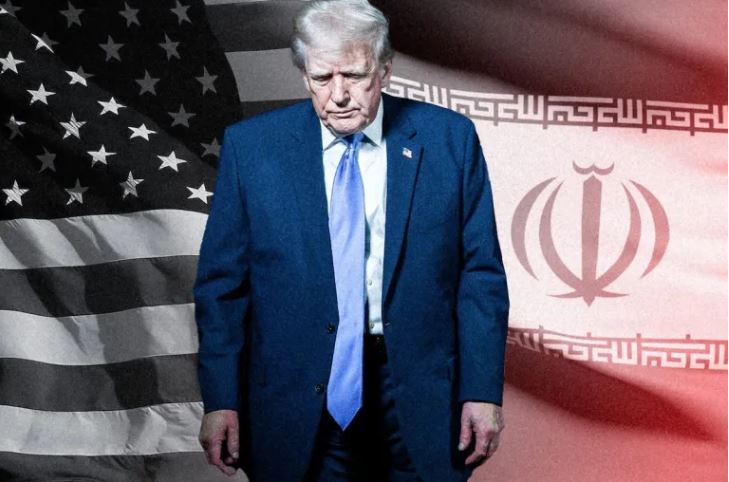
It appears that the conflicting parties, or at least two of them, have finally reached an agreement to end the conflict initiated by the U.S.-Israel entity to subdue Iran.
On the day the U.S. president turned 80, it was announced that the governments of Iran and the U.S. had drafted a memorandum of understanding (MOU), which in diplomatic terms has a lower hierarchical rank among documents signed under international law. To a large extent, this lower bureaucratic hierarchy explains the leaks about the document where, save for some specific and unavoidable commitments, the rest of the U.S. dispute with Iran will merit longer-term negotiation, said to be at least 60 days.
The document was signed remotely on June 17; Iran's president signed in Tehran, while Trump, traveling through Paris, signed at the Palace of Versailles. This holds a "curious" detail—there, the capitulation of Nazi Germany was signed, and also the U.S. capitulation to Vietnam; to a good listener, few words are needed .
The memorandum establishes an immediate and permanent ceasefire on all fronts—something already agreed upon since April and violated numerous times. It imposes that the U.S. will refrain from interfering in Iran's internal affairs and respect its sovereignty—a matter that should be redundant, as no MOU is needed for that, since it is already established in every existing text of international law. But, given the U.S., it evidently must be reminded whenever possible .
The document also specifies that the Strait of Hormuz must be reopened immediately, which is why the U.S. will lift its current blockade, although it does not establish that Iran will cease to control it—logical because it is part of its territory, shared with Oman.
Part of the agreement is the suspension of sanctions on Iranian oil production and provisions for Iran's full access to monetary revenues from the commercialization of these products. Although information is contradictory, it is stated that the U.S. and its allies—or ex-allies, depending on how one looks at it—that surround Iran will incur reconstruction costs for that country due to the aggression suffered, with mention of a sum of up to $300 billion USD .
In terms of money to be returned to Iran, it is established that around $24 billion USD, which were seized at the time (said to be "frozen"), will be returned. This process must be extended for the time provided for the talks, the mentioned 60 days, clarifying that at least half of this money must be in the hands of its true owners at the start of negotiations between the parties.
The agreement now reached must bring military operations to a halt, including the systematic Zionist aggressions against Lebanon, which appears from the first paragraph. The Strait of Hormuz will be gradually opened, and things will apparently return to "normality," at least to how they were before February 28, although the latter is impossible after the results of a conflict that lasted 108 days, with 40 days of active combat.
To interpret this dynamic, one must start by navigating the way the conflict has been communicated. It is certainly part of the confrontation what is published in the media universe, what is communicated, but it is also particularly challenging because the aggressor party, the U.S.-Israel, did everything on this matter except communicate. The expressly chaotic message from the U.S. president and other associated figures from the high command, such as the Secretary of War or Mr. Rubio, was not aimed at informing what was happening with the war, but at manipulating U.S. public opinion for justificatory or electoral purposes, as the case may be, and also, it should not be forgotten, to take advantage of speculation in stock markets—after all, this is the most important thing for some of these nefarious characters.
It is on the first point that one must allude. The aggression against Iran was, and in perspective will continue to be, very profitable for the techno-military-industrial complex, for the magnates who commercialize oil, mostly American. The war also served to take advantage of privileged information, available to the Trump family and acolytes, used to move stock indices in energy or military industry matters, generating enormous profits for the favored. It should always be kept in mind what President Trump clarifies all the time: the matter is making money, controlling oil, taking advantage of these 4 years of mandate to add millions to the family patrimony, and to the multi-hyper-super-millionaires who support him. It should be insisted that they also sought to delay, at least to extend over time, the inevitable fall of the petrodollar system, one of the empire's main motivations for initiating this absurd conflict in West Asia.
The extreme is that even the multi-million dollar figures mentioned to rebuild Iran suppose enormous investment projects where these super, mega, hyper-millionaires could participate, not out of love for one's neighbor, obviously. It is not clear how this could happen, but logically it cannot be ruled out. That's how the system works, where there are profits, political or ethical matters "are very boring" to be taken into account.
So, what reasons pushed Trump to sign? Even against the express and publicly manifested will of Zionism and its powerful lobby in the U.S.
We must begin by reiterating the heroic resistance of the Iranian people, the strategy and military tactics employed, and what is less tangible but verifiable: the success in the media and communications field, reversing decades of discredit in hegemonic Western media, to the point that even those same media, mostly and with enough capacity for noise, ended up cornering the White House, always putting it on the defensive, in which the proverbial insolence of President Trump himself contributed.
Trump himself clarified the matter in one of his known acts of "sincericide." Before the microphones of the friendly Fox News, he admitted that he had to yield given that "...we would run out of reserves in 4 weeks..." alluding to those in the U.S. Indeed, according to available figures, they were spending at a rate of 8.9 million barrels daily, which caused that by the close of June 17, 2026 itself, these reserves were at 340.3 million barrels, the same level as July 1983, during the Reagan administration.
This reality evidences another of the absurdities of the war initiated against Iran, through arrogance, both for what is already known and for the fact that perhaps for the first time in a long time, the conflict seriously impacted the U.S. economy, raising gasoline costs to no less than an average of $4 USD per gallon and driving inflation; Trump then resorted to whatever resource he had to lower fuel prices. It should not be forgotten, it is a country where having a full gas tank has the same priority as eating.
So the whole matter is reduced, for the American aggressors, to the Strait of Hormuz operating normally. Incredible, the Strait was fully open on February 28, and the U.S. did not then have to capitulate in any war, nor have spent billions of USD, nor squandered the little international prestige it had left, only to obtain what already existed naturally 100 days earlier.
But opening the Strait does not have an immediate consequence, beyond the fact that oil prices "for future delivery" have dropped relatively. Before the conflict, 100 ships circulated daily through this space, now reduced to a total of 127 between May 18 and June 17. According to experts, equalizing this flow will be gradual, it will take time, but also, to recover international oil supply, at least a substantial part or all of the oil structures of the Gulf countries will need to be rebuilt, with damages valued at no less than $58 billion USD.
To make matters worse, against this story having a peaceful and happy ending, the hostility of Israel to this agreement appears. In that country's media, the reaction of some ministers of the Zionist government was immediately reflected: "Trump's agreement does not unite us. Lebanon burns anyway," one of these sinister figures expressed laconically. Even surveys conducted in Israel reflect that the U.S. president's popularity there fell by -23% in the last three weeks. And Prime Minister Netanyahu seems to have been caught between two "friendly" fires.
Now we must see how the powerful Jewish lobby in the U.S. will react, along with the hawks they generously finance, who expect any outcome other than this one—the mentioned capitulation before Iran. A simple look at Mr. Rubio's body language when his boss explained why he had yielded to the Persians says much about the "muddle" in which these hawks are immersed. The very MAGA base, where the electoral reserve for November lies, is presented as potentially divided regarding whether or not to continue in this war. The most "cavernous," a minority, sick with arrogance, typical of a frustrated middle-class person ignorant that their failure is due to the system and not third-party reasons, continue to believe in the greatness of the imperial army, despite the blows received. But against this, there is another part of the MAGA, who are such because their leaders promised they would take care of them and would not spend federal resources on wars in distant geographies. Add independents and Democrats, and you have the perfect formula for Republicans to be swept away in the next elections.
In any case, nothing is guaranteed and the interests within the imperial domestic sphere are deeply contradictory, and not even the "magician" Trump has the formula to resolve them to his convenience. Euphoria must be avoided, objectivity in any conclusion about this situation is imposed, but what is certain is that regardless of the inevitable ideological bias with which one looks at how this matter is going, undoubtedly there is the possibility that the beginning of the end of the "Trump era" is underway.
Regarding how this outcome impacts Cuba, some variables can be assumed. Speculating on whether the defeat against Iran would lead Trump to rush a military action against the Island, as a kind of recovery of prestige, is at best simplistic and audacious.
Rather, the most sensible conclusion is that this variant disperses in the air more and more. Does that mean Cubans should lower their guard? Absolutely not; precisely the strategy of putting the country in full combat readiness becomes part of the equation, contributes to pushing away that Mr. Rubio-style exit.
Trump's virtual capitulation is a victory for the Global South, for the peoples who face imperial aggressiveness; it is the concrete demonstration that its hegemonism is in crisis. His super army was of no use; it showed how the colossal parasite of American society is above all a gigantic monument to defrauding an entire country. And more could be said, but objectivity and prudence are what is appropriate. We will see.
Translated by Sergio A. Paneque Díaz / CubaSí Translation Staff
Add new comment