
The Oscars Face Their Most Politically Charged Edition Under Trump's Shadow
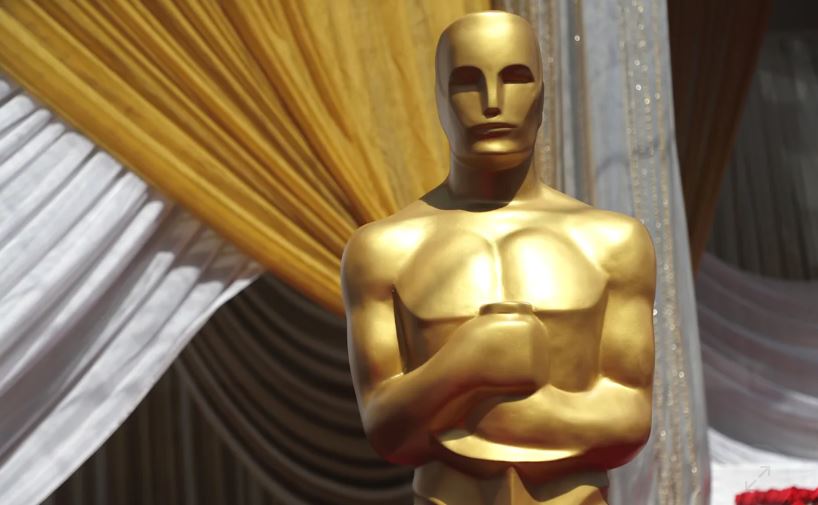
The 98th Academy Awards ceremony is taking place amid a climate of intense international tension, marked by escalating conflict in Iran, growing geopolitical polarization, and the controversial immigration reform measures advanced by the White House.
Following the muted tone of the Golden Globes — a tepid and restrained ceremony — the Oscars are expected to reclaim their tradition of political advocacy. In a charged atmosphere of heightened expectations, glamour appears to have yielded its prominence to the urgency of taking a stand in a divisive and complex political landscape.
Although awards organizations typically opt for institutional silence to avoid retaliation, individual pressure is what usually compels the use of these platforms for political advocacy.
In recent months, activism among Hollywood personalities has taken visible shape on red carpets through the "ICE Out" pin, with which artists have voiced their opposition to the mass deportations carried out by the administration of President Donald Trump. The movement emerged amid a wave of protests across the United States following the death of activist Renée Good in Minneapolis at the hands of federal agents — an event that has unified the artistic community against immigration-related violence.
In recent years, silent protests in support of Palestine have also made their presence felt, with the red "Artists4Ceasefire" pins symbolizing support for a cease-fire and the delivery of humanitarian aid to the region.
Javier Bardem and Wagner Moura Among the Most Vocal Critics
Spanish actor Javier Bardem, Brazilian actor Wagner Moura, and American actor Mark Ruffalo are poised to be among the most outspoken voices at this year's ceremony against the current state of global affairs. Wearing a Palestinian kufiya around his neck in solidarity with the people of Gaza, Bardem raised his voice on the red carpet at last year's Emmy Awards, demanding sanctions against "the genocidal state of Israel, not only for the ongoing genocide, but also for the apartheid state that is causing so much devastation."
Both Bardem and Ruffalo have led the charge against belligerence in the Middle East, promoting a manifesto that gathered more than 1,400 signatures against collaboration with Israeli production companies linked to the conflict with Palestine.
Moura, nominated this year for Best Actor for The Secret Agent, has focused his message on the protection of migrant workers who sustain the entertainment industry's economy.
Much Noise, Little Action?
For now, the debate over how much room to allow for protest versus pure entertainment at the Oscars remains unresolved. The ceremony's host, comedian Conan O'Brien, has chosen to tread carefully on the subject throughout the show's preparations.
"I think what is happening in the world is going to require a very, very fine balance between entertaining people and also acknowledging some of the realities," he said at a press conference.
Academy Awards producer Raj Kapoor told EFE: "The tone of our show is very festive and inclusive. It is a forum for artistic expression, but I think Conan really helps people feel good in that room."
A Legacy of Powerful Speeches at the Podium
The history of Hollywood's most prestigious awards ceremony carries a rich legacy of moments in which its unparalleled platform has been used for political and social confrontation. Most recently, the creators of No Other Land — Palestinian filmmaker Basel Adra and Israeli filmmaker Yuval Abraham, winners of the Oscar for Best Documentary — called last year for a joint effort to bring an end to the conflict in Palestine.
"There is a different path, a political solution with no national rights supremacy for either people," Abraham stated, adding that U.S. foreign policy "is helping to block the path" toward a two-state solution.
The shadow of Trump's first term already loomed over the 2017 ceremony, which was defined by repeated allusions to the controversial travel ban and the defense of cultural diversity. That same year, at the Golden Globes, Meryl Streep delivered a powerful speech in defense of immigrants and against the political aggression exercised by the then-president.
Another of the most memorable speeches on record came in 2003, amid the U.S. invasion of Iraq under President George W. Bush, when documentary filmmaker Michael Moore delivered an incendiary "Shame on you, Mr. Bush," splitting the audience between boos and cheers.
The single most memorable moment of this kind, however, likely occurred in 1973, when Marlon Brando declined his Oscar for The Godfather and sent activist Sacheen Littlefeather to the podium to denounce the film industry's systematic mistreatment of Native Americans.
Add new comment