
NYT: Trump and Advisers “Misjudged” the Impact of Iran’s Response
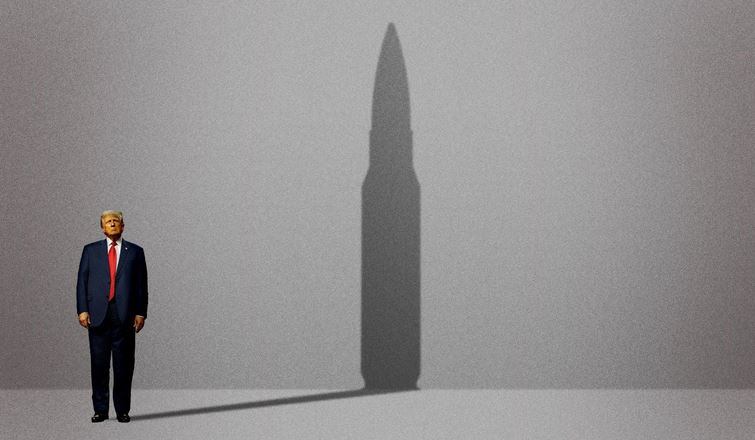
Foto e ilustración: Axios/Getty Images
During preparations for the joint U.S. and Israeli attack on Iran, President Donald Trump and his advisers underestimated Tehran’s potential response and downplayed the risks the conflict could pose to energy markets, according to a recent article by The New York Times (NYT).
The fact that Iran has acted “much more aggressively” than during the “12-Day War”—launched by the United States and Israel against the Persian nation last June—represents an “emblematic episode” demonstrating how much the president and his administration “misjudged how Iran would respond to a conflict that the government in Tehran views as an existential threat,” the newspaper reported.
In response to the U.S.–Israeli attack, Iran has launched “barrages of missiles and drones against U.S. military bases, cities in Arab countries across the Middle East,” as well as against Israel. In addition, Tehran closed the strategic Strait of Hormuz, through which roughly 20 percent of the world’s oil supply passes.
Facing this situation, the Trump administration was forced to adjust its plans on the fly. It evacuated embassies across the region and developed new strategies aimed at lowering gasoline prices. According to the report, Washington had initially viewed the economic repercussions of a conflict with Iran as only a short-term inconvenience.
Miscalculations over the Strait of Hormuz
The NYT recalls that on February 18—ten days before the military strike on Iran—U.S. Secretary of Energy Chris Wright stated that if a war with the Islamic Republic drove oil prices higher, the increase would likely be temporary. He referred to the “12-Day War,” noting that “oil prices rose and then fell again.”
The newspaper also reported that other Trump advisers privately held similar views in the days leading up to the attack, largely dismissing warnings that Iran might attempt to close the Strait of Hormuz.
“The scale of that miscalculation became clear in recent days, when Iran threatened to attack commercial tankers passing through the Strait of Hormuz, the strategic chokepoint that all ships leaving the Persian Gulf must navigate,” the article states.
Commercial maritime traffic in the area has since declined sharply, and the Trump administration has “been forced to improvise ways to contain an economic crisis” triggered by rising oil prices in the United States, according to the report.
The U.S. “has no plan”
Senator Christopher S. Murphy said the White House currently “has no plan” to “safely reopen it.” He added: “Which is unforgivable, because this part of the disaster was 100 percent foreseeable.”
Amid the situation and the absence of a clear strategy to end the conflict, some officials within the Trump administration have “grown increasingly pessimistic,” the NYT reports. However, they have not expressed these concerns directly to Trump, “who has repeatedly declared that the military operation is a total success.”
Add new comment