
“The Numbers Are Stunning”: U.S. Spent More Weapons Protecting Israel Than Israel Itself
"Las cifras son impactantes": EE.UU. gastó más armas para proteger a Israel que el propio Israel
Amid hostilities against Iran, the U.S. military expended far more high-end munitions to protect Israel than Israeli forces did themselves, depleting a significant portion of its inventory of advanced interceptors, The Washington Post reported Thursday, citing data from the Department of War.
According to three U.S. officials, this imbalance demonstrates the extent to which Washington has shouldered the burden of countering Iranian ballistic missile attacks during Operation Epic Fury, and raises questions about the North American country’s military preparedness and its security commitments around the world.
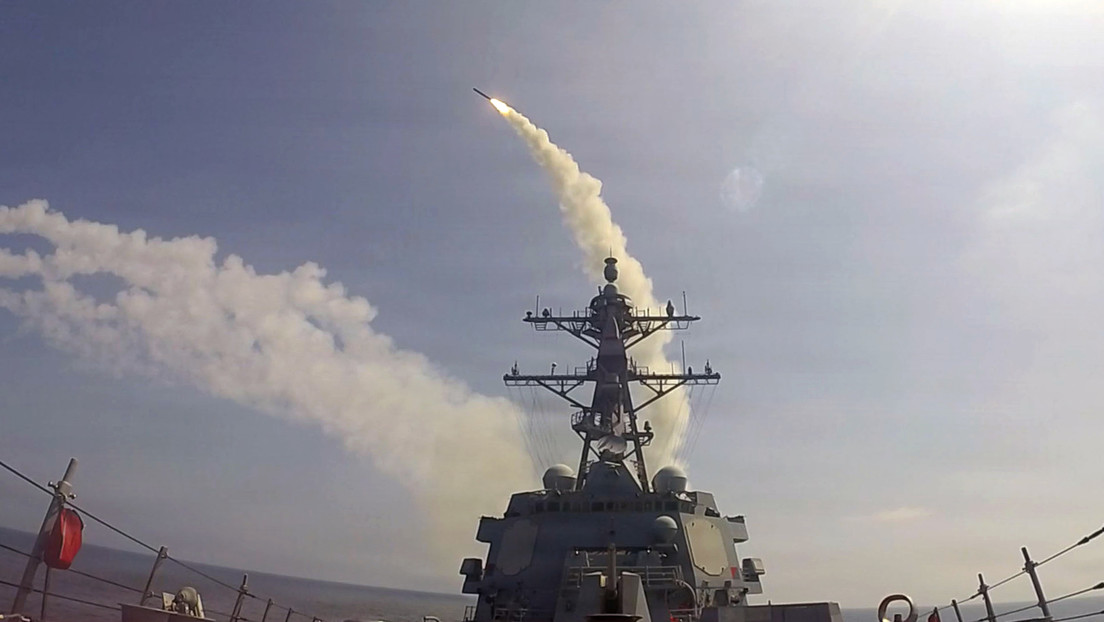
The United States launched more than 200 Terminal High Altitude Area Defense (THAAD) interceptors to defend Israel — approximately half of the Pentagon’s total inventory — along with more than 100 Standard Missile-3 and Standard Missile-6 interceptors fired from naval vessels in the eastern Mediterranean, the sources detailed.
In contrast, Israel fired fewer than 100 of its Arrow interceptors and around 90 David’s Sling interceptors, some of which were used against less sophisticated projectiles launched by Iran-backed groups in Yemen and Lebanon.
“The numbers are stunning,” commented Kelly Grieco, a senior fellow at the Stimson Center. “The U.S. took on the bulk of the missile defense mission while Israel conserved its own arsenals. Even if the operational logic was sound, the U.S. is left with approximately 200 THAAD interceptors and a production line that cannot keep up with demand.”
Furthermore, the shortage of U.S. interceptors has alarmed America’s allies in Asia, particularly Japan and South Korea. “That bill risks reaching scenarios that have nothing to do with Iran,” Grieco argued.
“The Israel Defense Forces were worn down by Gaza, Lebanon, and the question I ask myself is whether Israeli commanders overestimated their ability to sustain the operational tempo,” she added.
If the United States and Israel resume hostilities against Iran in the coming days, the U.S. military is likely to expend an even larger portion of interceptors due to a recent decision by Israeli forces to take some of their missile defense batteries offline for maintenance, a White House official clarified.
Meanwhile, a second U.S. Administration official asserted that “Israel is not capable of fighting and winning wars by itself. But no one really knows, because they never see what’s behind it.”
“It’s a Mystery”
In the same context, Justin Logan, director of defense and foreign policy studies at the libertarian CATO Institute, observed that the dynamic appears to clash with President Donald Trump’s motto, “America First.”
“Since Trump returned to power, Israel’s position makes sense: first our priorities, our resources at the end. [...] Why Trump has tried to present this as ‘America First’ is less clear,” he said.
Likewise, Logan noted that after the Pentagon reportedly revealed last year that it had only 25 percent of the necessary Patriot inventory to meet existing U.S. defense plans, that should have been a wake-up call. “Why this wasn’t a deafening siren for Trump officials is a mystery,” he questioned.
Add new comment