
The New Face of Tourism in the World
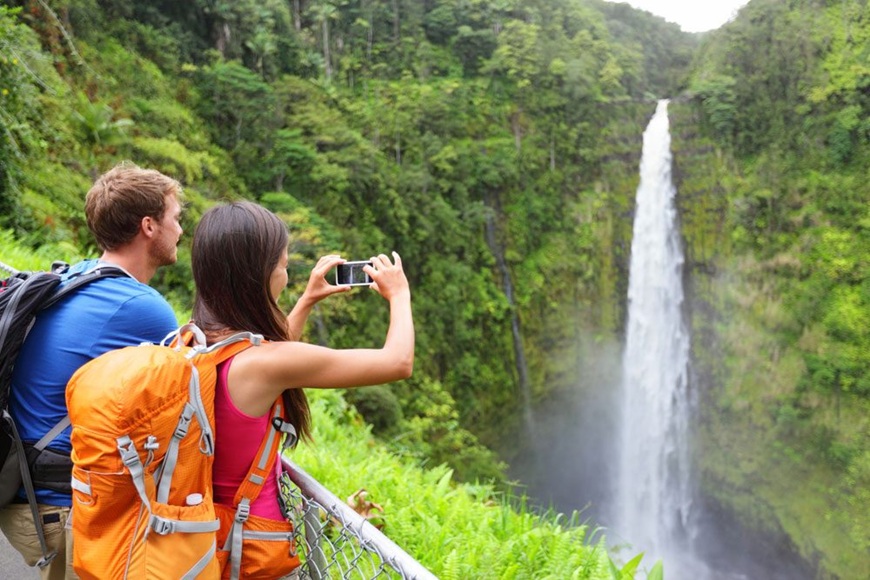
Foto: tomada de segittur.es
World tourism has left behind the pandemic recovery phase and is growing again. In 2025, approximately 1.52 billion international tourist arrivals were recorded, 4 percent more than in 2024 and a new world record.
For 2026, UN Tourism initially projected growth of between 3 and 4 percent. But that numerical increase is not the only transformation. Travelers increasingly find offerings centered on experiences, nature, well-being, personalization, and contact with local territories.
The underlying question, however, is more complex, because tourism is growing precisely as pressures on destinations increase. Hence the discussion should no longer be limited to how many people travel, but to what visitors leave behind, what communities receive, and how much a territory can withstand.
Authenticity Ceases to Be a Luxury
Personalization occupies a central place in Booking.com's forecasts for 2026. Its research, conducted among 29,733 people from 33 countries and territories, shows a growing inclination toward trips defined by individual interests, aspirations, and preferences.
The company itself notes that its Travel Predictions are a trend study among adults who planned to travel for business or pleasure in the following 12 to 24 months.
Among the results, 65 percent of travelers surveyed said they would use artificial intelligence or generative AI to design scenic and unconventional routes, while 66 percent would consider using technology to locate exactly the place where a photograph was taken or a memory was lived—that is, they gave more weight to the emotional.
These are data from a corporate survey, not a universal snapshot of the planet's tourists. But they do reveal the trend that travel is beginning to be sold less as a standard product and more as an individualized experience, in which even technology can help turn personal memories, hobbies, or curiosities into destinations.
Authenticity, however, contains a paradox. The more the experience of "discovering the authentic" is commercialized, the greater the risk of turning what distinguished a place—its culture, its landscapes, or its way of life—into a reproducible tourism product.
That is why authenticity should not be confused with exclusivity. A trip can be commercially sophisticated and, at the same time, deeply dependent on what only a community, a landscape, or a culture can provide.
Green Tourism and Something More Than a Label
The environmental dimension is another of the great transformations. An expansion of proposals linked to regenerative tourism and the circular economy is identified for 2026, from initiatives against food waste to ecotourism projects.
But tourism sustainability cannot be reduced to recycling towels, eliminating plastics, or placing ecological messages in rooms. The Organization for Economic Cooperation and Development (OECD) proposes for the sector an approach that combines economic, social, and environmental results, with greater resilience to crises and a better distribution of benefits among territories and their communities.
Regenerative tourism takes that discussion beyond damage reduction. In July 2026, the World Travel and Tourism Council (WTTC) and the United Nations Environment Programme (UNEP) agreed to promote, among other actions, nature-positive and regenerative tourism approaches, biodiversity conservation, the circular economy, waste reduction, and responsible management of water and energy.
The difference is significant. It is not only about polluting less while keeping the consumption model intact, but about trying to ensure that tourism activity contributes to conserving or restoring the natural resources on which it depends.
When Tourism Success Becomes a Problem
The economic weight of tourism explains why countries continue to bet on its expansion. According to the WTTC, Travel and Tourism contributed 11.6 trillion dollars to the world economy in 2025, equivalent to 9.8 percent of global GDP, and supported 366 million jobs. For 2026, the organization forecasts a contribution close to 12 trillion dollars and 376 million jobs.
But a vigorous tourism economy does not by itself guarantee well-being for those who live in the destinations. The OECD warns that the economic and social effects of tourism are not always distributed evenly and that, when growth is not properly managed, it can strain infrastructure, raise living costs, and displace residents.
On islands, the problem can be particularly visible. A 2026 OECD report notes that tourism pressure in places like Santorini has strained transportation networks, water supply, and waste systems, reduced housing affordability, and affected local quality of life.
From this arises one of the great contradictions of contemporary tourism. Promoting lesser-known destinations can deconcentrate flows and generate income in new areas, but it can also rapidly transform a previously marginal site into the next hotspot of overcrowding.
Authenticity, therefore, needs something more than promotion: it needs limits, planning, and participation from those who inhabit the territory.
Technology Changes the Way We Travel
Digitalization constitutes another decisive characteristic of tourism today. Artificial intelligence, biometrics, and personalization are penetrating different stages of the trip, from information search to airport and hotel processes. Prensa Latina identifies these technologies among the keys to tourism in 2026 and notes that more than half of travelers will use AI to plan their trips.
Technology, however, does not eliminate the need to interact with humans. Even in Booking.com's forecasts, technological personalization coexists with the search for nature, memories, bonds, and shared experiences. Digitalization can facilitate decisions and expand options, but it also favors those who possess connectivity, devices, payment methods, and digital skills—which is not everyone in this world.
That is why the tourism of the future can be smarter without necessarily being more egalitarian. The digital divide can also become a tourism divide.
Traveling in a World in Conflict
All of this occurs while travelers move through a world marked by armed conflicts, geopolitical tensions, economic uncertainty, and extreme climate phenomena. The OECD precisely identifies geopolitical and economic tensions as factors pressuring the sector and warns that concerns about security, disruptions, and affordability already influence travel patterns.
Conflicts can alter air routes, prices, perceptions of safety, and travel decisions. They can also temporarily redistribute flows toward territories considered safer, creating new economic opportunities but also new pressures on their infrastructure and communities.
Tourism thus has a social and political dimension that is sometimes hidden behind the idyllic image of vacations. Who can travel, who receives the benefits, who bears the environmental costs, and who can continue living in a destination transformed by tourism are questions inseparable from the future of this activity.
The global recovery itself also demonstrates that growth and vulnerability can coexist. Tourism has shown considerable capacity to recover from crises, but that resilience does not mean that all destinations, workers, or communities have the same capacity to withstand a new disruption.
The Challenge Is Not to Attract More, but to Do It Better
The figures justify the industry's optimism. But the number of visitors is not, by itself, a sufficient measure of success.
The OECD proposes precisely moving from volume-centered models toward forms of management that seek to balance economic prosperity, environmental sustainability, and social benefits. Among its priorities are better distributing flows, strengthening community participation, supporting local businesses, and diversifying destination economies.
This even changes the industry's traditional question. It is no longer enough to ask how to attract more visitors, but how to ensure that tourism generates value without destroying the natural, cultural, and social resources that make the trip possible.
The most determining feature of tourism in 2026 may not be, then, authenticity, personalization, respect for nature, or the use of technology considered separately, but the tension among all these characteristics and the need to manage them within territories with limited resources and deeply unequal societies.
The future of tourism does not necessarily consist of choosing between growth and sustainability, technology and humanity, comfort and authenticity. The challenge consists of finding models capable of reconciling them without one ending up financing itself at the expense of the other.
And in a world crossed by conflicts and inequalities, that question takes on an even greater dimension. Traveling can be an everyday experience for some, a privilege for others, and an unattainable aspiration for millions; any serious discussion about the future of tourism must begin by recognizing that difference.
Translated by Sergio A. Paneque Díaz / CubaSí Translation Staff
Add new comment