
NASA Telescope Re-enters Earth's Atmosphere After 22 Years in Space
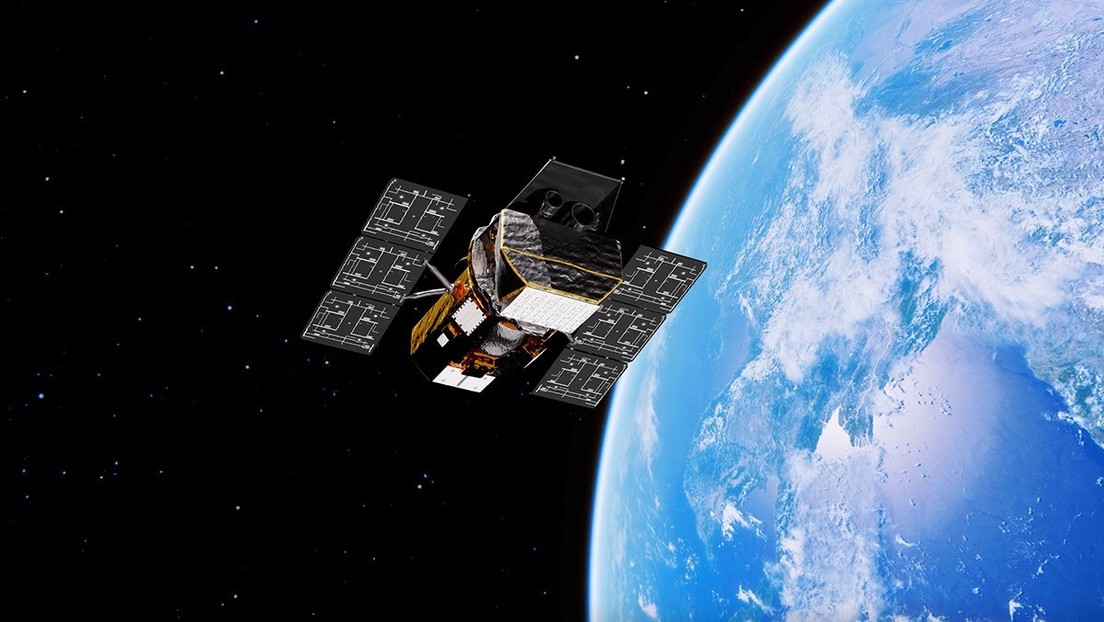
NASA's Swift space telescope, which spent over two decades studying some of the universe's most powerful explosions, re-entered Earth's atmosphere on Wednesday and largely burned up over the skies of Indonesia, Reuters reported. The satellite, weighing approximately 1,452 kilograms, ended a scientific mission that far exceeded its original planned lifespan.
U.S. Space Force confirmed that re-entry occurred at 12:39 GMT as the satellite traversed the upper atmosphere at roughly 22 times the speed of sound. The event took place over the North Sumatra province of Indonesia, a region inhabited by approximately 16 million people. NASA anticipated that friction-generated heat would destroy most of the spacecraft's structure, though some small fragments could survive and reach the surface.
Despite that possibility, NASA reported no property damage or injuries. Prior to re-entry, Space Force calculated the probability of an individual being impacted at one in 2,100. "Only a few small, scorched fragments are expected to reach the ground, nothing recognizable as a telescope," Dean Sladen, an aerospace engineer at British firm Accu Components, explained to Reuters.
The observatory, officially named the Neil Gehrels Swift Observatory, launched in 2004 with an initial two-year primary mission. Equipped with three instruments observing across different wavelengths, it was designed primarily to study gamma-ray bursts—the most intense energy explosions in the universe. Over its 22 years of operations, it also investigated hundreds of supernovas, black holes, asteroids, and comets, contributing to approximately 7,000 scientific publications.
However, the $500 million satellite lacked its own propulsion system and had been losing orbital stability for months. In July, NASA and U.S. company Katalyst Space launched a robotic spacecraft named LINK to dock with the telescope and boost it into a higher orbit. However, the vehicle began spinning uncontrollably shortly after reaching space, leading mission managers to abandon the rescue attempt in August. Swift permanently ceased operations on October 20.
According to Associated Press, NASA is also evaluating options for other satellites facing similar orbital decay, including the Hubble Space Telescope, whose orbit has been impacted by solar activity. Recent projections indicate Hubble could re-enter Earth's atmosphere in the mid-2030s. The agency is considering private-sector proposals to boost its orbit, modernize its systems, or carry out a controlled re-entry. "Hubble still has important science ahead of it, and we should explore all reasonable opportunities to keep it operating as long as possible," stated NASA Administrator Jared Isaacman.
Add new comment