
Miami: The Cradle of Hatred
That many cities of this cruel capitalism would deserve this designation is beyond doubt. But that in the end, without much discussion, Miami is singled out, is even more accurate.
It is not enough that Madrid, some other North American and world cities, as well as Latin American ones like Quito and Guayaquil in Ecuador, and others in Honduras with Papi a la Orden, could also deserve that label.
But in Miami moves the action and thought of that criminal fauna, with a varied vermin attached to imperialist policies now more entrenched in the Trump era.
There are many examples, but in 50 years without a doubt the most relevant event is the bombing of the Cubana de Aviación plane in Barbados.
All those still alive who were connected to the Barbados case are in Miami, of course. There is the cradle of hatred, it is the center of terror, but of all the names related to the event one in particular comes to mind: Carlos Andrés Pérez, former president of Venezuela, for his betrayal, for his double discourse, for HIS immorality.
On the one hand, it was believed that, as head of government, he was promoting the prosecution of those individuals—Posada, Bosch, Lugo, and Ricardo—and on the other, he had signed a pact with Orlando Bosch to protect him, so that he would have broad support from the DISIP (political police) and could collect all the millions he gathered in Venezuela to commit his crimes, as long as he complied with certain conditions.
THE U.S. ALLOWED THE CRIME
After three decades, documents have been declassified that corroborate exactly this and that the U.S. government had notice that the aircraft was going to be blown up, where 73 people died—among them the young Cuban fencers who won all the medals at the Central American event in their specialty—and it did not inform anyone, did not notify Cuba, allowed the crime.
But hatred toward Cuba continued to grow with Miami as the main point of everything despicable, with an elitist legislative mafia of Cuban origin that clamors for an invasion of the island and the assassination of its leaders at all levels.
Truly, they, from their cradle, have been a product of the worst in which North American pseudo-democracy moves. Where one must have money or be backed by it to be elected, without counting the subsequent commitments that sell the nation to the highest bidder.
While Donald Trump boasted of the destruction by his powerful war fleet in the Caribbean Sea and the Pacific of at least 50 fishing vessels and the death of almost all their crew members for supposed drug trafficking that, according to him, would poison the American people, the murder of the fishermen was denounced at the United Nations and it was recalled that U.S. territory is the seat of drug trafficking at a global level, with main emphasis on the principal cities of the industrialized West.
This categorization dates back to the 1970s and 1980s, when drug cartels used Miami as a gateway for foreigners who smuggled cocaine into the United States.
Currently, in addition to being the cradle of hatred, Miami has not managed to undo the stigma. According to the Drug Enforcement Administration (DEA), the city remains at the forefront as a distribution center for cocaine, heroin, methamphetamines, and fentanyl in Florida. In addition to marijuana, ecstasy, and prescribed opioids, which are trafficked to other parts of the state and the country.
According to the Florida Department of Health, over all these years there have been thousands of drug-related deaths, with the highest incidence in Miami-Dade County.
The American press itself has pointed to the complicity of factors tasked with combating the scourge, mainly indicating the DEA itself, with culpability on the part of the Federal Bureau of Investigation (FBI), U.S. Customs and Border Protection, the Florida Department of Law Enforcement, and the Miami-Dade Police Department.
"OBLIVION"
In the various reports of entities tasked with combating drug trafficking, Mexico is pointed to as the main culprit and Colombia second, as well as, for Trumpist convenience, Venezuela, "forgetting" that the main drug corridor is in the Pacific, with Ecuador as the main sender.
The drug traffickers and organizations that form part of the first link within the United States begin to travel to the different existing markets in the vast U.S. territory.
These organizations buy drug shipments in bulk, Jesús Esquivel, author of the book "Los narcos gringos," explains to BBC Mundo.
The researcher maintains that Latin American cartels know they are less vulnerable to captures or confiscation of cargo by using local intermediaries "who can easily disseminate within American society without drawing attention."
Asked why U.S. security agencies then frequently announce the arrest of citizens of Mexico and other countries for carrying controlled substances, the journalist noted that there are many more cases of Americans, but they receive no media attention.
Drug trafficking researcher Hernando Zuleta points out that one of the reasons why American organizations and their leaders are little known is their way of operating.
"In micro-trafficking, American gangs and those from different Central American countries have a strong presence, but they do not take the big part of the pie. So everyone wonders who the gringo leaders are, because there must be some," he tells BBC Mundo.
The university professor explains that the "distribution bosses inside the United States," as far as is known, have a very different profile from the installed image of the Latin American drug trafficker and have managed to export that model. Esquivel adds that this is why they are not ostentatious and opt for a low profile; they cannot draw attention because there is a lot of control and if one of them is detected, they will suffer seizures and the loss of their money.
Jesús Esquivel points out that among the bulk buyers, there are motorcycle clubs that have branches in many cities and, therefore, are difficult to detect.
"A cartel moves tons of cocaine, but upon entering the United States, it is thousands of Americans who are in charge of distributing those tons into increasingly smaller parts. It is like a spider web, that is why it is so complicated," he says, and adds:
"They are mobsters who do not look like mobsters, the 'invisible' narcos who control drug trafficking."
NECESSARY TO REPEAT
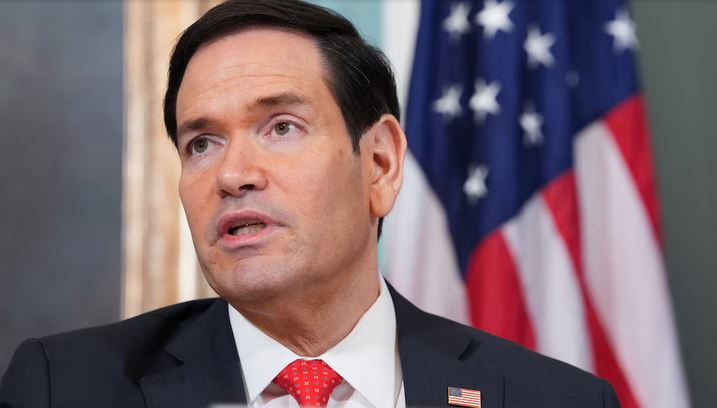
Data already collected, but necessary to reproduce thanks to this CubaSí portal, shows that the "king of the team of haters against Cuba," the one who wants to attack us militarily and suffocate us day by day, Marco Rubio—born in the Miami cradle of hatred—does not want us to talk about how his brother-in-law, Orlando Cicilia, was one of the most prolific cocaine traffickers in Miami in the 1980s. He was convicted of moving thousands of kilos of drugs and money laundering, sentenced to 25 years… but only served 12. And here is the worst part: when he was arrested, he lived in the same house as Marco Rubio. The DEA knocked down the door of Rubio's house, cites political influencer Caitlin Speaks.
Furthermore, Speaks revealed that in 2002, when Cicilia was already free, Rubio—at that time rising politically—sent a letter recommending him for a real estate license, without mentioning that he was his brother-in-law. Normally, a serious crime like drug trafficking would have prevented the license, but Cicilia obtained it.
The influencer highlighted Rubio's hypocrisy, who now promotes mass deportations of migrants with criminal drug records, the same crime for which his brother-in-law was convicted.
Orlando Cicilia, husband of Bárbara Rubio (Marco's sister), was arrested in 1987 in "Operation Cobra," one of the biggest blows to drug trafficking in Florida.
Cicilia was part of an organization led by Mario Tabraue (a drug trafficker known for his collection of exotic animals). He was sentenced to 25 years for conspiracy to distribute cocaine, marijuana, and for links to the murder of an informant and bribes to police officers.
The DEA raided the house where he lived with Bárbara Rubio, a property that was seized for being linked to drug trafficking.
At that time, Marco Rubio lived in the same house. Although his sister was not charged, the scandal marked the family. When Univisión asked him about the issue, his spokesperson Alex Burgos called it "a private matter," and accused the outlet of "sensationalist journalism."
Most controversial is the contrast between Rubio's past and his current discourse: as Secretary of State, he promotes mass deportations of migrants with drug records, even lesser than Cicilia's.
Furthermore, Rubio has stated: "Imposing visa restrictions on drug traffickers, their relatives, and close associates will not only prevent them from entering the U.S., but will also serve as a deterrent."
Translated by Sergio A. Paneque Díaz / CubaSí Translation Staff
Add new comment