
Martí, Here and Now
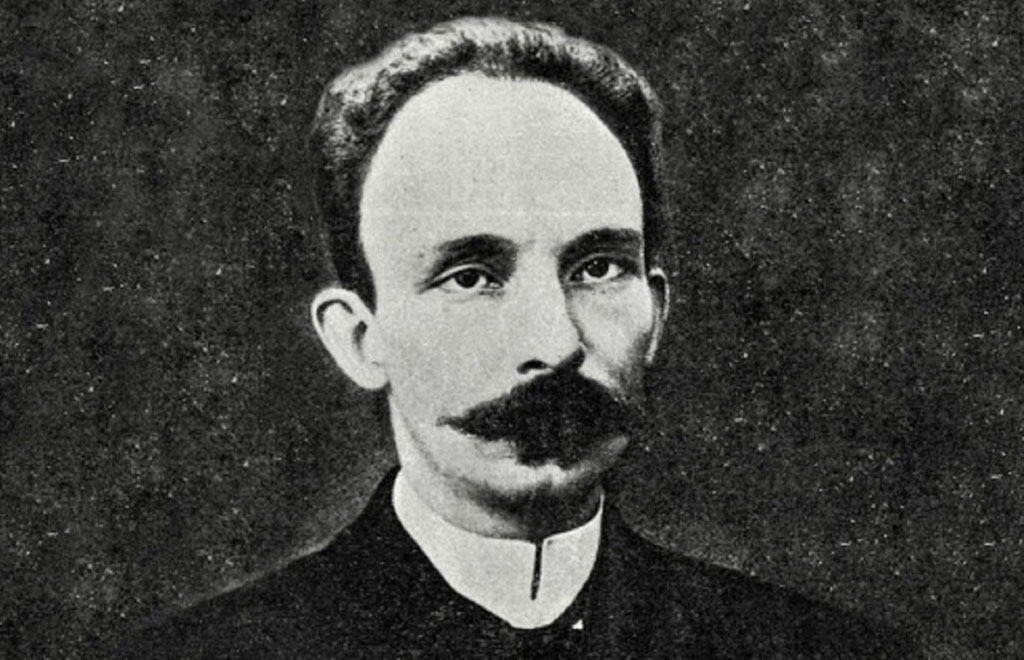
A contemporary reading of José Martí requires understanding his thought within its historical context, avoiding its dogmatic instrumentalization, and discovering—in the enduring relevance of his ideas and the beauty of his prose—a spur for thinking critically about the present.
Reading José Martí in the 21st century entails the challenge of understanding a body of work written from the coordinates of another era. The temptation to transplant his aphorisms into contemporary reality—without examining the circumstances that gave rise to them—can lead to a superficial appropriation of his thought.
A single phrase, stripped of its context, could then be used to lend authority to a preconceived notion or to justify a particular stance. In many ways, Martí was a visionary, but he was not a fortune-teller. His reflections address the problems and contradictions of his own time, even though some of the insights underlying them have transcended their original circumstances.
Understanding this dual dimension allows us to discern what remains relevant, what has changed, and what requires reinterpretation in light of subsequent historical experience.
The greatest risk lies in transforming this legacy into a collection of immutable truths, ready to be used for any purpose whatsoever. Instrumentalizing Martí means abandoning the complexity of his thought: citing instead of arguing, repeating instead of thinking, and seeking in his words an automatic confirmation of our own convictions.
However, acknowledging the historical nature of his ideas does not mean confining them to his own era, nor does it deny their capacity to shed light onto the present. Rather, it’s a matter of engaging in a critical dialogue with them—distinguishing between responses tied to specific circumstances and those principles or insights that can still help us understand reality today.
The enduring relevance of Martí does not depend on a mechanical application of his words, but rather on our ability to interrogate and interpret them, discovering new avenues for reflection without turning them into dogma.
This endeavor also requires a willingness to appreciate writing of extraordinary richness. Although Martí’s prose may prove challenging for some contemporary readers, it possesses a unique expressive power, in which thought finds its counterpart in imagery, rhythm, and linguistic precision.
In Martí’s work, conceptual depth and aesthetic flight converge, creating a body of writing that does more than just communicate ideas—it transforms them into a literary experience. Perhaps one of the keys to his lasting significance lies in this combination: the capacity for profound thought, coupled with the ability to turn language itself into an act of creation.
To read him is to engage with the contradictions of his time and to discover, within the beauty of his prose, reflections that have transcended their original context and continue to challenge us. His legacy does not absolve us from the need to think; it compels us to do so.
Translated by Amilkal Labañino / CubaSí Translation Staff
Add new comment