
Margaret Atwood: Never in the Modern Era Have So Many Books Been Banned as Now in the U.S.
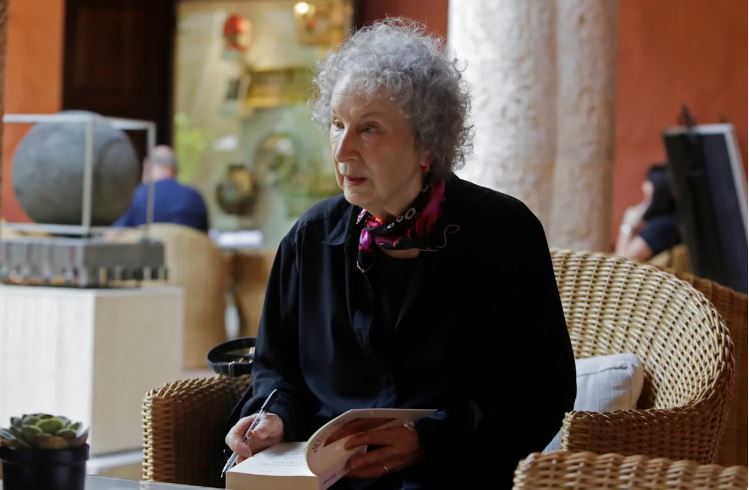
Margaret Atwood
Margaret Atwood spoke out during her speech after being invested with an honorary doctorate by the University of Granada (southern Spain), an event in which she criticized that some political parties champion freedom of expression when in opposition but, once in power, promote restrictions and pressure the media.
The author of novels such as "The Handmaid's Tale" stated that humanities professors are "besieged" in U.S. universities, where their subjects are being labeled as "non-essential" in an era characterized by rapid technological change and scientific innovation.
The writer, who defended the role of the humanities, emphasized that it is precisely this area of knowledge that teaches people to think, to create, and to understand others, especially "those who are different from oneself."
She argued that it is essential for individuals to retain the ability to question their own certainties: "A society that can no longer think clearly and can no longer question its own assumptions is heading toward the precipice," she said.
Atwood, also author of "The Testaments," recalled that the regime portrayed by George Orwell in his novel "1984" seeks to consolidate its power by eliminating from language any word that allows people to think and hold critical opinions. Along those lines, she asked whether artificial intelligence will play a role similar to Orwell's "thought police": "Will AI be able to achieve that? Let's find out," she said.
Atwood framed this situation of the humanities and thought within an international context she defined as a "perfect storm" of simultaneous crises, including the economic crisis, the wars in Ukraine, Gaza, and Iran, and environmental degradation. In this sense, she shared her concern about species extinction, ecosystem deterioration, and the destruction of animal, plant, and human habitats: "We need oxygen to breathe, and if we destroy the life of the oceans, it will be over," she emphasized.
To these challenges, she added economic difficulties such as rising prices and job losses, as well as public debt and the risk of famine — factors which, she noted, historically preceded episodes of great instability such as the French Revolution.
Add new comment