
THE LIBRARY: The Greek Lesson
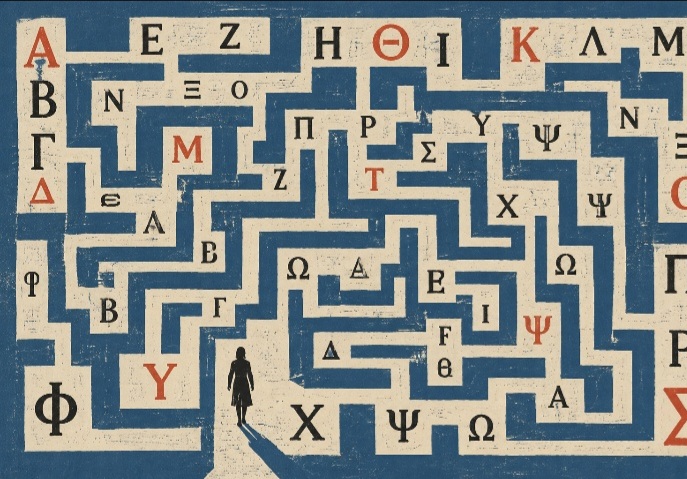
There are novels that read like a great poem. Or perhaps it should be said the other way around: there are poems that need the form of a novel to unfold their full intensity. Han Kang's The Greek Lesson belongs to that rare breed. In its pages, prose and verse cease to be separate territories, converging into a single language where the explicit and the suggested, sound and silence, light and darkness, ultimately synchronize with the rhythm of the narrative.
There are no torrents in this narrative; there’s a slow current that, nevertheless, hints at very deep waters. Hence the strange melancholy that lingers long after closing the book.
The novel presents two characters marked by fundamental losses. She has stopped speaking; he is gradually losing his sight. Their paths do not seem to respond to the contingencies of a conventional plot, but rather to a serene, almost imperceptible search that ultimately brings them closer. They are not heroes destined to overcome extraordinary obstacles or resolve their conflicts in an epic fashion. They are beings who learn to inhabit them, to live with them, until they discover that shared fragility can also be a space for encounter.
In this journey, the choice of ancient Greek as one of the novel's central themes takes on decisive importance. It’s not merely an ancient language, but a dialogue with foundational questions of Western philosophy concerning language, memory, identity, and the self being.
Han Kang establishes this bridge through extraordinarily delicate writing, where pauses, silence, and contemplation do not lessen the dramatic tensions, but rather deepen them. The novel's apparent stillness conceals a ceaseless reflection on that which words can barely name.
This is also why the relationship between the protagonists avoids any complacent resolution. What matters is not the consummation of a love affair, but the mutual recognition between two people who have seen their habitual ways of relating to the world shatter.
The author resists closing off this experience with certainties and prefers to let silence complete what the narrative only hints at. This choice strengthens the coherence of a book that never abandons suggestion.
The Greek Lesson thus transcends the story of an encounter to engage with some of the eternal questions of the human condition. It does so without stridency, with the serenity of writing that trusts in the reader's intelligence and sensitivity.
In times dominated by speed and urgency, Han Kang offers a novel that invites us to linger, to listen, and to contemplate. And that, perhaps, is the most enduring lesson of a book that transforms silence into one of the most eloquent forms of language.
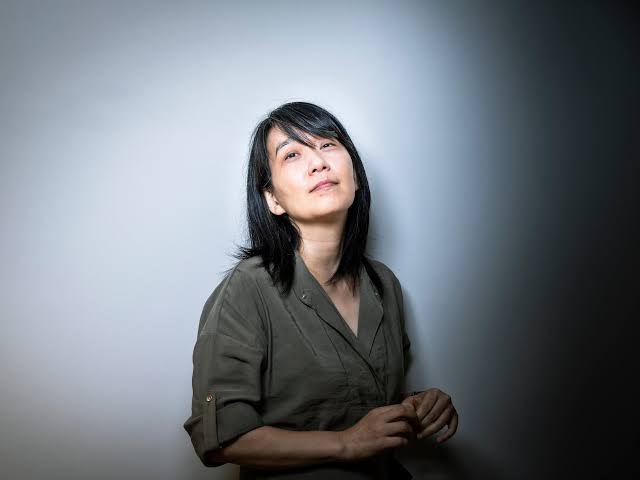
Han Kang was born on November 27, 1970, in Gwangju, South Korea. A novelist, short story writer, and essayist, he studied Korean Literature and began his career as a poet before establishing himself as one of the most important voices in contemporary literature. His work, characterized by a spare prose of great poetic intensity, explores themes such as violence, memory, trauma, the body, and the human condition. He achieved international recognition with The Vegetarian, which won the International Booker Prize in 2016, and subsequently published titles such as Human Acts, White, and It's Impossible to Say Goodbye. In 2024, she received the Nobel Prize in Literature, becoming the first South Korean writer to receive this recognition, for a body of work that explores with singular sensitivity the wounds of history and the fragility of existence.
Translated by Amilkal Labañino / CubaSí Translation Staff
Add new comment