
Let's Talk About Suicide
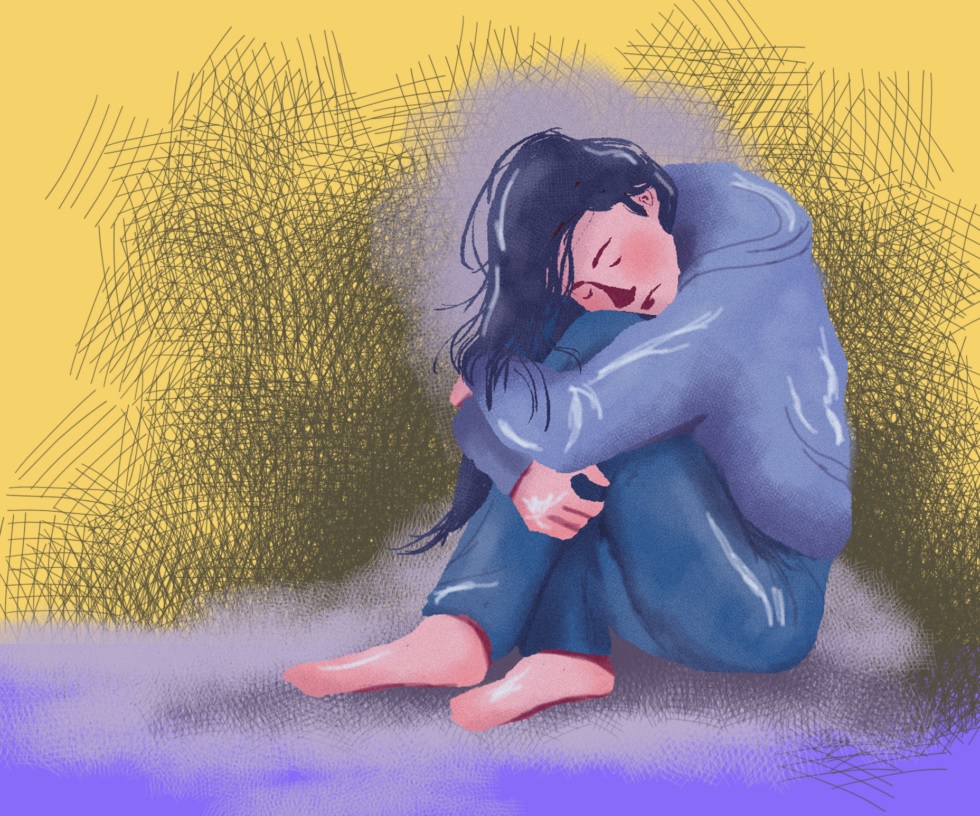
I was doing my news rounds when I came across a headline in *El País* that caught my eye, but I kept scrolling because I didn't want to read anything gloomy so early in the morning. However, less than three minutes later, I found a report from a few days ago by the World Health Organization (WHO) titled "Suicide." I stopped dead in my tracks; encountering the same topic twice was no longer a coincidence. I went back to look for the Spanish newspaper article and—surprise—had to settle for just the summary because it required a subscription, but that was enough for me. Let’s discuss this topic.
Suicide is a subject rarely spoken about. If someone has a family member who made that choice, they rarely address it openly or casually. Suicide is somewhat taboo; perhaps people think that by not mentioning it, they can pretend it didn't happen—that death claimed the person naturally because it was simply their time. Or maybe those closest to the deceased carry a burden of guilt that isn't entirely theirs to bear, believing after the fact that they could have intervened had they been more attentive.
On the latter there may be some truth to that last point; after all, a person must be in a truly dire state to feel that death is the only alternative—and yet, no one close to them notices any telltale signs in their appearance, behavior, or mood. It cannot be entirely invisible, no matter how much one might wish to end one’s life in total silence—to simply cease to exist, like the imperceptible signal of an antenna being switched off. No, that is not possible; a trace always remains.
When a person concludes that the only way out is to disappear forever, it’s rarely driven by an intrinsic desire for death itself. Rather, it stems from a need to escape a tormenting situation—something that robs them of sleep and the will to live differently—because, in the clouded whirlwind of their thoughts, they can find no way to overcome their affliction, or perhaps simply do not want to. Yet, in all likelihood, if they could share their pain—whatever it may be—that act of unburdening themselves would help.
But no; suicide is a final resort, one that isn't discussed beforehand precisely because the person knows it will trigger alarms. And it’s within that constant, obsessive rumination leading up to the decision that the voracious need to stop the pain takes root.
Psychologists and psychiatrists agree on this: suicide is generally not the result of seeking an end simply for the sake of non-existence; rather, it’s a desperate measure for relief when the weight of emotional exhaustion surpasses one's psychological capacity to endure it.
Guillermo Lahera Forteza—a Professor of Psychiatry at the University of Alcalá in Spain and the author of the text mentioned earlier—notes that, and I quote: "Behind the motive... something more fundamental may be missing: someone waiting for them, something to do, a reason that makes a tomorrow worth having." It’s precisely this lack of perspective that torments the individual—a kind of imposed blindness—when in reality, there’s always, *always* a tomorrow, and many opportunities to start over and appreciate that life is unique, brief, and wonderful.
Suicidal behavior does not occur unexpectedly; it’s usually contemplated. That’s not to say that someone might not attempt it in a rash moment, driven by the impulse of a high-stress situation; however, based on what’s known and theorized, such acts are usually preceded by a mental overload that impairs foresight. The individual looks ahead and perceives the future rigidly while feeling suffocated in the present—unable to view reality objectively, feeling stifled and hopeless.
A person who chooses to end their life does so exercising their own agency, yet is simultaneously stifled by a perceptual framework that has ruled out all other options. The reasons are as varied as the human psyche itself; common causes include heartbreak, shame, extreme poverty, or a terminal illness—along with a long list of both tangible and intangible struggles.
The subject of suicide is rarely discussed outside of academic circles; it’s mentioned in whispers or hushed tones, as if it were the worst possible tragedy a family could face, and it’s true because it is always preventable, yet it leaves behind a lingering, insurmountable sorrow. It’s a profound dilemma rooted equally in a shared blindness and the inability of those around the individual to read the warning signs. The person in crisis is unlikely to cry out for help; instead, the collapse often brews beneath a veneer of false calm until it finally erupts.
Image
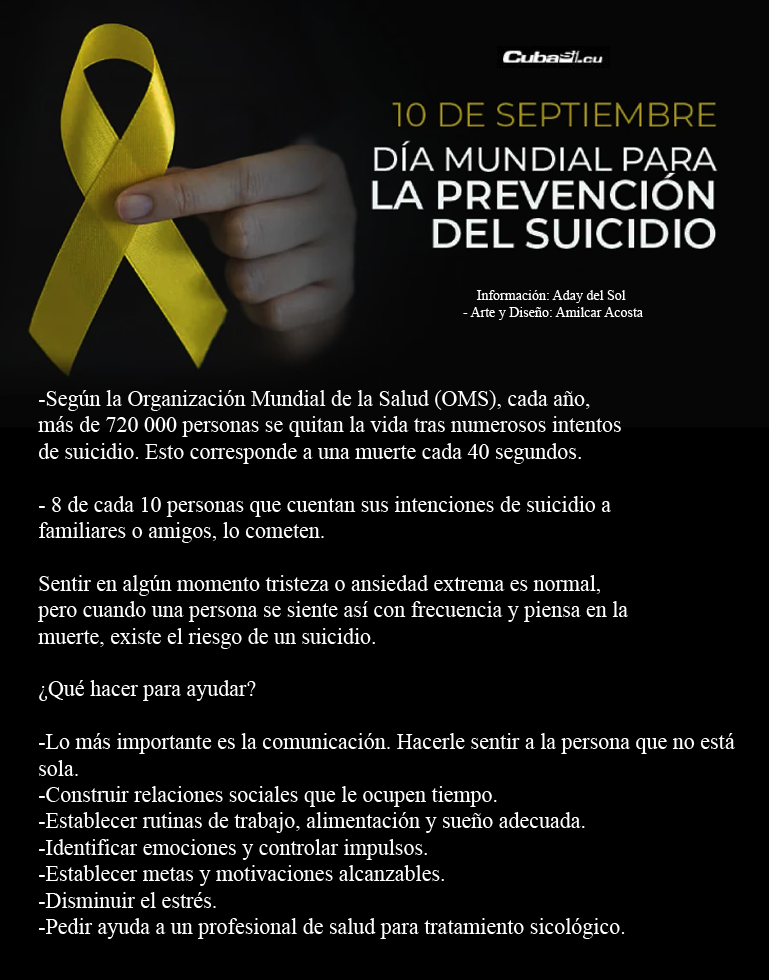
September 10, World Suicide Prevention Day
Only in retrospection does the trail become visible—the signs of deep distress. Amidst the chaos, those around the individual often fail to see the truth, mistaking isolation for a need for space, withdrawal for shyness, or a sudden, eerie calm for mere mood swings. Often, that very calmness marks the final stage for someone who has already made the decision to end their life. Society tends to shy away from others' distress out of discomfort; it demands that the sufferer maintain a mask of normalcy until it’s too late, leaving them to shoulder the burden of climbing out of the abyss—alone. That’s why we are all part of the problem; acknowledging the existence of that darkness is not about romanticizing it, but rather looking at it with clarity in order to dismantle it. Few people can escape on their own the mental tangle that drives them to contemplate suicide; psychological support is crucial when they can no longer bear the crushing weight of their distress alone.
WHO reports that there are over 720,000 suicide deaths annually. This is not a low figure—and the true number is almost certainly higher—while the rate of suicide attempts is also quite high and difficult to track accurately. It also notes that suicide is the third leading cause of death among young people, with a high percentage occurring in low-income countries, as one might expect.
Suicide is a tragedy that leaves lasting scars. We must address depressive crises and any signs of instability in a person, as psychological limits vary greatly and are not inherent to the disorder itself. ...not mental, so to speak. It’s not necessarily a premeditated decision, nor one easily articulated, yet it always arrives accompanied by a sense of hopelessness.
Since 2003, September 10th has been designated World Suicide Prevention Day, intended to draw attention to a health issue that can afflict anyone who feels trapped—even when a way out actually exists. We must shed the stigma, communicate and offer more companionship, and listen to, understand, and support our loved ones before it’s too late.
Translated by Amilkal Labañino / CubaSí Translation Staff
Add new comment