
Legal Warfare Against Cuba Reaches U.S. Supreme Court
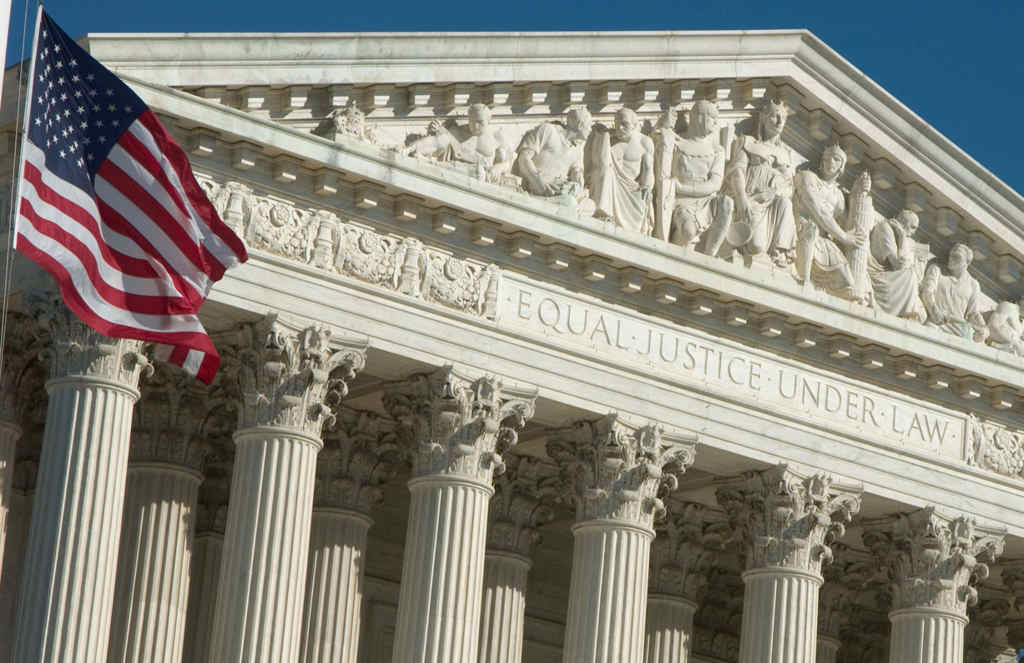
The United States Supreme Court will hear arguments today in a case that reflects the legal warfare against Cuba, while residents in this capital denounce the intentional harm their people suffer due to Washington's aggressiveness.
This Monday, a peaceful protest was called at the United Methodist Building, near the highest court of justice, where arguments from the oil company Exxon Mobil will be heard in a fabricated case against Cuba under the Helms-Burton Act.
Participants in the demonstration will demand an end to "the oil war against Cuba and Exxon's lawfare attack," detailed a statement.
Among the speakers are Paul Coates, founder of Black Classic Press; Blake Burdge, author and researcher; Leonardo Flores, from the Venezuela Network; Basev Sen, director of the Climate Justice Project at the Institute for Policy Studies; Reverend Nozomi Ikuta; and Cheryl LaBash, from the National Network on Cuba.
The Helms-Burton Act, enacted nearly 30 years ago by then-President William Clinton, includes Title III, which allows claims for compensation from families and companies allegedly affected by the nationalizations carried out sovereignly on the Island after the revolutionary triumph of January 1, 1959.
However, Title III remained paused until 2019, when Trump decided to activate it during his first term, and that same year Exxon Mobil, formerly called Standard Oil Company, filed a court claim over the expropriation of the current Ñico López refinery in Havana, as well as 117 gas stations that operated in that country before 1959. The lawsuit was filed against Cimex Corporation and Cuba Petroleum Union (Cupet).
Last January 29, President Trump issued an executive order that classified Cuba as an "extraordinary and unusual threat" to the United States and, to confront it, threatened to impose tariffs as a coercive measure against independent and sovereign countries that exercise their economic right to sell or supply fuel to the Caribbean nation.
The official excuse for this executive order—which evidences the extraterritoriality of the blockade—"is to comply with the provisions of the Helms-Burton Act, which demands that the Cuban people renounce their economic and political system as a precondition for lifting the unilateral and illegal economic war against that small developing nation," the statement underscored.
The text recalled that "as a result, severe hardships are imposed on the Cuban people by denying them access to fuel and electricity generation."
Attendees at the demonstration will announce ongoing or planned actions for U.S. citizens to contribute to overcoming the humanitarian situation generated in Cuba by the measures of the U.S. government, adopted without Congressional approval.
Add new comment