
If it Hurts, It's Not Love
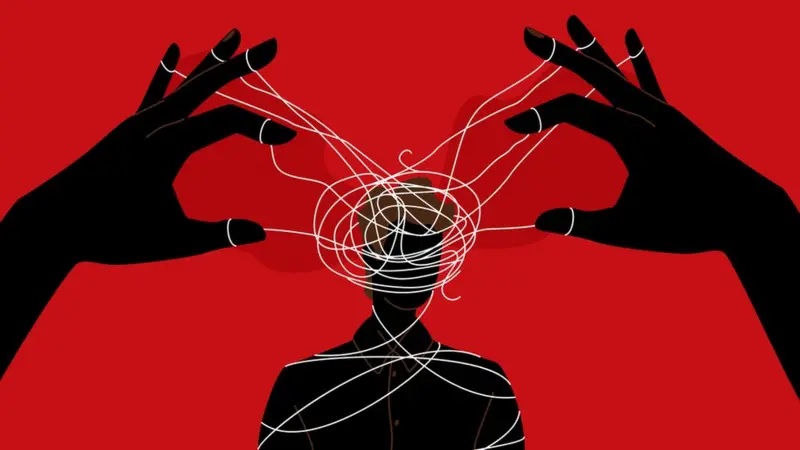
There’s a type of violence that initially leaves no visible marks on the skin, such as bruises or scratches from aggression, but it reserves a force sometimes greater than a physical blow because all the signs are internal, in the psyche, where the wounds perhaps remain deeper and are difficult to heal because they fester slowly, insidiously, and manage to defile the most basic aspects of being, such as self-esteem, perception of reality, and the freedom to choose, until we are left broken and worthless in a corner.
Unlike the common type of noisy violence that arrives with shouts, shoves, and bruises, this other type enters life almost silently, disguised as love. Unfortunately, it’s a more common scenario than we think; more persistent from men towards women as a legacy of that ancestral machismo that’s so difficult to eliminate, but which is not exclusive to our gender; we can also find it in the opposite direction.
Let's talk about what’s most prevalent. In such environments, many women begin to doubt themselves and suddenly lose their independence, even asking permission to do things they previously decided with complete freedom—and I'm referring to even the most basic things, not just matters of the relationship, of course. Sometimes these damaged women become meticulous, mentally reviewing every word before saying it to avoid making a mistake and triggering the tsunami they foresee, or they are always on high alert and learn to interpret their partner's mood to prevent an undesirable reaction.
The problem is that they often deny living in a toxic environment, even convincing themselves that love is like that—a little turbulent, a little jealous. And the truth is... there may be moments of mistrust, but it shouldn't be the standard. Believing it should be is unhealthy and speaks more to distrust than to genuine feelings in a relationship.
To be truly good, a relationship should exclude all forms of intimidation, even if it seems "soft," such as speaking rudely, using silence as psychological punishment, using hurtful irony, or constant questioning, among so many other examples that are so painful, diminish, and suppress peace of mind. Living as a couple shouldn't be an ordeal we have to endure because nothing forces us to make such a sacrifice.
And no, women aren't delicate flowers. Sometimes, they don't even notice when they are victims of oppressive or persecutory behavior, when they are living through a psychological war that absorbs them and doesn't let them escape because they normalize this environment and believe it's inappropriate to demand treatment equal with the love they feel.
Sometimes, from the wrong perspective, questions are asked that challenge their ability to endure because, from the outside, it supposedly looks so easy. Perhaps underlying factors prevent them from packing up and leaving, as there may also be economic and other factors that create a dilemma. The core question for the oppressed woman should be, is this reason enough?
On many occasions, this behavior of psychological confrontation is merely the prelude to physical aggression, even femicide, self-harm, and suicide, because they find no way out of the vicious cycle.
Are there psychological and social mechanisms that allow a relationship to gradually become a space of fear, dependence, and control? Yes. It’s multifactorial and also very prevalent. Sometimes the magnitude of the problem is not fully grasped, or it’s justified in countless ways, when it should compel us to take it seriously because feeling intimidated is not normal.
The World Health Organization (WHO) constantly studies all forms of violence and confirms that millions of women worldwide suffer, or have experienced, behaviors that violate their very nature, not only through physical aggression, and regardless of maturity, social status, professional level, or any of the other factors that define us for statistical purposes.
Psychological harm and controlling behaviors that instill fear are quite common. Trendy examples include: monitoring phone calls, deciding who she communicates with and interacts with, questioning her clothing choices, watching her movements, threatening, humiliating, or making her feel guilty. None of these actions are considered normal in a relationship; rather, they reflect insecurity and obsessive domination.
These are violent behaviors that stem from a pattern of subjugation that seeks to exert power over the other person. It will never be acceptable; if it hurts, it's not love. Sometimes it comes in a gentle voice, without shouting or harshness.
However, one of the challenges of psychological violence is that it can be mistaken for affection. And it isn't. Excessive control isn't concern, and distrust isn't love. It's true that it can be interpreted as fear of abandonment, but paranoia never leads to safety; on the contrary, it's exhausting.
It's also true that from the outside, we can't know when a relationship is abusive; only the person experiencing it knows. Therefore, to the woman who has a partner who behaves this way, we say that when such behavior becomes constant, progressively reduces autonomy, and creates insecurity, it's time to question whether it's healthy.
Feelings should never be used as a tool for control. Any expression of fear should be banished from a relationship; it should be the biggest red flag that triggers a desire to flee or, at the very least, to sit down and discuss the situation and try to reverse it, if possible.
We repeat, it's not okay to modify instinctive behavior to avoid conflict, nor is it okay to distrust oneself and endure humiliation. Anyone who belittles others for sport, or manipulates, threatens, and punishes, should not have the privilege of participating in the life of the person they try to subjugate, because the consequences can be very serious, extending far beyond mental health.
Translated by Amilkal Labañino / CubaSí Translation Staff
Add new comment