
Geopolitics: Possible Scenarios in the Iran War
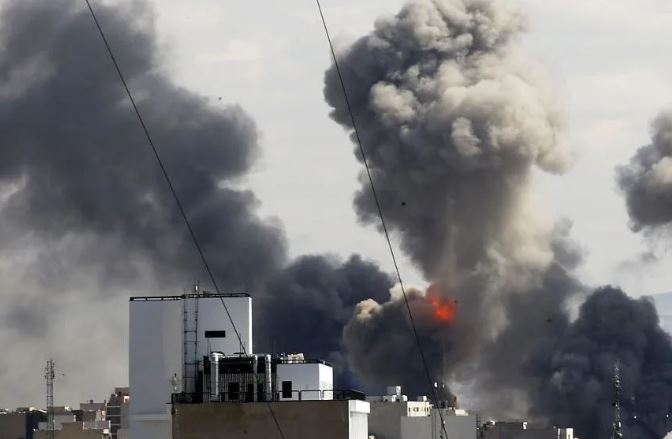
The armed aggression of the Western triad (United States, United Kingdom, and Israel) reveals a reality: the agenda of liberal globalism is essentially about eliminating alternative identities to the centralized power of the elites. There’s much speculation surrounding why this decision is being made now and not before. There’s talk of a supposed weakness in Iran that would place it in an unprecedented position, a window of opportunity for Tel Aviv. More than that, the West, and especially the United States, operates on election cycles. The balance in this regard is sending a signal to Trump that he may lack the power of Congress for the remainder of his term and face impeachment proceedings. The withholding of all the details regarding the Epstein file and the potential use by a sector of Zionist globalism to blackmail the president into war should not be discounted. However, the truth is that this is an oil war, a confrontation that seeks to keep gasoline prices within tolerable limits and use them as a pivotal point in elections. Extractive capital at its most extreme, but at what cost?
The destabilization of Middle Eastern countries through war has broken down institutions in the past, leading to the emergence of irregular groups that have further jeopardized peace. We need only recall the case of ISIS. Pentagon analysts know this, and of course, they are well aware that the death of Ayatollah Ali Khomeini will unleash a wave of insecurity and political violence—precisely what the elite repeatedly vowed to avoid since the Iraq disaster. Resource extraction, and the use of these resources to lower the cost of living in nations that are no longer industrial centers and therefore lack the capacity to maintain their standards, have led to a return to the gunpowder keg policy. A similar situation exists in almost every country in the Middle East, with sensitive issues deeply intertwined with the region's culture: women's and LGBT rights, tolerance of other beliefs. But the West has used only the events in Iran for propaganda purposes. The other absolute monarchies remain untouched because they are major oil exporters and home to numerous US military bases. The narrative of democracy and its discretionary use are elements of geopolitics that have discredited the very idea of liberal democracy and call international law into question.
What we must see in this intervention is a kind of attempt by Israel to reshape the geopolitical landscape of the Middle East, with Gaza as its first chapter. Iran is the major adversary that has been steadily growing in recent years, developing long- and medium-range missile technology, drone swarms, control of oil routes, and funding of allied armed groups that operate as irregular proxy forces on the borders of strategic locations. Tel Aviv needed an event to trigger an offensive on all fronts and use the firepower of the West to do so. They took advantage of the fact that Iran's allied powers were engaged in other theaters of operations and might not come to its aid. Proof of this is that, in parallel to the aggression against Iran, another country in the Western sphere of influence, albeit of Eastern essence, Pakistan, attacked the Afghan Taliban regime. In the days leading to the attack, Western media outlets prepared the narrative of women's rights; they positioned the debate on social media and once again took aim. It’s no coincidence that all this is happening at the beginning of March; in fact, the political and marketing use of human rights is one of the crucial elements of postmodern politics. If Iran falls, the matter will be presented largely as a gender liberation, a relief for women, and a humanitarian act by the aggressor powers.
In all this drama, there’s another major collapse: that of international law. The United Nations agencies are proving powerless to resolve the issues; worse still, they remain mired in inaction and rhetoric. At the emergency meeting of the Security Council, the vetoes of the Western powers against criticism from Russia and China were known, and therefore, the impossibility of any action was evident that through peace and agreements the conflict would end. This is leading the world to the brink of a very dangerous precipice. Addressing issues through reactive force and protocols for the use of nuclear weapons puts us one step away from apocalypse. And that should be what matters to us at this moment: sustaining peace as a possibility for life on the planet. War can only create more war.
There’s something else that this confrontation with the East brings to all of us in the West: we don't understand their identity. What may seem to us like a victory for the United States and its allies, for them is an opportunity for martyrdom and an opening toward spiritual purification. The rise of religious fundamentalism as part of a cultural backlash against the West has been a defining feature of this century. The aggression against Iran makes everything worse and also repositions the crisis within the hemisphere. Religion is an important asset in the geopolitics of the Middle East, and the war between the two main branches of Islam also permeates this issue. Something that the West is not, quite literally, interested in. This explains the existence of theocratic nations in the 21st century, where politics doesn't follow the typical parliamentary mechanisms of liberal democracy. Addressing this through violence doesn't bring solutions; instead, it complicates the possibility of a rational, plausible, and decent framework that guarantees human rights and preserves life, stability, and governance in the Middle East.
What to expect? The insecurity in the West following the US invasion of Iraq has returned, but now in a world with greater information permeability, with hybrid and fourth-generation warfare in which the boundaries between what is and what isn't, between the solid and the fluid, are blurred. Now, the enemy's location is unknown, and intelligence agencies play a crucial role. Undoubtedly, we are facing a scenario in which the realignment of forces points to a different reality, where emerging powers will sooner or later have to resort to force, with unpredictable consequences. This means that both Russia and China will at some point be affected by the extractive frenzy and the chess game played by the West, and responding will be fundamental to their very existence. In fact, the dismantling of international law points toward this scenario. In this ecosystem of the new century, small and dependent countries, with their economies plagued by structural problems and unequal power relations, are the biggest losers. While the previous legal framework guaranteed them at least a theoretical opportunity to be heard, the new international order denies them the status of legitimate actors. The return of force means that the law is respected only when it’s transformed into a power narrative favorable to one of the West's positions.
Trump's so-called Peace Council is, in essence, this new post-liberal or ultraliberal international order (depending on one's perspective) in which decisions are being made regarding matters that fall under the purview of UN agreements. It’s a realignment of alliances in the old style of the world wars. The danger of breaking international law is that it gives complete freedom to do literally anything to anyone, abandoning civilization as a principle and giving way to barbarism and the use of force as an expression of law. That is the great harm of this warmongering action. To ignore it’s suicidal, regardless of ideological positions.
More than that, the return to international law is not something that can be easily achieved after acts like these. Some acts, once committed, become ingrained in the DNA of international relations and are rearranged as part of the norm. Now, whenever a negotiation is not aligned with the West, they will kick the table and act by force. This MO is a permanent blow to the very mechanism of diplomacy, making any attempt to resolve differences peacefully hardly credible.
No one knows how the war in Iran will end, but what’s certain is that, to defeat a country like that, they have to enter and occupy it. That entails a greater cost. So far, the only actions carried out in the operational theater have been bombings, surgical strikes, and attacks on cities aimed at demobilizing forces and inflicting psychological violence. The clashes are occurring at the level of drones, manned aircraft, missiles, intelligence gathering, and the manipulation of networks and matrices. An invasion, a landing, in the style of Iraq, could be the final chapter that brings this situation in line with what happened during the George W. Bush administration. Any speculation could prove far-fetched; we must stick to the facts.
Add new comment