
Geopolitics: Open Scenarios for the Death of the Old World
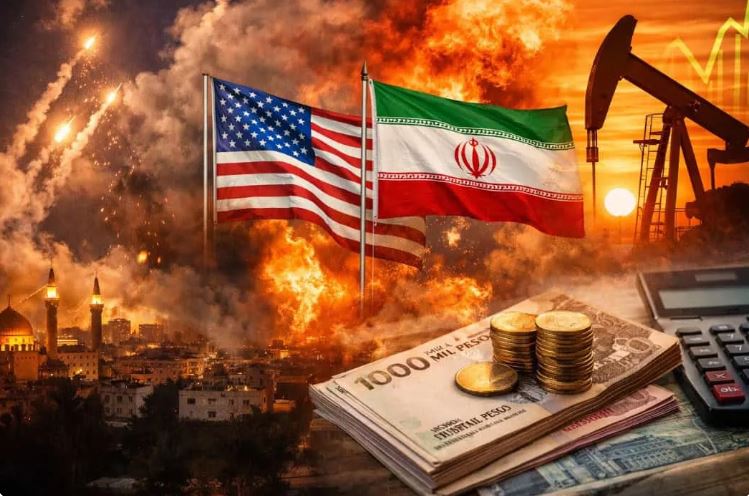
A peace treaty between Iran and the United States has been under discussion in recent weeks; however, tensions in the Middle East, created by Israel with Lebanon, continue unabated. It seems that every time the West is about to seal a cessation of hostilities, Tel Aviv sabotages it with new military operations. Who is dragging whom into war? By now, we know that the Zionist lobby in Congress wields immeasurable power in decision-making within the American establishment, to the point of dragging the country into a war it cannot win. Any expert would have warned against initiating a clash with Tehran, which would also have repercussions in the November elections.
The truth is that the closure of the Strait of Hormuz has not only affected the United States and the Gulf countries, but also the global economy, shifting geopolitics toward agreements that leave the Americans at a disadvantage. China has continued its trade through this route, while Western nations see their supply lines become more expensive. The global economy is shaken by the prices of oil and its byproducts, which undoubtedly determine the value of other goods, while the United States military hesitates to launch a ground operation in a country that could prove far worse than Vietnam. So far this year, American military spending is immense, and progress on its agenda is minimal. Aside from decapitating the Iranian leadership, there has been no regime change, nor a weakening of Tehran's position. On the contrary, the Persian narrative has been fueled by the war and continues to dominate the country.
Peace, though much advertised, seems distant, and we even see that the United States is more impatient to achieve it than Iranians themselves. And even if a plan for a cessation of hostilities is drawn up, the temperature in the Middle East is so high that it would only be temporary, not lasting. Israel has been responsible for shattering trust forever and for acting unpredictably, disrupting the stability of the peace process. Fractures in international law. Nothing else can be expected from the West, given recent events. Now, what impact might this have in the coming months? The November elections in the United States will define everything. Not only because a new legislative era may be dawning, but because a change in foreign policy is absolutely necessary. Relations between nations are being governed by force, and that's a rope that, if stretched too far, will snap. Some scenarios are out of control, and others are on the verge of exploding. Consider the situation in Taiwan. NATO is at its lowest point, and perhaps when the Democrats return, the first priority will be rebuilding the alliance and credibility among allies. In any case, the old world order is so fractured that it may already be a fatal wound. Recent events have put the US economy at risk, creating distrust in the dollar as a currency and a flight of international assets to other currencies. The instability of the political system has become economic and financial instability. There can be no stock market that predictably determines values if we don't know where a conflict might erupt tomorrow, disrupting supply lines.
The old world is riddled with wars, especially as capital no longer dictates actions in favor of the West, and new players emerge in the economy, displacing the old ones. The Middle East, with oil at the heart of its debate, defines these positions. These are not religious wars, as the Western press sometimes claims, nor are they cultural clashes. What has happened is the interest of the old powers in maintaining preferential trade systems. Now they are doing so by force and by any means necessary, even though neither Europe nor the United States guarantees good business. Trump has been the latest cry from that old world. The most recent G7 Summit has shown how Europeans look to Washington as a benchmark for shaping global macro-policies. However, we are no longer in the 1990s, when Western supremacy was evident. The world's pie is being divided according to new interests and logics, and when the military budget can no longer tip the scales in favor of the Americans, who knows what might happen? Most likely, a new equilibrium will emerge.
This doesn't mean the world is veering sharply to the left. On the contrary, what we are witnessing in this 21st century is the redefinition of the political categories that emerged from modernity. The left/right dichotomy is being challenged by the globalism/anti-globalism dichotomy and the narratives that stem from it. In other words, it's either the Western agenda of domination or its alternatives. The globalization of the class struggle has imposed a major battle in geopolitical terms, functioning as a conglomeration of internal debates within capital. The discussion is no longer about building a global social revolution, but rather about the transformations that a transfer of economic hegemony implies. Will the West remain relevant? What will happen to the United Nations system and international law?
The situation with cultural and geopolitical change can only worsen to the extent that the old world order becomes unsustainable, and this implies the danger of further wars. Following the change of party in power in the United States, foreign policy cannot be expected to be anything other than that of a system in crisis. In any case, the Democrats inherit an explosive situation, as wars have stretched tensions to their limit, and in some contexts, this means that peace treaties are unlikely or short-lived. Iran is just one example of the many open scenarios.
Translated by Amilkal Labañino / CubaSí Translation Staff
Add new comment