
FIFA to Evaluate Expanding World Cup to 64 Teams
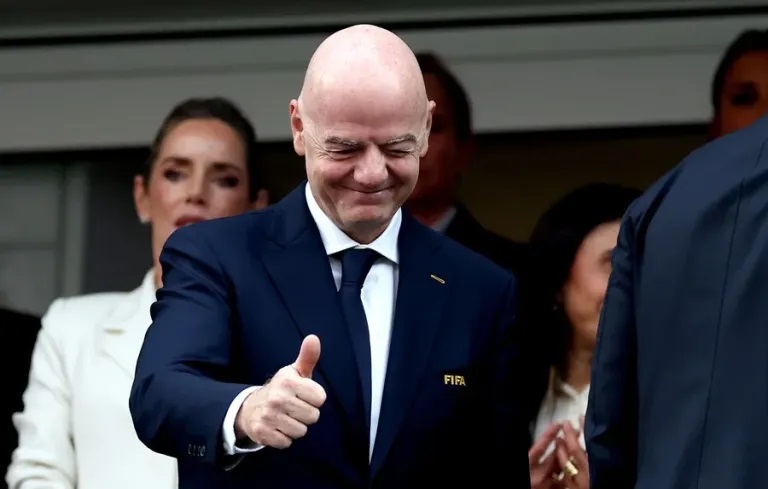
Imagen tomada de https://www.telesurtv.net
The President of FIFA, Gianni Infantino, officially announced that football's governing body will submit to institutional study and debate the possibility of expanding the FIFA World Cup format to a total of 64 participating national teams ahead of the 2030 edition.
The initiative emerges after consolidating the 48-team restructuring applied for the 2026 tournament in North America, which increased the previous slots in effect since the 1998 championship. The Swiss executive confirmed that technical committees will analyze the feasibility of the proposal with the objective of providing sporting incentives to national associations with lower levels of global competitive development.
The baseline planning for the tournament's centennial contemplates the development of official matches across six nations affiliated with three distinct continental confederations.
The motion for structural expansion was initially presented before the FIFA Council by Uruguayan executive Ignacio Alonso, subsequently gaining the public backing of the President of Conmebol, Alejandro Domínguez.
South American officials justify the need for an expanded tournament in their pursuit of obtaining full competition groups for Uruguay, Argentina, and Paraguay, overcoming the current limitation of hosting a single inaugural match per venue.
The initiative seeks to mitigate regulatory rotation restrictions that marginalize the continent from hosting major World Cup events for prolonged periods. Furthermore, the expansion project has garnered interest from various delegations seeking to ensure greater representation in the final stages of the circuit.
Conversely, European and North American confederations expressed explicit disapproval of the proposal, arguing that a 64-team tournament would devalue the technical quality of regional qualifying phases.
The President of UEFA, Aleksander Čeferin, categorized the measure as a "detrimental determination for continental football calendars," a stance that was unanimously backed by the head of Concacaf, Victor Montagliani.
Critics within the international federation point out the risk of diminishing the competitive value of current qualifying processes, where confederations such as Conmebol already possess more than sixty percent of their slots with direct access to the final tournament.
Add new comment