
Diego Luna in Cannes: Hatred in the U.S. Forces Latin America to Look Toward Spain and Europe
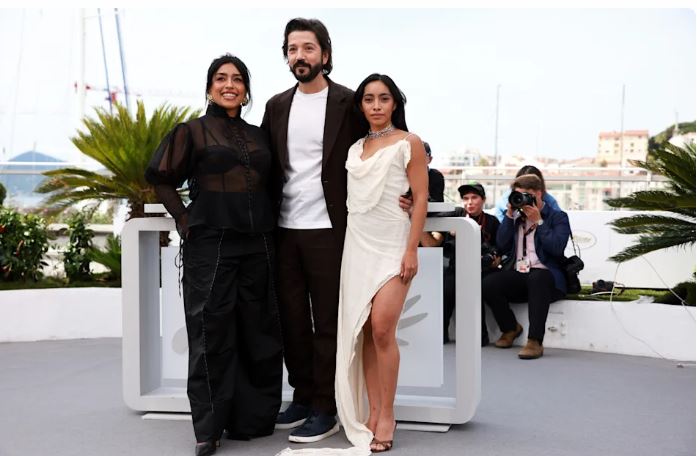
Diego Luna is attending the Cannes Film Festival in his capacity as a director with Ceniza en la boca (Ashes in the Mouth), a film exploring family, identity, and migration. The story depicts a journey from Mexico to Spain, illustrating how Latin America is increasingly looking toward Europe as the exit toward the United States becomes impassable.
"Donald Trump’s migration policies, along with the violence and the narrative of hate, have caused Latin America to look toward Europe," noted the Mexican actor this Thursday in an interview with EFE. Having worked on major U.S. productions, Luna considers it "very pertinent" to discuss current events.
In his view, real-world issues belong in cinema. "I do believe in that, and I will undoubtedly continue to do so," affirmed the director of films such as Abel (2010) and series like Everything Will Be Fine (2021).
Upon reading the book by Brenda Navarro on which the film is based, Luna discovered an "extremely interesting story to tell." It follows Lucila, whose mother has emigrated to Spain and with whom she reunites years later in Madrid, fleeing the violence in Mexico.
Spain: A Safe Harbor for Latin Migrants
The initial concept was to show how Lucila experiences the distance from her mother and the conflicts their separation creates. This led directly to "talking about a type of migration we discuss very little in Mexico, which is migration to Europe and Spain—and how Spain, in particular, has become a safe harbor for Latin American migrants."
Luna emphasized that "no single film can claim to speak for Latin American migration" as a whole due to its complexity. However, it can address the issue through a specific story like the one told in Ceniza en la boca.
"No one leaves their place of origin unless there is no other option, right? And this film speaks about those who leave, but it also speaks about those who receive," he explained.
In this sense, his goal was to make the audience reflect on "who we are when we receive others." He explores this through two opposing cases: a woman (Irene Escolar) who hires Lucila (Anna Díaz) to care for her baby and treats her with unnecessary harshness; and an elderly woman (Teresa Lozano), whom the young woman cares for and who treats her as if she were her own granddaughter.
Luna places special emphasis on the relationship between the elderly woman and the youth. "That connection they generate, that way of receiving... is the hope of what we could be, of what could be happening."
He hopes such examples prompt viewers to ask themselves "why we are not the best versions of ourselves."
"Migration is a fact; it is happening on a global level. It is a challenge facing every community," added the filmmaker, visibly pleased by the film's warm reception in Cannes, where it is featured in the Special Screenings section. The gala session held last night saw him supported by friends and colleagues such as Alfonso Cuarón and Gael García Bernal.
Anna Díaz, the Discovery, and Adriana Paz, the Strength
The film's leads were also in attendance: the young Anna Díaz, a true discovery who surprised the festival with her performance, and Adriana Paz, an established actress who accepted a smaller role in the film. While the movie rests on the young girl's perspective, it required the counterpoint of the mother.
"They read together once and what I saw was exceptional. They performed the scene in the Madrid restaurant where they confront each other," Luna recalled, noting that the first table read was so powerful he could have filmed it directly.
In those moments, he saw the movie unfolding before his eyes, discovering "a level of understanding of the characters' situations and a connection between them that felt lifelong." It is a film through which he wants the viewer to, "in some way," step into Lucila's shoes.
Add new comment