
Díaz-Canel Visits the Institute of Neurology and Neurosurgery
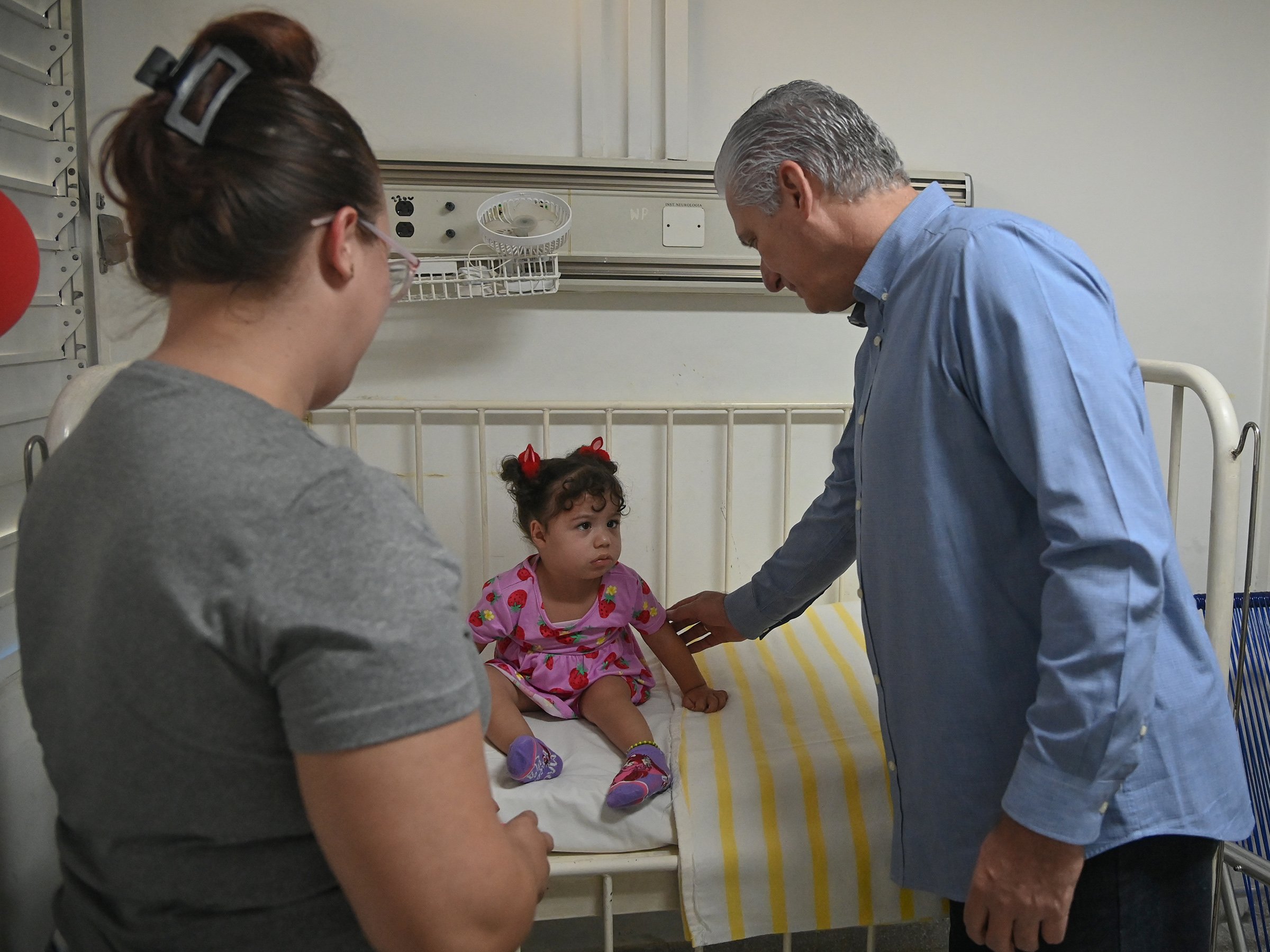
Recorrió Díaz-Canel Instituto de Neurología y Neurocirugía. Foto Estudios Revolución
Miguel Díaz-Canel Bermúdez, First Secretary of the Central Committee of the Communist Party of Cuba and President of the Republic, visited the Institute of Neurology and Neurosurgery today. During the visit, he confirmed advancements in digital transformation and telemedicine, achieved despite the intensified economic and energy blockade imposed by the United States.
Accompanied by Vice Prime Minister Eduardo Martínez Díaz, Minister of Public Health José Angel Portal Miranda, and Minister of Communications Mayra Arevich Marín, the president highlighted the professionalism, performance, and excellence of the center. According to the Presidency’s website, the institute has become a vanguard for the country’s digital transformation strategy, which is prioritized in sectors such as health and education.
Dr. Duniel Abreu Casas, Deputy Director of Diagnostic Media at the Institute, explained that work on developing digitalization and telemedicine techniques began in 2018. He noted that although progress has been difficult due to obstacles—such as the inability to obtain certain software applications—the will of the doctors and the institution has allowed them to win "50 percent of this battle."
He pointed out that telemedicine, despite being technically demanding, is a way to confront the shortages imposed by the blockade. Once implemented, it generates significant savings in paper, printing, and time.
Dr. Orestes López Piloto, General Director of the 64-year-old center—which governs neurology and neurosurgery specialties in the country—conveyed the workers' pride in the President’s visit. He noted that many renowned specialists with decades of experience wished to express their commitment to their science, their patients, and the Revolution.
For 2026, the center’s projections include maintaining excellent care for the national population and continuing to advance in digital transformation, telemedicine, and tele-education. Dr. Abreu Casas argued that the institute is at the forefront of these processes, with all diagnostic laboratories now digitized and integrated into the information and clinical history systems, allowing doctors to interact via the network from their desks.
Teleconsultations enable real-time interaction with Cuban or foreign medical personnel, regardless of their location, through three high-definition internet points already established. Furthermore, digitalization has brought upgrades to imaging and equipment, while providing the security of digital backups for documentation that was previously stored in physical archives.
Upon concluding his visit, President Díaz-Canel wrote in the center’s Guest Book: "It is very comforting in the hard times we live in, with enormous shortages and suffering the impact of the intensified blockade—compounded by the energy blockade—to appreciate the performance, will, professionalism, tenacity, and desire for improvement of the collective of workers at the National Institute of Neurology and Neurosurgery. The progress in the digital transformation process and the use of AI in this important institution is particularly interesting. If we can do it today, we will always be able to."
Add new comment