
Dialogue Space on Indigenous Cultures Continues in Cuba
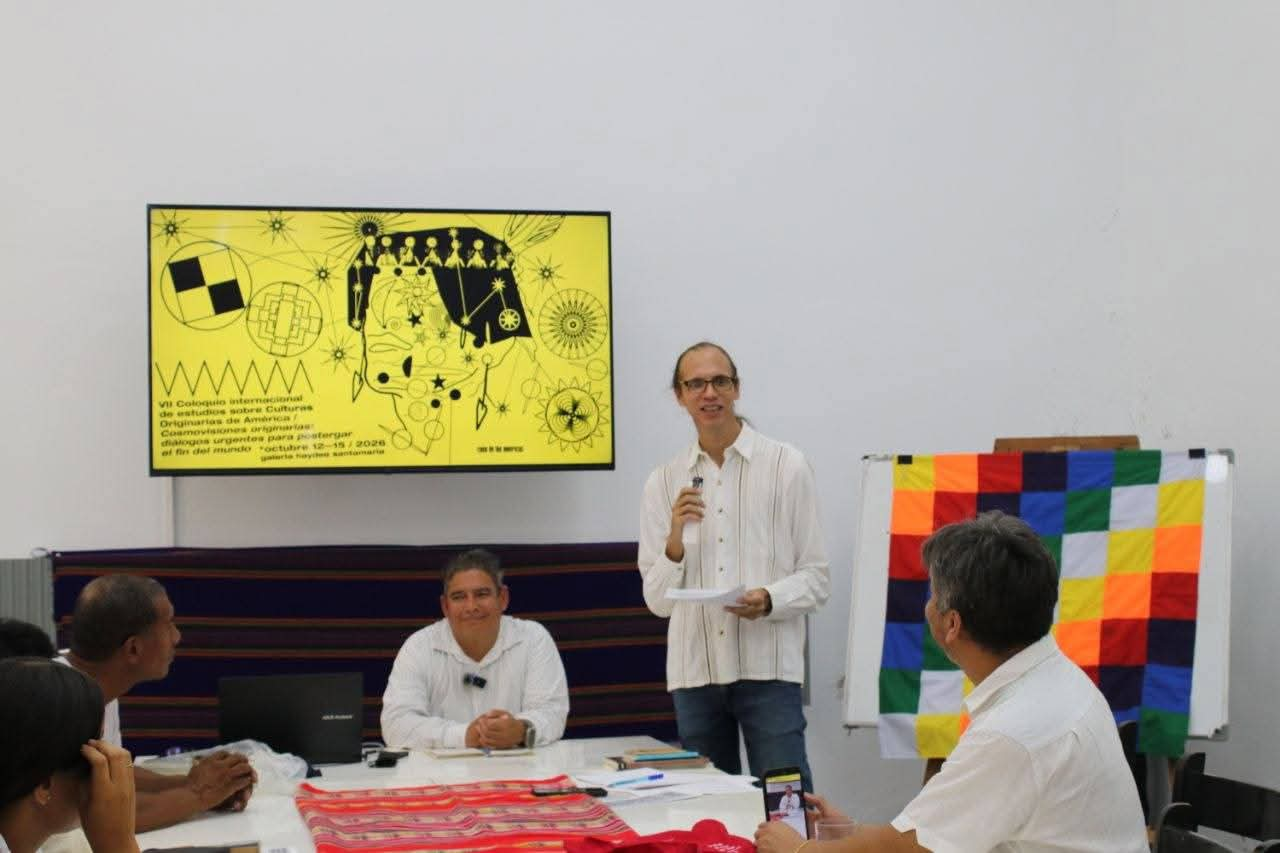
La cita sesiona en la Galería Haydee Santamaría de Casa de las Américas, ubicada en la zona capitalina de El Vedado, con entrada libre, y fue inaugurada en el Día de la Resistencia Indígena.
The gathering is convening at the Haydee Santamaría Gallery at Casa de las Américas, located in the capital's El Vedado district, with free admission, and was inaugurated on Indigenous Resistance Day.
This edition, dedicated to the theme “Original Worldviews: Urgent Dialogues to Postpone the End of the World,” will run through the 15th of this month.
The morning schedule features lectures and panels presented by community representatives, specialists, and scholars of Indigenous cultures of the Americas, as well as documentary screenings, while afternoon sessions are dedicated to video presentations accessible via the institution's YouTube channel.
Scheduled for Tuesday morning was the lecture “Linguistic and Identity Revitalization: A Challenge Within the Tosepan Cooperative Union,” delivered by Rosalinda Heredia (Mexico).
This was accompanied by the panel “Dancing to Postpone the End of the World,” featuring presentations by Roberta Maria Zambon (“The Dance of Living Well: Celebrating and Imagining Other Worlds”), Marcilio Vieira (“Dancing to Postpone the End of the World: The Toré as Body-Territory”), Renata Celina de Morais (“The Ciranda Circle: The Design of a World That Never Ends”), and Daniela María Amoroso (“Sustainable Evolutions: Cultural Knowledge and Practices as Epistemology”).
In the afternoon, the book O toré e a memória dos povos indígenas potiguar was presented by Marcilio Vieira.
Available on YouTube were video presentations titled “Indigenous Rituals as Practices of Resistance Against Capitalism” and “Care and Veneration of Nature from Indigenous Worldviews: An Educational Ethic to Postpone the End of the World.”
During the opening of the Colloquium, Jaime Gómez Triana, director of the Program for Studies on Indigenous Cultures of the Americas and vice president of Casa de las Américas, noted that the event was created to bring visibility to “the many worlds that exist in this hemisphere.”
Likewise, the gathering seeks to attribute value to all worldviews and propose new encounters and potential dialogues.
The first day included the lecture “Contributions of Indigenous Peoples in the Search for Humanity's Environmental and Social Balance,” given by Jacob Omar Jerónimo; “Experiences of a Teacher in Indigenous Communities of Guatemala,” by Roberto Carlos Morales; and “Cartography of Isla del Rey,” by Silvana Lamilla.
Video presentations featured “Social Semiotics, Territory, and Collective Cinema: Struggles, Resistance, and Disputes over Meaning in Abya Yala”; “Zapatista Cinema and Obedient Aesthetics: Insurgent Poetics from the Community”; and “When Words Lose Their Territory: Economic Transformation, Community Knowledge, and Dislocation of Didza Xidza.”
Additionally, the audiovisual work The Timely Action: The Resurgence of Abya Yala was presented.
Add new comment