
Cuban Writers and Artists Union Denounces Blockade at UN
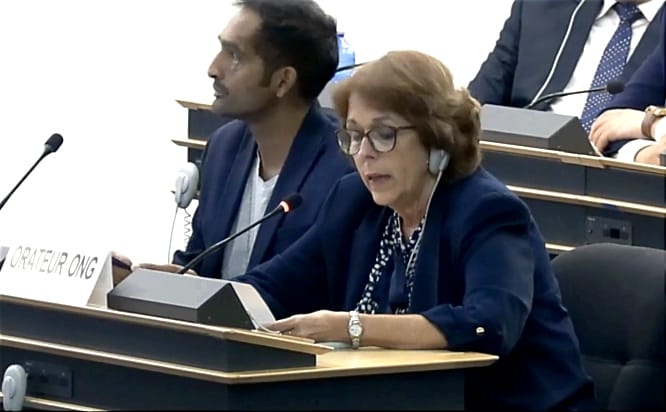
Marta Bonet, intervino en el Consejo de Derechos Humanos de la ONU. donde defendió la cultura como derecho esencial.
The president of the National Union of Writers and Artists of Cuba (Uneac), Marta Bonet, spoke today at the UN Human Rights Council, where she defended culture as an essential right.
During the 61st regular session of that Council, the intellectual denounced the impact of the U.S. blockade on the artistic life of the island, the organization she leads reported on social media.
In the panel dedicated to economic, social, and cultural rights, Bonet emphasized that Uneac, comprised of more than 7,800 writers and artists, works to protect freedom of creation and association, as well as to guarantee citizen participation in cultural life.
The defense of economic, social, and cultural rights is an indispensable condition for the full realization of all Cubans, she stated, highlighting that culture constitutes a vital component of the nation's identity and spiritual life.
Bonet denounced that the economic, commercial, and financial blockade imposed by the United States for more than six decades directly affects creators, limits artistic production, and hinders the functioning of cultural and educational institutions.
Despite these restrictions, she emphasized that Cuba maintains a broad network of cultural institutions, subsidizes artistic production, and guarantees accessible prices for the enjoyment of the arts, as part of an inclusive and democratizing public policy, Uneac added.
Its president stressed that cultural projects on the island are conceived without discrimination based on sex, race, age, religion, or ability, promoting the participation of all citizens both as spectators and creators.
Finally, she noted that multilateral forums such as the Human Rights Council constitute an essential platform to denounce the impact of the blockade and, at the same time, share with the international community the policies in Cuba that ensure respect for cultural rights.
During the same session, the Cuban Association of the United Nations also spoke, sharing with the forum the experiences of civil society in defending economic, social, and cultural rights.
Add new comment