
Cuban Director Humberto Solás' Film Cantata de Chile Premieres in Chile
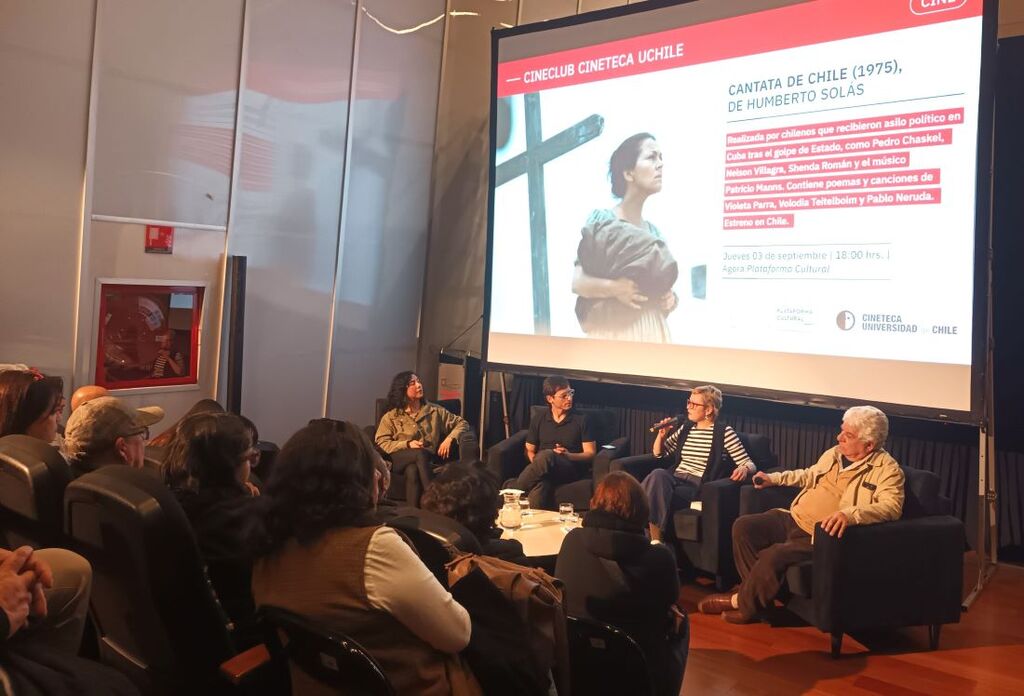
Foto: tomada de Prensa Latina
A Historic Premiere in Santiago
Hundreds of people gathered in Santiago, Chile, for the premiere of Cantata de Chile, a film directed by Cuban filmmaker Humberto Solás in 1975 and presented in the country for the first time half a century later.
Produced by the Cuban Institute of Cinematographic Art and Industry (ICAIC), the feature was filmed entirely on the island. Many of its cast members were Chilean actors who were forced into exile following the military coup against the Popular Unity government.
The movie depicts the 1907 massacre committed by the Armed Forces against nitrate workers who had organized a strike for better wages and were staying at the Santa María de Iquique school.
This tragic event cost the lives of hundreds of workers and their families, marking a pivotal turning point in the history of the country's labor movement.
The feature film was presented last night at the Cineteca of the University of Chile, which proved insufficient to accommodate all attendees, making it necessary to set up an overflow screening room at the Juan Gómez Millas Campus.
"The film is deeply moving. Many audience members left in tears and thanked me for this initiative, which is both important and healing," stated Valentina Ávila, head of mediation and audience engagement at the Cineteca, in remarks to Prensa Latina.
She explained that the screening was made possible through arrangements with the Prague Film Archive, as the movie had won an award at the Karlovy Vary International Film Festival—one of the most prominent film events in the Czech Republic—which preserved a 35mm print.
The presentation is part of the film cycle "Echoes of Memory: Persistent Images," which aims to restore and screen works previously unknown in the country.
Solidarity and the Memory of Exile
Chilean filmmaker Sergio Trabucco explained that his ties with Cuba date back to the 1967 Viña del Mar International Film Festival, where Latin American directors gathered, including then-president of ICAIC, Alfredo Guevara, one of the most brilliant intellectuals of the Cuban Revolution.
Following the 1973 coup d'état against the government of Salvador Allende, many artists were imprisoned and subsequently went into exile, including Trabucco himself.
"Alfredo was deeply shaken by what happened to Allende, and he expressed the need to make a film in solidarity with the Chilean people and their struggles. From that point, Humberto Solás, who was one of the most prominent directors, proposed creating a cantata," he recalled.
Around 30 Chileans participated in the project, including Pedro Chaskel, Shenda Román, Nelson Villagra, and Patricio Manns.
"It is within this context of solidarity that this film must be viewed," the director expressed.
Academics, intellectuals, students, friends of Cuba, and the general public attended the screening, alongside the Counselor and Head of Chancery of the Cuban Embassy in Chile, Vivian Delgado, and First Secretary for Political Affairs, Rosario Rodríguez.
Add new comment