
Cuba Reports on State Budget Execution
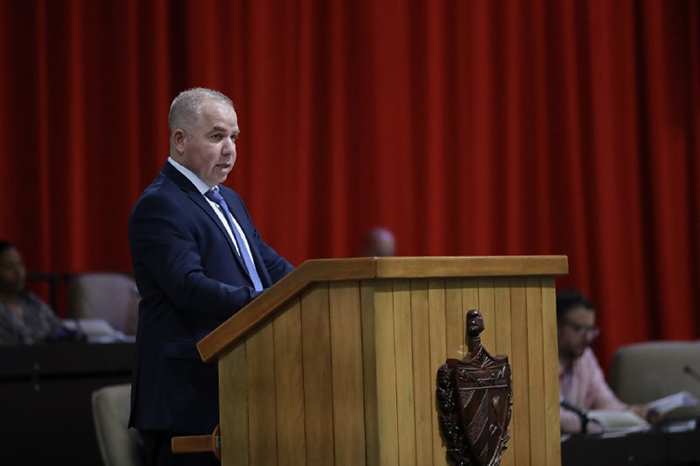
Vladimir Regueiro Ale, ministro de Finanzas y Precios
The analysis of the State Budget's execution for the first half of the year, along with the settlement report for 2025, occupied part of today's session of the National Assembly of People's Power.
The intensive agenda of the Seventh Ordinary Period of Sessions of the 10th Legislature, which began this Wednesday at the Havana Convention Center, included remarks by Vladimir Regueiro Ale, Minister of Finance and Prices (MFP), accompanied by the parliamentary committees' assessment.
Providing an update on the State Budget's execution through the first half of 2026, he stated that the budget deficit stands at 35.016 billion pesos, higher than planned.
He emphasized that through June, both net and gross revenues fell below projections, reaching only 88% and 77% compliance respectively, resulting in a lower-than-desired surplus in both current accounts and local budgets.
Although most provinces exceeded their planned revenue targets, Cienfuegos, Guantánamo, and the Isle of Youth did not.
Total expenditures were executed at 93%, and the social security deficit came in lower than planned; however, the year is projected to close with a budget deficit of 132.910 billion pesos, significantly above plan, due mainly to revenue shortfalls, the MFP head indicated.
Regarding the State Budget's execution during 2025, he said it was heavily shaped by an international economic environment of extreme complexity and uncertainty, marked by geopolitical tensions, persistent inflation, and volatile fuel and food prices.
Compounding these systemic distortions, the minister explained to lawmakers, was the direct impact of the economic strangulation policy stemming from the embargo imposed by the United States government, which further restricted access to external financing sources, raised the cost of logistics and supply chains, and hindered international financial transactions, severely limiting the inflow of foreign currency and placing pressure on social spending.
Nevertheless, despite these conditions, fiscal performance was guided by the unwavering principle of protecting the sustainability of the Revolution's social programs.
According to the MFP head, under these circumstances the State Budget required a redoubled effort in balancing revenues and expenditures in order to preserve the core of our social achievements, without abandoning the goals of macroeconomic stabilization.
At the close of 2025, a fiscal deficit of 67.642 billion pesos was recorded, a figure 20.897 billion pesos lower than the amount initially approved.
Gross revenues totaled 463.461 billion pesos, exceeding projections by 9.524 billion pesos, and covered 88% of expenditures executed during the period.
Of the total revenue collected, tax revenues accounted for 68.6%, amounting to 311.074 billion pesos.
This indicator, Regueiro Ale explained, which has grown relative to previous periods, reflects the consolidation of the tax system as the Budget's main source of financing, within a framework that reinforces the validity of the tax policy decisions consolidated during this period, related to strengthening fiscal control and implementing special taxes.
Contributions from non-state sector entities, primarily those tied to sales and profits, contributed favorably to this growth.
However, fiscal indiscipline persists, with a high incidence of revenue underreporting, which limits the capacity to expand and improve the quality of programs for the population.
He said that through strengthened fiscal control actions by the Tax Administration, outstanding debts of 12.056 billion pesos were identified, a figure higher than that recorded in 2024.
One point of concern is that, although 98% of taxpayers activated their fiscal bank accounts as part of the banking-inclusion process, a low level of actual use of these accounts was observed, revealing a lack of rigor in implementing this measure, which is vital for transparency and fiscal control.
The fight against tax evasion and the informal economy remains an ethical and material challenge for fiscal equity and social justice, moving the country closer to the ideal of an increasingly redistributive budget.
Amid the complex economic situation, the revolutionary government maintained its priority of social programs guaranteeing basic services to the population.
Strategic sectors such as health, education, and social assistance and security were prioritized, along with investments in infrastructure and sustainable development. Nevertheless, inflation and shortages of basic goods have generated social tensions, which has led to an increase in public spending, the speaker emphasized.
In 2025, Social Assistance efforts focused on addressing the needs of vulnerable groups, including the elderly, people with disabilities, and low-income families, as a tool to promote social equity.
In presenting this budget settlement report, we all find ourselves immersed in the implementation of Economic and Social Transformations, Vladimir Regueiro Ale recalled in his remarks before Parliament.
Add new comment