
Cuba Flexibilizes Foreign Trade
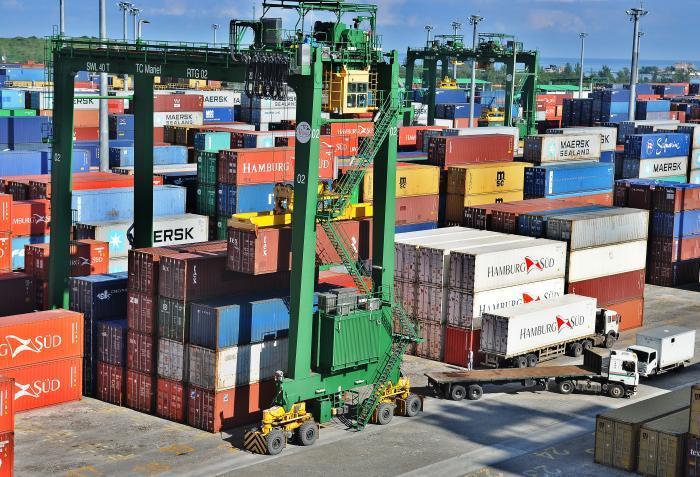
Foto: Jose M. Correa
As part of Cuba's new economic measures, one of the most outstanding topics today is the greater opening of foreign investment and the flexibilization of foreign trade — the country's most significant reform in decades.
The National Assembly approved a package of measures that for the first time allows foreign capital participation in private and cooperative enterprises, authorizes direct foreign trade without state intermediaries, and expands the partial dollarization of the economy.
Within the historic package of 176 economic measures approved by the National Assembly, the Cuban government is introducing an unprecedented shift in its foreign investment and foreign trade policy, opening the door to foreign capital participation in the private sector, while eliminating decades of absolute state control over imports and exports.
The reforms, presented by Prime Minister Manuel Marrero and backed by the Communist Party of Cuba, seek to revitalize an economy mired in its worst crisis in decades. This comes amid a sustained contraction of the island's GDP over the past six years and under the intensification of the U.S. blockade, which has almost completely prevented oil from entering the island.
The reform package contemplates a substantial simplification of procedures for approving direct foreign investment, with greater decentralization of the process that will expedite the arrival of capital to the island. For the first time, private and foreign capital participation in private and cooperative enterprises is authorized — a far-reaching change that breaks with the traditional scheme in which foreign investment could only be channeled to state enterprises.
The government will also allow foreign capital participation in fuel purchases and sales, as well as in strategic technological areas such as ETECSA's data centers, mobile networks, and other digital infrastructures.
In the financial sector, the measures project greater private capital participation in banking activity, including the possible creation of private banking under the supervision of the Central Bank and subject to the same regulations as the state banking system.
One of the most significant changes is the authorization for private enterprises — including micro, small, and medium enterprises (MSMEs) and cooperatives — to import and export directly, without resorting to state agencies that until now established deadlines and fees. This elimination of mandatory state intermediation represents a radical change in Cuba's foreign trade model, which for decades maintained absolute state control over import and export operations.
The new regulations also provide incentives for the importation of inputs and raw materials destined for productive processes, with the aim of reactivating national industry. State enterprises will also benefit from these measures, as they will gain powers to design their own wage systems, use their profits with fewer restrictions, and partner with private and cooperative enterprises.
The reforms equate Cubans residing abroad with foreign investors in terms of participation in direct investment projects. Municipal governments, which will also receive powers to export, import, and retain foreign currency, will be able to manage projects driven by Cubans living outside the island. This opening seeks to channel remittances and capital from the Cuban diaspora toward productive investments in the country — a sector that until now had significant restrictions on participating in the national economy.
As part of the reform package, the government projects a resizing of the official currency exchange market, with the incorporation of non-state economic actors and the creation of private exchange houses. The measures also contemplate a flexibilization of financial operations for foreign investors, in a context of growing partial dollarization of the Cuban economy driven by currency scarcity and the accelerated depreciation of the Cuban peso.
Add new comment