
Cuba Denounces Illegality of U.S. Naval Base in Guantánamo
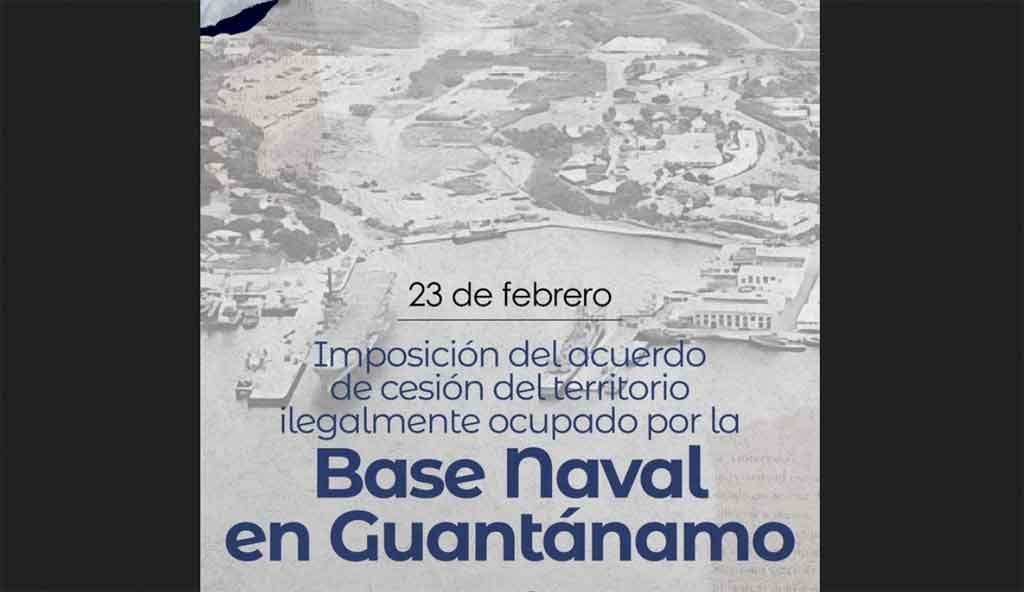
Cuban Foreign Minister Bruno Rodríguez today recalled the 123rd anniversary of the formalization of the treaty imposed by the United States government through which it usurps 117.6 square kilometers of Guantánamo Bay.
Rodríguez emphasized on social media platform X that the Guantánamo Naval Base was established without the legitimate consent of the Cuban people, and against the principles of international law.
The Minister of Foreign Affairs denounced that the installation has been used as a torture center for hundreds of prisoners, and that it currently operates as an illegal migrant detention center, where individuals are subjected to "terrible living conditions" and excluded from the jurisdiction of U.S. courts.
Likewise, he insisted that the presence of the base and the absence of a termination clause violate Cuba's sovereignty and territorial integrity, against the express will of the island's people and Government.
Covering 117.6 square kilometers of Cuban national territory, the Guantánamo Naval Base began operations in December 1903 and served, in the first half of the 20th century, as a training and preparation ground for the U.S. fleet.
After the triumph of the Revolution (1959), the enclave became a platform for permanent aggression against the country, through support for counterrevolutionary organizations and networks of the Central Intelligence Agency (CIA).
Cuba has reiterated in various multilateral forums its demand for the return of that territory, whose current use constitutes an affront to the principles upheld by the Cuban State and people.
Add new comment