
Cruise Ship Affected by Hantavirus Outbreak Reaches End of Its Voyage
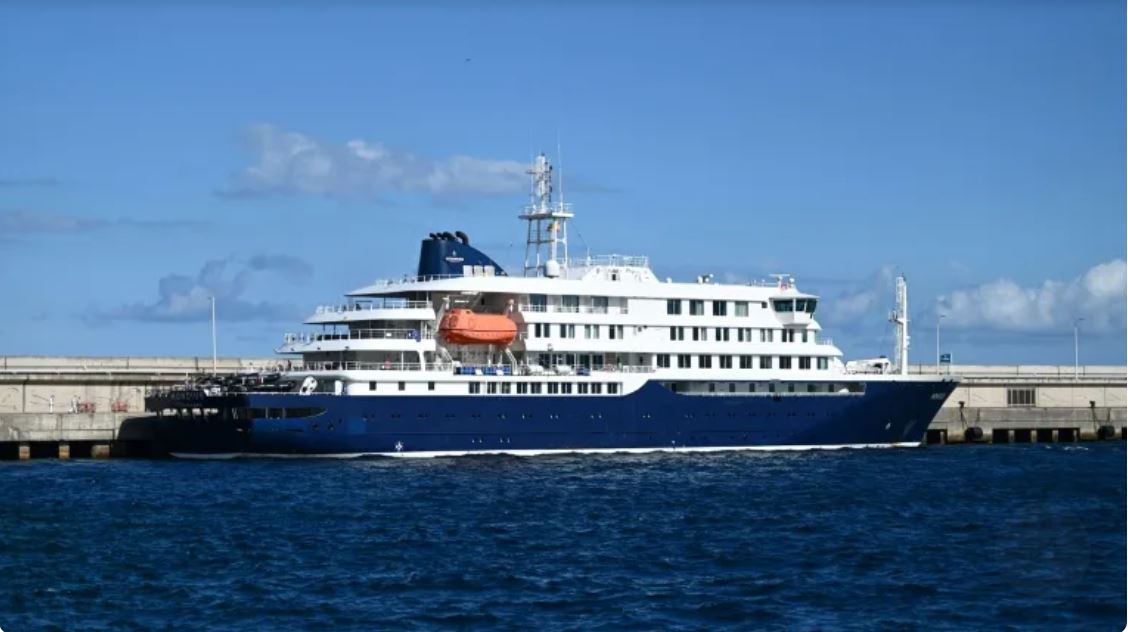
El brote de hantavirus en el crucero MV Hondius provocó una alarma global (JORGE GUERRERO)
(JORGE GUERRERO/AFP/A
The cruise ship that sparked worldwide alarm over a hantavirus outbreak docked Monday at the port of Rotterdam, carrying only a skeleton crew that will have to complete several weeks of quarantine.
The MV Hondius, which departed on April 1 from Ushuaia, at the southern tip of Argentina, bound for Cape Verde, suffered a hantavirus outbreak that resulted in three fatal cases.
AFP reporters aboard another vessel observed the ship docking at the port of Rotterdam, Europe’s largest port, where it will undergo a disinfection and cleaning procedure.
The disembarkation is planned for 27 people still on board, of whom 25 are crew members and two are medical personnel from the vessel, which is owned by the Dutch company Oceanwide Expeditions.
The World Health Organization has moved quickly to reassure the world, stating that the outbreak is not comparable to the COVID-19 pandemic.
“The risk to public health has been reassessed in light of the most recent available information, and the overall global risk remains low,” the WHO announced in a bulletin published just hours before the ship’s arrival in Rotterdam.
The WHO added that “although additional cases among passengers and crew members may continue to emerge,” the risk of transmission “should decrease following disembarkation and the implementation of control measures.”
The virus has an incubation period of several weeks, meaning more cases could still arise.
To date, at least seven positive cases have been confirmed, with one additional probable case, according to an AFP tally based on official sources.
In Canada, a passenger from the cruise ship who remains in quarantine tested “presumptively positive for Andes hantavirus,” the country’s Public Health Agency reported on Saturday.
Isolation and Repatriation
More than 120 passengers and crew members were evacuated from the ship to their home countries or to the Netherlands, which assumed special responsibility given that the vessel flies the Dutch flag.
Two people — a Dutch national and a British citizen — were evacuated on an emergency basis to the Netherlands, where they were hospitalized. Both are stable, and the British citizen is in condition to be repatriated in isolation, Dutch authorities indicated.
All other evacuees brought to the Netherlands from the ship have tested negative for the virus. Some remain there in quarantine, while others have already flown back to their home countries.
All individuals on board are asymptomatic, according to Oceanwide Expeditions, and are being closely monitored by the two medical staff members aboard the vessel.
The Andes Strain
The individuals scheduled to disembark Monday include 17 Filipino nationals, four Dutch nationals (two crew members and two medical workers), four Ukrainians, one Russian, and one Polish national. Some will remain in quarantine at the port, while others may complete their isolation at their residences.
Still aboard the vessel is the body of a German woman who died during the voyage. After docking, the ship will undergo an exhaustive cleaning and disinfection procedure, the operator stated.
The cruise departed from Argentine Patagonia, passed through several remote islands in the South Atlantic, and then headed north toward Cape Verde off the coast of Africa. Due to the outbreak, the ship sailed to Tenerife in the Canary Islands, where evacuations were carried out by air.
The operation to repatriate individuals aboard the MV Hondius presented several diplomatic challenges, as different countries had to agree to receive and treat passengers. Cape Verde refused to allow the ship to dock, and the cruise had to remain anchored off the coast of the capital, Praia, while three people were evacuated by air to Europe. Spain’s central government had to negotiate with the regional administration of the Canary Islands to permit the evacuation operation from Tenerife.
Initial hantavirus infection occurs through exposure to the saliva, urine, or feces of infected rodents, generally in enclosed environments. The disease is endemic in Argentina, where the voyage began. Those infected carry the Andes strain, the only documented strain capable of person-to-person transmission.
Add new comment