
Communications in a Complex Cuba: Maintaining the Vitality of Essential Services
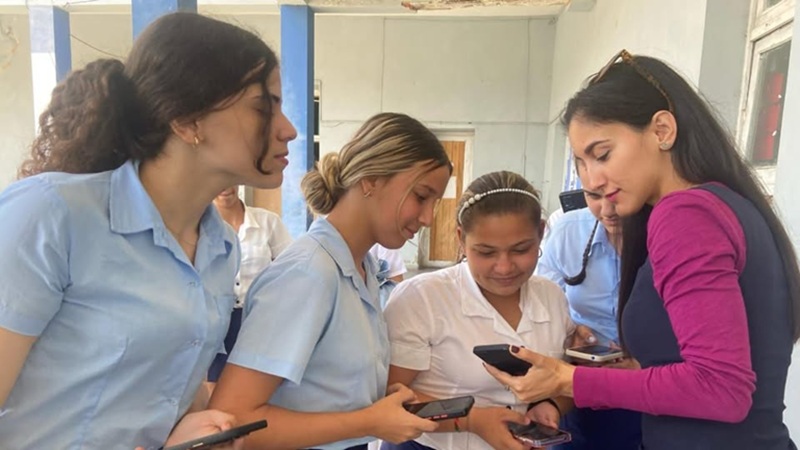
Foto: tomada del perfil en Facebook ETECSA_Cuba
In the current scenario distinguishing Cuba, marked by persistent energy tensions, there are numerous obstacles now accompanying the communications sector as well—a sector with which practically all inhabitants of this Island interact.
Therefore, it is worth recalling the considerations of the Minister of Communications, Mayra Arevich Marín, during a recent Round Table discussion on this and other topics.
The minister referred to how difficulties have forced the country's communications system to reorganize, protect its essential services, and simultaneously accelerate its digital transformation.
The declared priority is clear and pragmatic: sustaining telecommunications, postal services, and IT services that are vital both for the population's daily life and for the functioning of the economy, relying on the digital agenda and the national artificial intelligence strategy as action frameworks.
Connectivity appears in this discourse not as a technological luxury, but as a structural pillar without which it is impossible to articulate economic actors or effectively reach citizens.
Hence, programs have been activated aimed at optimizing resources and guaranteeing the continuity of a system highly dependent on energy, spanning from telecommunications and radiocommunications to the postal sector.
Along these lines, concrete actions are advancing, such as battery replacement by ETECSA and the deployment of strategic renewable energy projects, mainly solar, both in this company and in Correos de Cuba, with more complex plans destined for radio and television.
The search for stability in the sector relies on broader coordination involving the Electric Union, the national electronics industry, and the importation of photovoltaic systems, integrating these efforts into the national renewable energy project.
In this framework, the role of local governments has been decisive, with territories allocating their own resources to install solar systems—such as Mayabeque and Sancti Spíritus—and others willing to follow that path, reinforcing a logic of territorial co-responsibility.
Amid these limitations, the Ministry underscores the relevance of maintaining and making visible the channels for public attention, from traditional numbers for reports and information to specific lines for different services, as well as digital platforms that have become essential.
Standing out in that universe is Transfermóvil, recently celebrating 11 years, defined as a tool made for the people, with more than 60 procedures available and the capacity to operate even without connection.
Added to this is the ETECSA digital store, Online Services, which centralizes landline, mobile, and internet management, and integrates with payment platforms like Enzona, expanding access to electronic commerce and banking services.
But It Keeps Moving
Despite so many difficulties, aggravated to the extreme by the energy blockade imposed by the U.S., the national digital ecosystem continues to grow with applications and services seeking to take root in daily life.
Emphasis is placed on the use of Todus, included in data packages and already enabled for calls, with progress toward video calls, as well as on the role of Picta as a support channel for education and culture.
Apklis, for its part, is consolidating as a repository of computer solutions and a showcase for national developers, while the Soberanía portal promotes digital government, electronic identity, and a culture of responsible internet use, with emphasis on cybersecurity.
In the postal sphere, the continuity of press and parcel distribution is reaffirmed—the latter crucial both for the population and for the country's external income.
Correos de Cuba is advancing in renewable energy projects and in coordinating schedules with local governments, strengthening municipal autonomy, while recognizing the challenge of sustaining radio and television services as essential supports for culture and information.
In this context, the use of the national antivirus and the expansion of digital signatures for natural persons is promoted, supported by an application developed by Softel that allows managing personal and work certificates in a user-accessible manner.
The minister also highlighted the role of the Joven Club de Computación, founded by Fidel and soon to turn 37, as spaces that reinvent themselves to bring technology to communities.
Work in grandparents' homes, homes for children without family protection, and digital literacy processes, as well as training competencies in the use of applications and in areas such as robotics and cybersecurity, reinforce the social dimension of digital transformation, including incident response and management of telecommunications licenses and permits.
The message closed with recognition and commitment. Within the framework of the Communicator's Day, Arevich Marín highlighted the resilience of sector workers, who have sustained services in an especially complex year, and reaffirmed that despite energy difficulties, the Ministry of Communications will maintain the impetus for digital transformation and the guarantee of telecommunications as an essential component of the country's development.
Translated by Sergio A. Paneque Díaz / CubaSí Translation Staff

Mayra Arevich, ministra de comunicaciones. Foto: tomada del Perfil en Facebook del Consejo de la Administracion Plaza de la Revolución
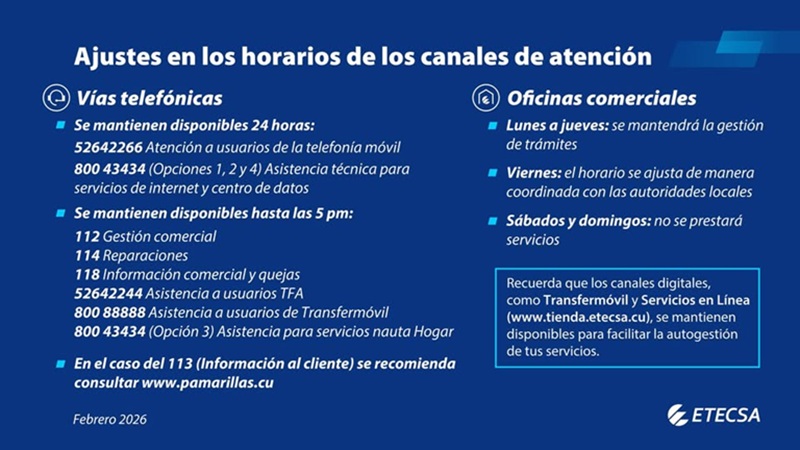
Imagen: tomada del perfil en Facebook ETECSA_Cuba
Add new comment