
Colombian Presidential Elections: De la Espriella and Cepeda Meet Second Round
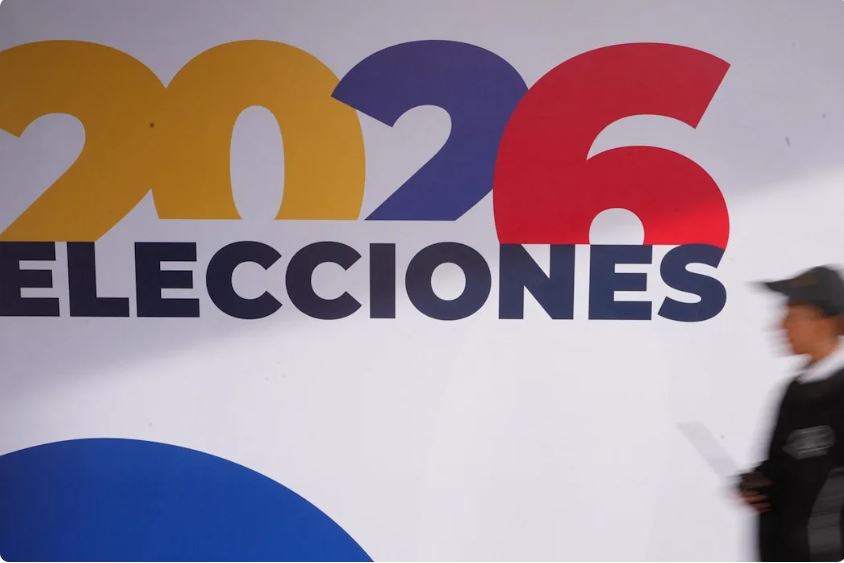
The far-right candidate Abelardo de la Espriella, of the Defenders of the Homeland movement, and the leftist Iván Cepeda, of the Historical Pact, will face each other in the second round of Colombian presidential election on June 21, having received the most votes in the first round. This Sunday, De la Espriella surprised everyone by surpassing 10 million votes (43.74%), a better result than predicted by the polls, which consistently placed him in second place behind Cepeda.
The leftist candidate, meanwhile, came in second with 9.5 million votes (40.90%), with less than 2% of the 122,020 polling stations still to report, according to the National Registry, the entity that organizes the elections.
However, since neither candidate obtained the required majority to win in the first round, De la Espriella and Cepeda will advance to a runoff election in three weeks. Third place goes to Senator Paloma Valencia, of the Uribista Democratic Center party, who received 1.6 million votes in this partial count (6.91%).
Valencia is the biggest loser in this election because her vote share is far below the 12% predicted by the latest polls, and even lower than the 3.2 million votes she obtained on March 8 in the primary of center and right-wing parties in which she was chosen as the candidate.
In fourth place is Sergio Fajardo, of the center party Dignity & Commitment, with 992,510 votes, representing 4.26%.
Another center candidate, former Bogotá mayor Claudia López, is in fifth place with 221,058 votes (0.94%).
Leaderships on the left have called for a recount. Previously, President Gustavo Petro had expressed his distrust of the software used.
Regarding this, the National Registrar, Hernán Penagos, said that the problem lies not in the software, but in the coercive methods used against voters and vote buying.
ABELARDO DE LA ESPRIELLA
The so-called Devil's Advocate and defender of organized crime, the far-right millionaire Abelardo de la Espriella, has mixed slogans from Donald Trump, Nayib Bukele, and Javier Milei in crafting his presidential platform, hoping to attract more votes from reactionary forces, such as those of Uribismo, to secure victory in the runoff election.
Ostentatious to the core is this man who could become the successor to the leftist Gustavo Petro: Louis Vuitton loafers, more than 20 colognes for different times of day, bottles of alcohol that cost over $10,000—in short, the far-right presidential candidate in Colombia, who claims to represent "the never-before-seen," likes to present himself to the world in luxury: he doesn't hide the fact that he travels by private jet, says his father taught him how to pair good wines with good cheeses, and travels once a year to buy his clothes in Italy.
His lifestyle is his campaign style. When he's on stage, he sets off fireworks, flies drones, and dances to AI-generated videos of tigers—the animal with which he identifies. His wife says that if they lose the presidential election, it's no problem, as they would return to their home in Italy or the United States, where they also have citizenship. But, according to the polls, "El Tigre" (The Tiger) has one foot in the Casa de Nariño (Presidential Palace). Fueled by a hardline approach to solving the security crisis and his promise to break with traditional politics, he was second in the polls. And now he has surprisingly won the first round.
At 47, “the defender of homeland” has never held a public office, although he has been involved in public life for over two decades. He is known as a criminal lawyer who enjoys taking his strategies to the media: he has defended politicians, mobsters, and the owners of a pyramid scheme. He likes fighting, weapons, attention, and, above all, provoking. He confessed on television, laughing, that as a child he used to tie cats to firecrackers to watch them explode. “It was terrible, but I enjoyed it,” he said.
Uribe is a close friend of the candidate's father, Abelardo de la Espriella Juris, also a lawyer and a former magistrate of the Administrative Court of Córdoba, whom Uribe appointed as a notary, first in Cartagena and then in Bogotá. He had three sons: Abelardo Tercero, the eldest; María del Mar, the youngest; and Abelardo Gabriel, the candidate, the middle child. Their mother, María Eugenia Otero Aldana, comes from a cattle-ranching family with connections in local politics and is currently campaigning for him.
The father's greatest frustration was not winning the governorship of Córdoba, a position he ran for twice in the 1990s. "I don't believe in depression, but the old man suffered a lot from losing twice," says Antonio Sánchez, a journalist from the region. "He always wanted to be elected by the people, but that's very difficult in Colombia, and it's very difficult in Córdoba." The electoral greatness to which the father aspired is now embodied by the son.
For other criminal lawyers, De la Espriella represents the "anything goes" mentality. "He's a person who likes to win, and to win, anything goes," says a lawyer who knows his career well. "I can't question whether a person handles certain processes; what I can question is how they operate within that process. This lawyer sees him as a “very shrewd” man, with the ability to “manipulate any circumstance and turn it to his advantage,” who has no qualms about surrounding himself with people better than him. “But he’s not the tiger he’s being portrayed as,” the lawyer warns. “He’s more like a cat because he always lands on his feet.”
The one people De la Espriella has failed to convince are the independent media, which have spent years scrutinizing his ties to paramilitaries. Besides calling those who ask him uncomfortable questions ignorant, he has filed lawsuits against more than 20 journalists for libel and slander, according to La Silla Vacía, in a strategy that reveals his frustration when he can’t control the narrative of his own show.
IVÁN CEPEDA
Iván Cepeda had never wanted to govern Colombia. With Gustavo Petro’s term about to end, many approached the leftist senator to encourage him to take the plunge. They asked him, both jokingly and seriously, and he would cut them off with a “don’t go on about it.” Until a letter arrived. The mothers of Soacha—women who had lost their sons, husbands, and relatives murdered by soldiers who presented them as guerrillas—told him it had to be him. And Cepeda, despite everything he dislikes about campaigning and knowing that governing would require him to compromise on things he never believed in, ended up saying yes. He, who his entire life had been a man of the opposition—a defender of victims, an accuser of the State—was accepting to become the head of state.
In a campaign where politics is conducted through shouting and social media, Cepeda, a 63-year-old from Bogotá, is an anomaly. A senator for over a decade, he is the most authoritative voice of the victims of crimes committed by the military, paramilitaries, and their allies within the State, and he always maintains the same tone: measured, methodical, reserved, almost soporific. Whatever he talks about.
His attire completes the portrait, that of a man of few surprises: Mao-collar shirts in neutral colors, cardigans or wool sweaters, glasses perched on the middle of his nose. On several occasions, he has been advised to dress more modernly, but he—on this subject and on his campaign—always repeats the same thing: “I'm not going to change. My appearance as a presidential candidate isn't about creating an image or a message.” Cepeda writes his speeches for public squares—something his opponents don't do—but he also reads them, as if he still lived in the analog age. His friends don't recall any funny anecdotes about him; instead, they point to his commitment and consistency. Nothing about him invites improvisation, much less theatrics.
There’s one story that defines Cepeda more than any other: the murder of his father. Manuel Cepeda had been a communist senator for the Patriotic Union for two weeks when hitmen shot him dead in his car on August 9, 1994. His son was on his way to Javeriana University, where he was a young professor, when he came across the bullet-riddled car. He got off the bus and wept in front of everyone. Television reporters interviewed him immediately, and he delivered his first political plea, directed at then-President Ernesto Samper. He demanded that he halt the offensive against leftist leaders. “Let this crime not go unpunished, like the crimes of so many just and courageous men,” he said to the cameras, his voice trembling but unwavering.
“He knew they were going to kill him. It was inevitable, and his father had prepared them for it,” recalls Jorge Rojas, a friend of both Cepeda, father and son, and one of Iván's campaign managers. It was perhaps the politician's first great example of composure, a trait that remains with him to this day. He is the unflappable candidate.
That calm in the face of the worst storms doesn't come from any Zen method or Eastern technique, writes León Valencia in his recent biography, but from life experience: having lost his mother to a brain tumor when she was 39 and he was 18, having seen his father die before his eyes, having overcome two cancers.
His partner, the anthropologist Pilar Rueda, has accompanied him through his struggles and illnesses. Only in that intimate circle does he shed the uniform of senator, victim, and defender. “Iván faced cancer twice very bravely. He has a family that surrounds him; I think we have been partly his strength,” says his sister María. Indeed, his health has been and continues to be the subject of attacks and questions about his suitability for presidency. But his life, they say, has always been that of a survivor.
That plea before the cameras after his father's death was the first of many. During the following years, Cepeda built his public persona through denunciation: as an investigator, as a human rights defender, as an organizer for victims. Until 2004, having just returned from his last exile, he became the protagonist, both as a victim and an activist, of one of the most tense episodes of the Uribe era.
Then-President Álvaro Uribe was negotiating In those days, the demobilization of paramilitary groups, responsible for thousands of massacres, and the leaders of the AUC—the far-right army that had operated for years in alliance with sectors of the Army—were invited to appear before Congress in downtown Bogotá. The paramilitary commanders filled Bolívar Square with thousands of followers who arrived by bus. Cepeda and a handful of comrades attempted a demonstration, but only two managed to slip into the Capitol building. “There was no correlation; we were just a handful; the conditions weren't right for a protest,” recalls Lilia Solano, a philosopher and activist who accompanied him that day. Inside, they held up posters with Manuel Cepeda's face. Most of the congressmen stood to applaud the paramilitaries; only a handful resisted.
From that protest, the National Movement of Victims of State Crimes was born, with Cepeda as its main driving force. Six years later, in 2010, he returned to the Capitol in grand style: as a congressman for the Democratic Pole, the first party to unite the Colombian left. And it was within that same building that the legal battle that would make him famous throughout the country began.
Cepeda has made the war against Uribe the driving force of his campaign. Last Friday, he filled that same Plaza de Bolívar alongside his vice-presidential running mate, the indigenous senator Aida Quilcué, and at one point the crowd erupted in chants against the former president. Cepeda encouraged them. “Uribismo is fascist; it represents the ideology of contempt. Our confrontation is not with Paloma or Abelardo. It is with Uribe.”
“Petro is a rebel, and Cepeda is a revolutionary,” says Jorge Rojas, who was the president's chief of staff and has known the candidate since 1984. “Petro likes to confront hard, but Cepeda has the gift of dialogue.” Those close to him frequently point out this distinction: while Petro attacks, tweets compulsively, and sparks diplomatic crises, Cepeda listens, analyzes, and is very calculating. He is, perhaps, too rigid. Petro improvises and gives impulsive orders, while Cepeda “has shown calm and persistence in long-standing cases,” notes León Valencia. “He may be more radical than Petro, but more sincere, more predictable,” says former president Ernesto Samper, who has just announced his support. Samper sums it up this way: “He is anti-Petro in style and Petro-supporter in substance.”
Translated by Amilkal Labañino / CubaSí Translation Staff
Add new comment