
Classics: Carmen, from the Word to Movement
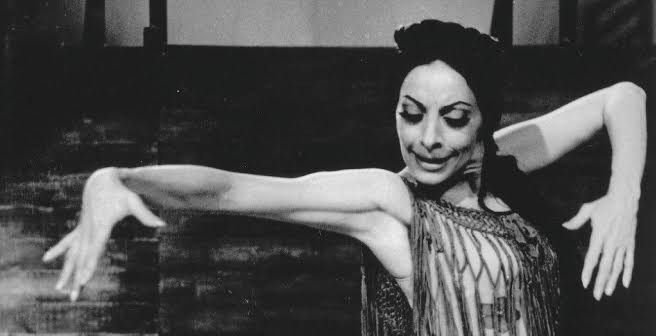
Alicia Alonso encarnó a una de las más célebres Carmen de la historia del ballet. Foto: Cortesía del Ballet Nacional de Cuba.
Few characters in literature have achieved the significance and extraordinary reach of Carmen, the unforgettable protagonist created by Prosper Mérimée for the novel first published in 1845. That woman of indomitable spirit soon burst beyond the pages that gave her life to become one of the great myths of Western culture.
Carmen quickly became a symbol of the rebellious, free, self-sufficient, and defiant woman. She is a character who refuses to accept any form of submission and who, above all else, asserts her right to decide the course of her own life — even when that decision leads her toward danger or tragedy.
Carmen, the Novel
Carmen the novel is not among the great titles of world literature, nor is it typically counted among the novels that decisively transformed the genre. Its literary merits are undeniable, but its principal contribution may well have been the creation of a character of such singular force that she ultimately eclipsed the work itself and secured a privileged place in the imagination of Western culture.
Mérimée was one of the most prominent figures in nineteenth-century French intellectual life. A writer, historian, archaeologist, and inspector general of historical monuments, he cultivated the short novel and the short story with particular success. His prose is marked by precision, economy of expression, and a notable sense of narrative rhythm — qualities that made him a highly respected author in his time, though today he is remembered above all for Carmen.
The novel first appeared on October 1, 1845, in the prestigious Revue des Deux Mondes, one of the most influential cultural publications in nineteenth-century France. It was published in book form the following year.
The story has the effectiveness of a short narrative, built with intelligence and restraint — yet, as noted, it was the character of Carmen who ultimately took over the work. Her overpowering personality, her independence, and her rejection of any form of submission turned that woman into a symbol of universal reach, far more powerful than the narrative anecdote that gave rise to her.
The novel marks the starting point of one of the longest chains of reinterpretation in modern culture, proving that, at times, a single character is enough to secure a writer's immortality.
Carmen, the Opera
One of the great reinterpretations — perhaps the most celebrated — of the character conceived by Prosper Mérimée was the operatic version created by Georges Bizet. Premiered on March 3, 1875, at the Opéra-Comique in Paris, Carmen became a landmark in the history of opera. Paradoxically, its initial reception was cold, even provoking unease among audiences unaccustomed to a heroine so free, sensual, and morally ambiguous. Only after Bizet's death, which occurred just months later, did the work begin its ascent to becoming one of the essential titles of the universal repertoire.
Rooted in the French opéra-comique tradition, Carmen pushed that genre toward a new dimension. It retained the spoken dialogue characteristic of the form but incorporated a dramatic intensity, a profound psychological realism, and an orchestral richness that anticipated naturalism and foreshadowed elements of Italian verismo. Bizet composed a score of extraordinary vitality, in which every musical theme helps define the characters' conflicts and temperaments.
The opera preserves the essential core of Mérimée's novel but introduces decisive transformations. Bizet and his librettists heightened the story's emotional dimension, enriched the relationships between characters, and made Carmen an even more fascinating and complex presence. The music amplifies her expressive force: audiences no longer know only what she does or says, but also what the orchestra reveals about her character. In this way, the heroine acquires a stage intensity that came to dominate the collective imagination and that, for millions of audiences, now defines the very image of Carmen.
Over time, Bizet's Carmen became the fundamental reference point for nearly all later reinterpretations of the character, whether operatic, theatrical, choreographic, or cinematic. Its fidelity to the character's spirit explains why the opera has outlived its era to become one of the undisputed peaks of musical theater and one of the most frequently performed works in history.
Carmen, the Ballet
When Carmen arrives in ballet, words disappear and the body takes on the task of narration. Perhaps the best-known choreographic version is Roland Petit's, premiered in 1949, which finds in Carmen's story especially fertile ground for exploring desire, sensuality, violence, and confrontation between characters. The choreography transforms what the novel tells and the opera sings into movement, gesture, contact, and physical presence.
Among all these reinterpretations, one created in 1967 by Cuban choreographer Alberto Alonso, at the request of legendary Russian ballerina Maya Plisetskaya, stands out in its own right. That production used the celebrated Carmen Suite, composed by Rodion Shchedrin, Plisetskaya's husband, based on themes from Bizet's score. Far from a simple adaptation, Shchedrin created a work of powerful character, while Alberto Alonso devised a modern choreographic language centered on dramatic intensity and the symbolic force of the characters.
Although conceived for Maya Plisetskaya, Alberto Alonso also developed this creation with Alicia Alonso, who made the role one of the defining interpretations of her extraordinary career. Beyond her impeccable technique, Alicia grasped Carmen's spiritual world: her freedom, her pride, her passion, and her constant defiance of fate. Her portrayal revealed an exceptional performer, capable of making every gesture and every glance an essential part of the choreographic language.
Alberto Alonso's Carmen remains one of the great works of Cuban ballet and an essential reference in world dance. Its dramaturgical precision, the contemporaneity of its expressive language, and its ability to distill the story into images of enormous poetic force make it an irreplaceable creation. Through it, Cuba secured its place among the most memorable reinterpretations of a character who continues to inspire artists worldwide and who, on stage, continues to proclaim the unshakable value of freedom.
The Myth That Endures
Something runs through all these versions: Carmen resists being possessed. That, perhaps, is the key to her endurance. In an era and a society that seek to dictate what a woman may do, whom she may be with, and how far she may exercise her own will, she places freedom above security. Her tragic fate does not cancel out that will — on the contrary, it becomes the very center of her myth. That is why Carmen continues to provoke new readings, interpretations, and versions: because behind the gypsy of Seville lies a question that remains as relevant as ever — how much are we willing to pay to be truly free.
A version of this text served as the script for the Clásicos segment, broadcast every Wednesday in August on the program Estudio 9, CMBF Radio Musical Nacional.
Translated by Sergio A. Paneque Díaz / CubaSí Translation Staff
Add new comment