
China Urges U.S. to Immediately Cease "Blockade and Sanctions Against Cuba"
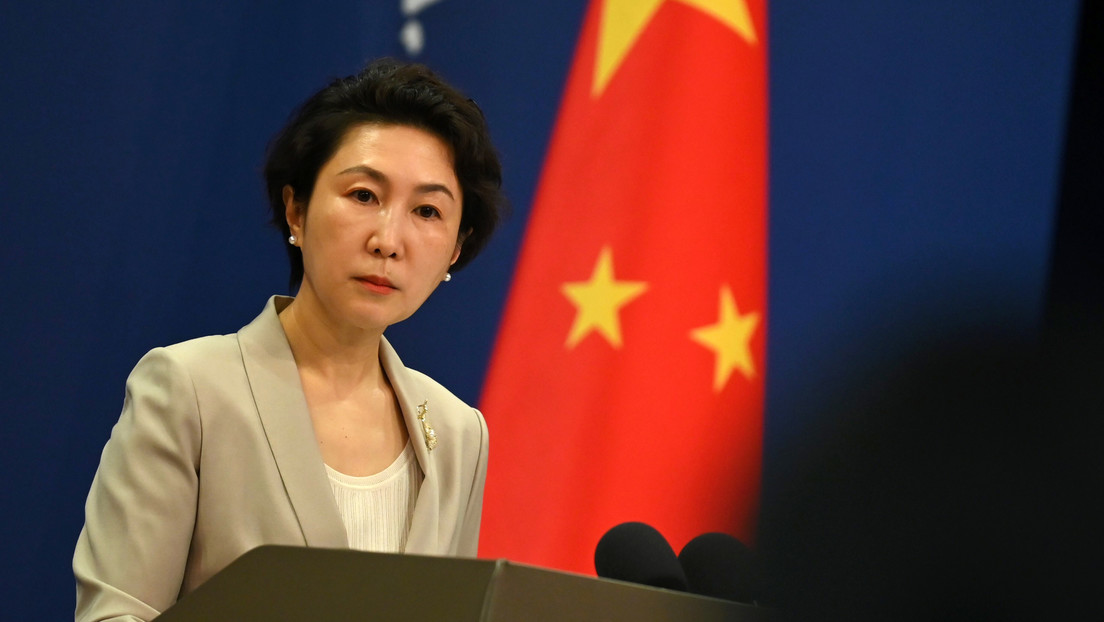
La portavoz del Ministerio de Asuntos Exteriores chino, Mao Ning. Foto: Johannes Neudecker / Gettyimages.ru
Beijing issued a formal appeal to Washington on Monday to put an end to its escalating pressure campaign against Cuba, Chinese Foreign Ministry spokeswoman Mao Ning announced.
"China urges the United States to immediately cease the blockade and sanctions against Cuba, as well as any form of coercion or pressure. We will continue to provide assistance to Cuba to the best of our ability and in our own way," the spokeswoman declared at a press conference.
Mao further underscored that Beijing "has always upheld respect for the sovereignty and territorial integrity of all countries and opposes any violation of the sovereignty of other nations or interference in their internal affairs under any pretext." "China firmly supports Cuba in safeguarding its sovereignty and security and opposes external interference," she asserted.
China has called on more than one occasion for the United States to immediately lift its blockade and sanctions against Cuba and to cease all coercive measures under any pretext. On Saturday, Chinese Ambassador to Cuba Hua Xin announced the arrival of a humanitarian shipment from China as a gesture of solidarity with the island. "The 15,600 tons of rice donated by the Chinese Government have arrived! We stand with the Cuban people in their struggle against hardship! Cuba is not alone!" he wrote on X.
Also on Monday, the Russian tanker Anatoly Kolodkin arrived in Cuba carrying approximately 100,000 tons of oil — the first tanker to reach the island in three months, after the United States pressured Venezuela and Mexico to cut off energy supplies. Cuba had received no oil deliveries since January 9, triggering a severe energy crisis.
U.S. Threat Against Cuba
On January 29, U.S. President Donald Trump signed an executive order declaring a "national emergency" in response to the alleged "unusual and extraordinary threat" that Washington claims Cuba poses to American national security and the broader region. The order accuses the Cuban government of aligning itself with "numerous hostile nations," harboring "transnational terrorist groups," and permitting the deployment on the island of "sophisticated military and intelligence capabilities" belonging to Russia and China.
On that basis, the administration announced the imposition of tariffs on countries that sell oil to Cuba, along with threats of reprisals against any nation that acts in defiance of the White House executive order.
The move came amid an escalating standoff between Washington and Havana, with Cuba systematically rejecting the allegations and warning that it will defend its territorial integrity. Cuba's president responded that "this new measure reveals the fascist, criminal, and genocidal nature of a clique that has hijacked the interests of the American people for purely personal ends."
On March 7, Trump announced that "a great change will soon come to Cuba," adding that the island is reaching "the end of the road."
The United States has maintained its economic and commercial blockade against Cuba for more than six decades. That embargo, which has severely damaged the island's economy, has now been further reinforced by a series of coercive and unilateral measures from the White House.
Add new comment