
On the Brink of the Nuclear Abyss
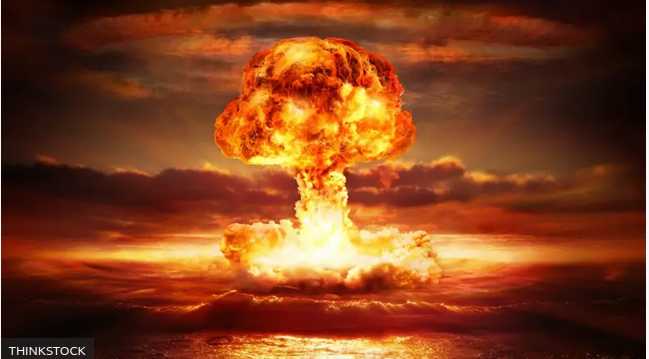
The resumption of nuclear testing by the United States ends a three-decade-long moratorium and reignites a new global arms race. This development is entirely the result of Donald Trump’s warmongering policies—even though he attempts to cloak his rhetoric by framing these actions as "deterrence tactics," he is, in fact, exposing the world to the very real danger of total annihilation.
The revival of the testing program—set against the backdrop of the ongoing war in Ukraine and the genocide in Palestine—instills an inescapable sense of terror: among other things, this could trigger an uncontrollable domino effect, as other countries might respond with their own nuclear tests.
In this regard, Russia—through Kremlin spokesperson Dmitry Peskov—stated from the outset that it would act accordingly, given that the United States has broken its legal commitment to the Comprehensive Nuclear-Test-Ban Treaty.
Since 1996, when the treaty was adopted, ten nuclear tests have been conducted. According to the United Nations, two were carried out by India in 1998, two by Pakistan—also in 1998—and the remainder by the Democratic People's Republic of Korea in 2006, 2009, 2013, twice in 2016, and in 2017. The last nuclear test conducted by the United States took place in 1992, while China and France carried out their final tests in 1996, and the former Soviet Union in 1990.
North Korea defied the ban, arguing that it was the only way to prevent aggression from states whose territory could be reached—and not intercepted—by North Korean nuclear-tipped missiles. This explains Trump’s decision to engage in talks with Pyongyang; he noted at the time that such dialogue is necessary when dealing with a non-friendly nation that possesses nuclear weapons.
Today, only two European countries maintain independent nuclear arsenals: France and the United Kingdom. Both justify their possession through the concept of "nuclear deterrence"—a security strategy based on the threat of using nuclear weapons to prevent hostile action. In short, a state possesses nuclear weapons to discourage other countries from attacking it, as their use would entail devastating consequences for the aggressor. Yet no one questions Israel, which—protected by the United States—possesses over a hundred atomic devices that it uses as a form of blackmail, all while seizing Arab lands and exterminating the majority of their legitimate inhabitants.
A CHANGE FOR THE WORSE
Trump’s statements regarding nuclear testing topple decades of U.S. policy. They come at a time when Washington’s rivals have been expanding and testing their own nuclear-capable arsenals.
Faced with this situation, Russia and China are not sitting idly by, Moscow has acknowledged testing a nuclear-capable cruise missile called the Burevestnik—known to NATO by the codename "Skyfall"—as well as a similar underwater drone.
China is constructing additional land-based nuclear missile silos. Meanwhile, the Democratic People's Republic of Korea has just unveiled a new nuclear-capable intercontinental ballistic missile (ICBM) capable of reaching the continental United States.
Trump’s remarks were made ahead of a meeting with Chinese President Xi Jinping. They appeared in a post on his website, Truth Social, in which Trump noted that other countries were testing nuclear weapons and wrote: "I have instructed the Department of War to begin testing our nuclear weapons on an equal footing. That process will begin immediately."
The former president’s post raised immediate questions. The U.S. nuclear arsenal is managed by the Department of Energy and the National Nuclear Security Administration—a semi-autonomous agency within it—rather than the Department of Defense. The Department of Energy has overseen nuclear weapons testing since its establishment in 1977; prior to that, such testing was conducted by other agencies, separate from the Department of Defense.
Trump also claimed that the United States "has more nuclear weapons than any other country." Russia is believed to possess 5,580 nuclear warheads, according to the Washington-based Arms Control Association, while the United States has 5,225. These figures include so-called "retired" warheads awaiting dismantlement.
The Stockholm International Peace Research Institute provides a further breakdown of the total number of warheads: the United States has 1,770 deployed warheads and 1,930 in reserve. Russia has 1,718 deployed warheads and 2,591 in reserve.
Together, these two countries hold nearly 90% of the world's nuclear warheads.
MORE THAN ANY OTHER COUNTRY
Between the detonation of its "Trinity" atomic bomb in 1945 and 1992, the United States conducted 1,030 nuclear tests—more than any other nation. These figures do not include the two nuclear weapons the United States used against Japan—in Hiroshima and Nagasaki—at the end of World War II; these were entirely criminal and unjustified acts, carried out when Japan was already on the verge of total defeat.
Furthermore, each year, as the anniversary of these events approaches, the Japanese authorities of the day avoid mentioning that the United States was the perpetrator of these crimes—just as they fail to mention the 130,000 deaths caused months earlier during a bombing raid on Tokyo, the capital, which was carried out to test napalm bombs.
The first U.S. nuclear tests were initially atmospheric, but later moved underground. Scientists refer to these tests as "shots." The last of these "shots"—codenamed "Divider," as part of Operation Julen—took place on September 23, 1992, at the Nevada National Security Site, an expansive complex located about 105 kilometers (65 miles) from Las Vegas.
The United States halted its nuclear testing for several reasons. The primary one was the collapse of the Soviet Union at the end of the Cold War. Furthermore, the U.S. signed the Comprehensive Nuclear-Test-Ban Treaty in 1996.
More broadly, the United States also possessed decades of test data, which allowed it to use computer modeling and other techniques to determine whether a weapon would detonate successfully. Every president since Barack Obama has supported plans to modernize the U.S. nuclear arsenal—an undertaking whose maintenance and upgrades will cost nearly a trillion dollars.
The United States relies on what is known as the "nuclear triad"—land-based silos, aircraft-delivered bombs, and submarine-launched missiles equipped with nuclear warheads—to project a threat toward other nations.
Any scientific objective behind resuming nuclear weapons testing would likely be overshadowed by the negative backlash, while also serving as a pretext for other major nuclear powers to initiate their own large-scale tests.
Experts at the *Bulletin of the Atomic Scientists* warned that the Trump administration could trigger an uncontrollable chain of events, with other countries potentially responding by conducting their own nuclear tests—thereby destabilizing global security and accelerating a new arms race.
NOTHING SHORT OF A MIRACLE
Aleksandar Vučić, who stepped down as president of Serbia on September 27, warned that a third world war might be inevitable, noting that Europe is investing vast sums of money into strengthening its military capabilities. "It will be a miracle if it doesn't blow up," the former leader stated when asked about that possibility in an interview published on October 20th. He added that he would be "the happiest person in the world" if his prediction turned out to be wrong, though he fears it might not be.
Add new comment