
Artificial Intelligence: It’s Hard to Know What to Believe Anymore
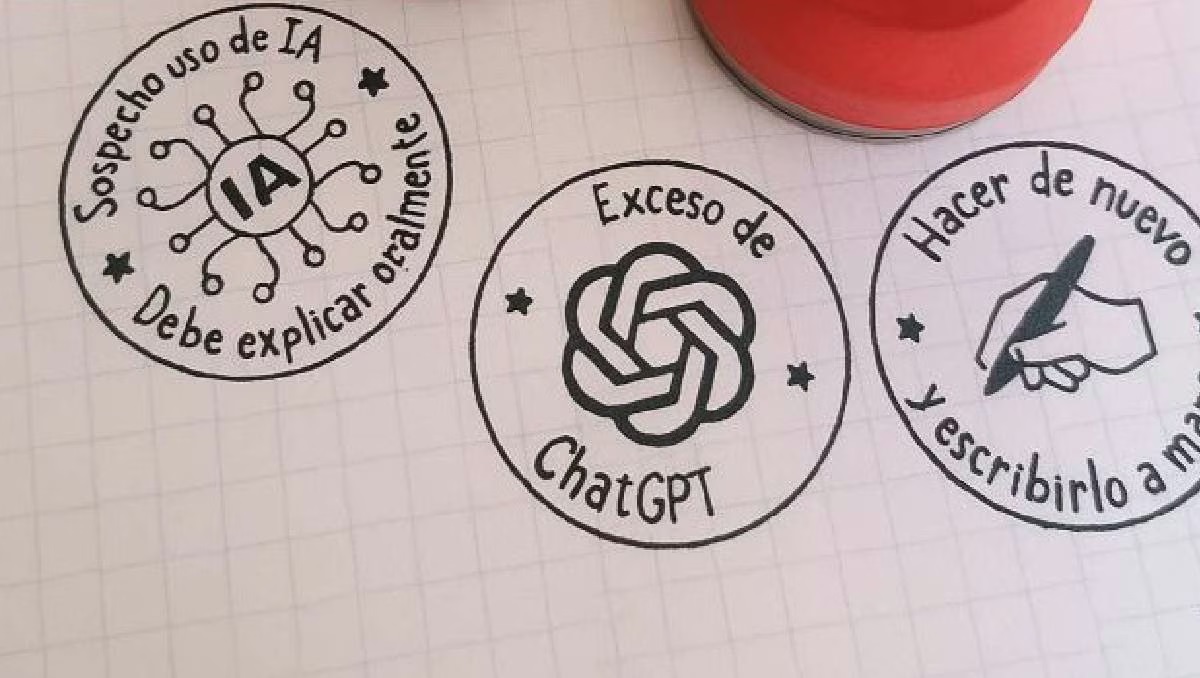
The internet is full of nonsense. Artificial intelligence is used to generate images, text, music, videos, and practically any type of content. It’s everywhere, and its outputs are becoming increasingly convincing at an astonishing speed.
We no longer always know when a piece of information, an image, or even an experience that we see on screen is real. It takes a critical eye to spot it—true—but not everyone has a trained eye; furthermore, when something confirms what we want to believe, we tend to let our guard down.
Many people use artificial intelligence excessively, relying on it as a source of information without verifying what they receive. While it can certainly be an extraordinarily useful tool, it is wise to cross-check its answers; it can make mistakes, mix up data, fabricate references, or confidently present something that simply isn't true—whether due to distortion or because it lacks the knowledge yet refuses to leave a question unanswered.
That’s precisely what’s unsettling: the errors aren't always obvious; they can be subliminal or hidden in barely perceptible details. Sometimes it projects an apparent confidence that deceives us—and then, who can we hold accountable? The problem lies in the overuse of the tool.
Suddenly, a certain type of content goes viral, and we all rush to ask our assistant to do this or that—like when videos circulated showing "annoying" vegetables explaining how best to store them, or photos of a single person alongside versions of themselves at different stages of life. Everyone wanted to try it out. These examples are relatively harmless, of course, and there is nothing wrong with experimenting, as some of these activities are entertaining. The trouble arises when we stop using technology merely as a tool and begin delegating our judgment to it as well. This is a serious issue, because thinking, selecting, questioning, researching, and deciding what deserves our trust are distinctly human responsibilities.
We are gradually eroding something we perhaps fail to value enough: naturalness. Social media is flooded with perfect images, immaculate homes, exquisite meals, flawless faces, dreamlike gardens, and objects that never actually existed. Much of this is unreal—manufactured.
Creating such images with artificial intelligence can be fun, even fascinating, but it becomes concerning when that fabricated aesthetic begins to blur with reality. This is especially true when media outlets, institutions, or accounts we deem trustworthy share content without clarifying how it was created.
It’s all on us to be observant, as it takes only a little attention to spot the slip-up. Beautiful images appear on pages dedicated to art, cooking, décor, or architecture—images that, upon closer inspection, reveal subtle flaws. Sometimes it is a line ending where it shouldn't, a lamp suspended in mid-air, an impossible staircase, a recipe that doesn't actually work, or a painting that never existed yet circulates under a famous artist's name. There is also music that suddenly appears everywhere with no known author, accompanied by flawless videos. Errors do exist; we simply need to learn to spot them, since there are no obvious "artificial intelligence" warning labels.
The most unsettling use of this technology, however, concerns writing. A quick look at social media reveals recurring patterns in how texts are constructed: specific rhythms, overly polished phrases, and paragraphs chopped into tiny fragments—as if every single idea required its own separate line. Sometimes the texts are incredibly long and repetitive, yet strangely impersonal.
Of course, this doesn't always mean the text was written by AI—there are many writing styles, after all—but we do see a pattern that shouldn't be this common across the board. It is unlikely that everyone has suddenly started emulating one another, churning out lengthy texts in the exact same way.
Perhaps the greatest risk isn't that AI might fabricate a fake image, but that we lose the habit of questioning whether it is real; that we come to believe the world out there is truly that beautiful—or, worse, that we begin to crave that kind of perfection. Technology can produce extraordinary content, but it can also manufacture an illusion; and our brains—which tend to accept repeated imagery as familiar—can easily mistake that illusion for reality. Of course, that doesn’t mean everything beautiful is fake or everything imperfect is true; yet in a world capable of creating almost any scenario, uncertainty might well be a useful tool. That’s why, in this day and age, a healthy dose of skepticism isn't paranoia—it’s critical thinking: asking ourselves how something was conceived and for what purpose. It isn't healthy to believe everything; a questioning mind fosters growth, and it is valid to ask where information comes from, what evidence exists, and what parts of what we see have been altered.
This is not an argument against artificial intelligence, for we must move forward with technological development—embracing the positives that make life easier without sacrificing authorship or trust. It’s not about ignoring technology, but rather knowing how to use it thoroughly, and not allow her—or her manipulator—to prey upon our innocence.
Add new comment