
UN Experts Urge Revocation of Executive Order Targeting Cuba
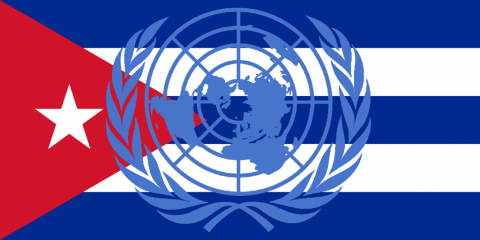
Just as two Mexican Navy vessels arrived in Havana Bay carrying aid for the Cuban people, a special press release began circulating from the Office of the United Nations High Commissioner for Human Rights regarding the rejection by the organization's experts of the executive order issued by the President of the United States on January 29, 2026. That order declares a supposed national emergency and authorizes the imposition of commercial tariffs on oil exports from third countries to Cuba.
According to the specialists, this order constitutes a serious violation of international law and a grave threat to a democratic and equitable international order. They also assert that it represents an extreme form of unilateral economic coercion with extraterritorial effects, through which the United States seeks to exert pressure on the sovereign State of Cuba and compel other sovereign States to modify their legitimate commercial relations under the threat of punitive measures.
In other words, and as thousands of voices, parties, governments, institutions, organizations, and social movements have denounced, this new imperialist aggression is cruel, genocidal, and emulates the most barbaric and ruthless tactics implemented throughout history to subjugate, overwhelm, and devastate nations.
As lamentable as the United States lying and generating false pretexts to justify this executive order is the fact that they do not hide their true intentions nor feel the slightest remorse for the thousands of children and elderly victims of this infamous aggression.
"The characterization of Cuba as an 'unusual and extraordinary threat' to U.S. national security and allegations that the country supports 'transnational terrorist groups' lack credibility and appear designed to justify the use of extraordinary and coercive powers," stated the experts from the aforementioned international body. They underscored that, in the absence of authorization from the United Nations Security Council, the executive order has no basis in collective security and constitutes a unilateral act incompatible with international law.
"A democratic international order cannot be reconciled with practices in which one State claims the authority to dictate the internal policies and economic relations of others through threats and coercion," the text continues. It notes that fuel is indispensable for electricity generation, water and sanitation systems, hospitals, public transportation, and food production—including irrigation, harvesting, refrigeration, and distribution.
Depriving a country of fuel is condemning it to death, disease, slow agony, and prolonged suffering. However cruel the method, for some it is an effective remedy—something along the lines of: "the end justifies the means."
That is why the rejection by the international community is immense. And although a few play along as sycophants of the empire and others remain silent out of fear—not knowing that the wolf devours the sheep one by one—people with dignity stand in solidarity with the Cuban people.
Through diverse actions, within their means—such as the aforementioned experts calling on the U.S. government to immediately revoke the executive order and cease using extraterritorial economic measures—the world demonstrates its condemnation of this criminal policy and evidences that Cuba is not alone.
As the report in question concludes: "The normalization of unilateral economic coercion erodes the international legal order, weakens multilateral institutions, and inflicts unacceptable suffering on civilian populations," the experts affirmed. "Collective action by States is essential to defend a democratic and equitable international order."
Add new comment